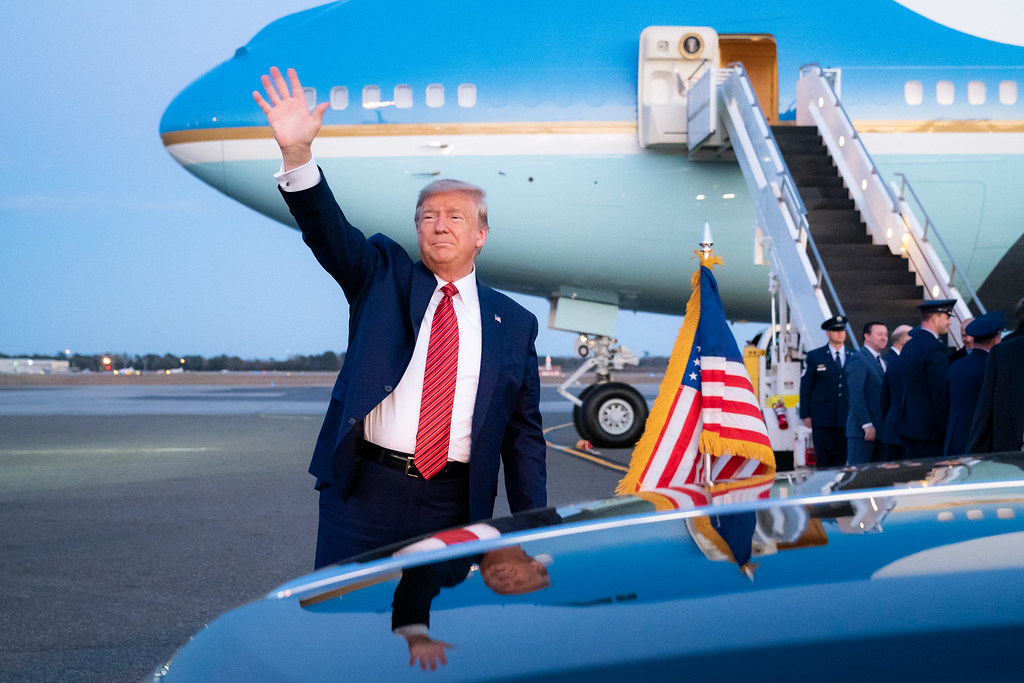
(UNITED STATES) The US Air Force said on December 12, 2025 that the first of two new presidential aircraft, the Boeing 747-8 VC-25B Air Force One, is now scheduled for mid-2028 delivery, pushing the program back by about a year from the prior 2027 target and prolonging the wait for a replacement to the aging VC-25A jets that have carried presidents since 1990. The announcement underscores how a flagship, high-security aviation project signed during President Trump’s first term has struggled for years with technical and staffing problems, leaving open the question of whether the new plane will arrive in time to be used much during Trump’s current term.
The Air Force did not give a single specific reason for the latest slip. Instead, it pointed to the result of ongoing discussions between Boeing and the Air Force, against a backdrop of challenges that have repeatedly slowed the work, including interiors supplier transitions, manpower shortages, and wiring design issues. Boeing has faced setbacks and financial losses on the fixed-price deal, a key detail because that contract structure can leave the company responsible for cost overruns even when delays mount.
The updated schedule adds another turn to a timeline that has repeatedly stretched beyond earlier promises. When the original contract was signed in 2018, during Trump’s first term, the plan was for the first aircraft to be delivered by the end of 2024. That target moved to 2026 in 2022, then shifted again to 2027 in 2023. In February 2025, a Trump official projected the program could slip as far as 2029 or later, a warning that gained new relevance as the latest estimate moved out again, this time to mid-2028 for the first jet.
The Air Force’s new date also tightens the window for the current president. Trump’s second term ends January 20, 2029, meaning a mid-2028 delivery would, on paper, allow him to use the new VC-25B for roughly six to seven months if it arrives on time and is cleared for presidential operations. But with the program’s history of moving targets and the Air Force offering no new single explanation for the latest delay, the prospect of further slippage is now a central political and operational question: whether the aircraft ordered during Trump’s first administration will be ready while he is still in office.
That political pressure has been building for years. Trump has previously voiced frustration with the program, including a 2016 tweet, as president-elect, criticizing it as over budget. The White House implications are not just symbolic. Air Force One is more than a plane; it is a flying command center built around secure communications and protective systems designed to keep the president connected and safe during crises. The Air Force noted that the existing VC-25A fleet remains operational with White House-level communications and security, but it is also a fleet that first entered service in 1990, and officials have long argued that age alone increases maintenance burdens and operational risk.
Even as the Air Force extended the schedule, it also moved to keep the program’s technical work in step with the revised timeline. The service said it awarded Boeing a $15.5 million modification for new communications integration, work it said is completable within the updated schedule. With that addition and earlier contract actions, the total contract now exceeds $4.3 billion, a figure that has drawn attention because it reflects how complex it is to turn a commercial Boeing 747-8 into a hardened presidential aircraft with specialized communications and defensive features.
Air Force officials have previously tried to project confidence in the program even as delays stacked up. In May 2025, Acting Assistant Secretary Darlene Costello and Lt. Gen. David Tabor said Boeing was aiming for 2027, and they framed the effort as a commitment to replace the 35-year-old VC-25A fleet. The Air Force’s new mid-2028 estimate now sits a year beyond that stated aim, while still short of the darker projection made in February 2025 that the aircraft might not arrive until 2029 or later.
With the main replacement aircraft continuing to slip, the Air Force has also pursued an interim path meant to ease pressure on the aging fleet. In September 2025, the Air Force began converting a Boeing 747-8 donated by Qatar into executive transport, an effort it said is being led by L3Harris Technologies, though the company provided no comment. Air Force Secretary Troy Meink, speaking in September 2025, said he was confident in the contractors and estimated the Qatar jet upgrade would cost under $400 million, funded by shifting money from the Sentinel missile program. Meink said the retrofit was expected to be completed in “just short of a year.”
That interim conversion effort, however, is not described as a full substitute for the VC-25B program, which is designed to deliver two new aircraft built to the Air Force One standard for presidential travel. The mid-2028 date applies to the first of those two new jets, leaving the second aircraft’s in-service timing less clear in the material released alongside the announcement. The Air Force’s decision to announce an adjusted schedule while awarding communications integration funding suggests an effort to keep major pieces of the project moving even as core challenges—supplier transitions, staffing gaps, and wiring design issues—continue to complicate the work.
For Boeing, the latest schedule change lands amid years of scrutiny of its ability to deliver on a fixed-price contract that has already produced financial losses. For the Air Force and the White House, the stakes are operational and political. The service must keep the 1990-era VC-25A aircraft ready for presidential travel while it juggles a delayed replacement program and an interim Qatar-donated 747-8 conversion that is being built out on a faster schedule. For Trump, the date now attached to the Boeing 747-8 VC-25B Air Force One program—mid-2028—puts the delivery close enough to the end of his term that even small additional slips could mean he never flies on the aircraft that became one of the most visible defense procurement promises of his first administration.
The Air Force’s announcement offered no suggestion that the VC-25A fleet cannot continue to do its job, only that the long-awaited replacement remains a work in progress. Still, the repeated delays have left the Air Force managing two realities at once: a technically demanding new aircraft program that has yet to meet earlier delivery goals, and a set of existing planes that must continue operating with the secure communications and protective capabilities the presidency requires. More details about the Air Force One fleet and service updates are available through the Air Force’s official website, U.S. Air Force.
The Air Force moved the first Boeing 747-8 VC-25B delivery to mid-2028, citing ongoing discussions with Boeing amid supplier, staffing and wiring challenges. A $15.5 million communications integration modification was added; total contract value tops $4.3 billion. An interim 747-8 donated by Qatar is being converted for executive use. Repeated schedule shifts raise political and operational questions about whether the new aircraft will be available during the current president’s term.