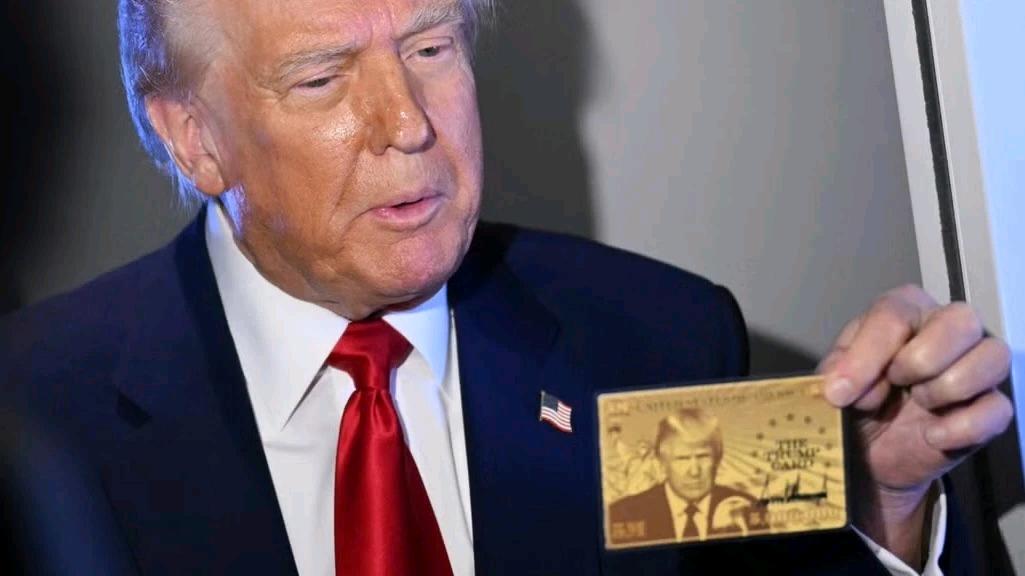
(UNITED STATES) — President Donald Trump said on December 19, 2025, that his administration has sold more than $1 billion worth of immigration “gold cards” since launching the program nine days earlier.
Speaking at a White House event, Trump described the Trump Gold Card as
“essentially the green card on steroids,”
and said the proceeds go “directly” to the U.S. Treasury to reduce the national debt.
The administration said sales have reached $1.3 billion.
Trump’s remarks put fresh attention on a program built around large payments to the federal government in exchange for an accelerated path to lawful permanent residency, at a time when the president has repeatedly attacked other immigration channels.
Executive Order 14351, signed by Trump on September 19, 2025, directed the Departments of Commerce, State, and Homeland Security to create the Gold Card within 90 days and prioritize immigrants providing “significant financial gift[s] to the Nation.”
Applications opened on December 10, 2025, through TrumpCard.gov, and U.S. Citizenship and Immigration Services released Form I-140G (Immigrant Petition for the Gold Card Program) around December 11, 2025.
The program offers an Individual Trump Gold Card that requires a $15,000 non-refundable Department of Homeland Security processing fee per person, plus a $1 million “gift” to the U.S. government after vetting.
That individual option grants expedited lawful permanent residency through EB-1 (extraordinary ability) or EB-2 (national interest) categories, and applies per person, including dependents.
A second track, the Trump Corporate Gold Card, requires a $15,000 processing fee plus a $2 million gift and allows companies to fast-track residency for employees.
Under the corporate version, the benefit is transferable for a 5% fee plus a background check, and carries a 1% annual maintenance fee.
A third option, the Trump Platinum Card, has not yet launched and is available only through a waitlist, according to details released about the program.
The waitlisted platinum tier would require a $15,000 fee plus a $5 million gift, and would permit up to 270 days of annual U.S. residency without tax on non-U.S. income, while requiring no prior U.S. tax liability on foreign income.
All tiers require DHS security vetting, interviews, and evidence of benefit to the U.S., and the program does not require job creation, unlike EB-5.
Commerce Secretary Howard Lutnick described the intended standard for applicants in blunt terms.
“Perfect, people in America,” Lutnick said,
while also stating that card holders would be eligible for citizenship after five years.
The White House event on December 19 tied the administration’s sales claims to debt reduction, and a YouTube video from December 19, 2025, shows Trump repeating his pitch that the card is a “green card on steroids” while criticizing other immigrants.
The administration has not released independent verification for the sales figures it cited.
Processing was described as taking “weeks” after the fee, with potential delays up to a year for some countries.
Critics of the Gold Card program have argued it prioritizes wealth over merit and could invite legal challenges by reshaping how limited immigration categories operate without creating new visa slots.
They have also argued it could favor applicants from backlogged countries like India and China, and have warned of lawsuits over whether the program alters congressional visa limits.
Program materials also highlight that the processing fee is non-refundable, and the criticism has included warnings that applicants could be left without refunds if a court invalidates the initiative.
The Gold Card’s launch has stood in contrast with Trump’s public rhetoric about immigration from specific regions and countries, including remarks cited alongside the program’s rollout.
“I preferred immigrants from “Norway, Sweden… Denmark” over “Somalia, places that are a disaster… filthy, dirty, disgusting, ridden with crime.”
The Trump administration reports $1.3 billion in revenue from the ‘Gold Card’ program, which fast-tracks green cards for individuals donating at least $1 million to the Treasury. Launched in December 2025, the program uses existing EB-1 and EB-2 categories. Critics argue it favors wealthy applicants from backlogged countries like India and China, raising concerns about legal challenges regarding congressional visa limits and the prioritization of wealth over merit.