- Supreme Court ruling limits judicial review of visa revocations, granting the government broader discretionary powers.
- Over 8,000 student visas revoked since January 2026 amid a significant federal deportation and enforcement push.
- SEVIS terminations create immediate removal risks, distinguishing them from travel-related visa revocations for international students.
(UNITED STATES) Student visas are facing tougher scrutiny across the United States, and the legal shield around visa revocations is now stronger for the government than it has been in years. The Supreme Court’s unanimous 2024 decision in Bouarfa v. Mayorkas confirmed that visa revocations sit largely outside court review, and the Trump administration has used that authority aggressively through 2025 and into 2026.

For more than 1 million international students at U.S. colleges and universities, that means one warning now carries far more weight: a visa can be revoked, and a SEVIS record can be terminated, with fast-moving consequences for study plans, travel, and even removal proceedings. The rules are not the same, and that difference matters.
Supreme Court backing gave visa revocations wider room
The key legal turning point came with Bouarfa v. Mayorkas. In that case, the Supreme Court said visa revocations are discretionary decisions and are largely insulated from judicial review. That ruling matters because it gave the executive branch broad room to act without expecting courts to second-guess every revocation decision.
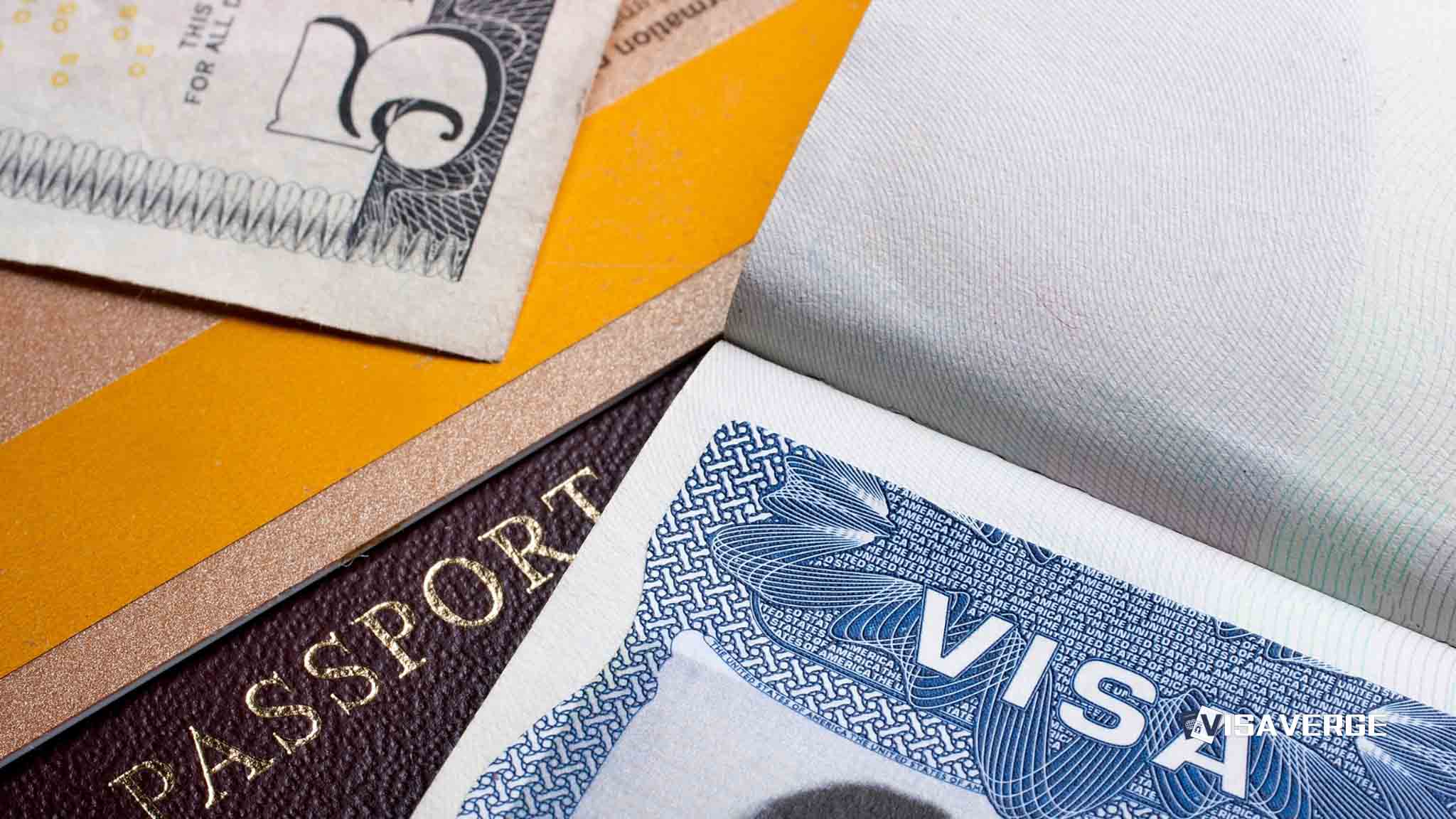
Free toolOPT Timeline Calculator OnlineThe government’s power to revoke a visa is not the same as its power to end a student’s lawful presence in the country. A visa is a travel document. It lets a person seek entry into the United States. It does not, by itself, decide whether that person can remain after entry. That distinction is now central in disputes involving student visas.
A separate system governs student records. The Student and Exchange Visitor Information System, known as SEVIS, tracks students in F, M, and J status. A school’s Designated School Official, or DSO, can only terminate a SEVIS record for specific reasons tied to the regulations at 8 C.F.R. § 214.2(e)–(g). Those reasons include unauthorized employment, false statements to the Department of Homeland Security, and a conviction for a crime of violence that carries a possible sentence of more than one year.
That difference has real legal consequences. A visa revocation is serious. A SEVIS termination is often more immediate and more destabilizing. It can put a student on the government’s path toward removal.
The State Department’s own visa guidance remains the clearest public reference point for students and schools. The agency’s student visa information page explains the basic F, M, and J visa framework and remains the most direct official source for current visa rules.
According to analysis by VisaVerge.com, the combination of Bouarfa v. Mayorkas and the administration’s 2026 enforcement posture has made student visa protection far more fragile than many students expected when they arrived in the United States.
Why visa revocations have surged since January 2026
The scale of action is large. The Department of State revoked 8,000 student visas since the start of President Donald Trump’s second term in January 2026, as part of a wider deportation push. In total, the administration revoked 100,000 nonimmigrant visas during that period. That is roughly twice the number revoked in former President Joe Biden’s final year.
Officials say most student and specialized worker visas were revoked because of crimes. About half of those cases were linked to drunk driving. Secretary of State Marco Rubio has repeatedly said visas are not permanent guarantees. He has stressed that anyone entering the United States as a tourist, student, journalist, or other visa holder must follow the rules tied to that status and avoid conduct that conflicts with national security or legal requirements.
The most common trigger is still criminal conduct, especially arrests or convictions tied to driving under the influence. The State Department’s Foreign Affairs Manual directs consular officers abroad to revoke visas when an individual has been arrested or convicted for DUI. That practice has had a direct effect on students, and drunk driving now accounts for approximately half of all student visa revocations under current enforcement.
A second trigger is the growing use of “prudential visa revocation.” This tool allows the State Department to cancel a visa even when there is no conviction and no recent immigration violation. Officials have cited prior arrests, criminal charges, political activity viewed as troubling, and social media or public behavior they believe could affect U.S. foreign policy interests.
A third category is political protest. Using INA 237(a)(4)(C), the government may treat a noncitizen as deportable if the Secretary of State has reasonable ground to believe that the person’s presence or activity could have potentially serious adverse foreign policy consequences for the United States. That authority has been used against some students involved in campus protests.
In April 2025, the Trump administration detained a number of international students involved in pro-Palestinian advocacy on campuses. A federal judge agreed the campaign was ideologically motivated. Those SEVIS terminations were later reversed, and the students were released, but the episode showed how quickly campus activism can collide with immigration enforcement.
Minor incidents have also drawn attention. Reviews of April 2025 SEVIS terminations showed that many students had police encounters that ended up in national law enforcement databases, even when the underlying issue was minor, such as a driving citation. In some cases, the student was a witness or a victim, not a suspect. That pattern has raised alarm across universities with large international populations.
SEVIS termination is different from visa revocation, but the effect can be just as severe
Many students hear that a visa has been revoked and assume they must leave immediately. That is not always correct. A visa revocation alone does not cancel a person’s status inside the United States. It matters most when the person tries to reenter the country.
SEVIS termination is different. Once a student’s SEVIS record is terminated, the government may treat that student as subject to removal. That does not mean a final decision has already been made. It means the government is asserting that the student no longer fits the terms of lawful stay.
Under INA 237(a)(1)(B), a noncitizen whose nonimmigrant visa has been revoked is deportable. If the Department of Homeland Security applies that ground, ICE can open formal removal proceedings. At that point, the student may face immigration court, possible detention, and the risk of a removal order.
That is why a SEVIS termination often becomes the more urgent problem. A visa revocation can strand a student outside the country. A SEVIS termination can create immediate risk while the student is still enrolled, living in campus housing, and trying to keep up with classes.
A school may still try to help. If the termination appears to be technical or unjustified, the DSO can ask the government for a SEVIS data correction. Those requests do not always succeed, but they remain an important first step when the record looks wrong.
Students also have legal tools. If removal proceedings have not started, a student may challenge the SEVIS action under the Administrative Procedure Act. That lawsuit argues that the government acted in a way that was arbitrary, capricious, or unsupported by law. If removal proceedings do begin, the student has the right to a hearing in immigration court.
2026 policy changes have tightened the system further
The enforcement environment is not just about revocations. It also includes wider screening and tighter entry rules.
As of 2026, the United States has expanded social media vetting for all F, M, and J visa applicants. Interview waivers have also been reduced sharply, which means most students now need in-person interviews. Entry screening at ports of entry has become more demanding, with more document checks and closer review of travel history.
DHS has also proposed a major change to the student framework. Under the current Duration of Status, or D/S, students can stay in the United States for as long as their academic program requires. The proposal would replace that system with a fixed admission period tied to the I-20, capped at 4 years, with extensions required for students who need more time.
That proposal would also shorten the grace period after program completion from 60 days to 30 days. That matters for students who want to apply for Optional Practical Training, change status, or prepare to leave the country. Fewer days means less room for delay.
Another recent change affects work authorization. A DHS interim final rule effective October 30, 2025, eliminated the 540-day automatic extension of Employment Authorization Documents for people who file renewal applications. For students using OPT, that change adds pressure at renewal time and increases the risk of work interruptions.
Presidential Proclamation 10998, effective January 1, 2026, at 12:01 a.m. Eastern Standard Time, fully or partially suspended entry and visa issuance for nationals of 39 countries, as well as people using travel documents issued or endorsed by the Palestinian Authority. The proclamation explicitly says it does not revoke the validity of visas issued before that moment. Those visas remain valid unless revoked on other grounds by the Secretary of State.
What students are doing when their status is threatened
When a student learns that a visa has been revoked or a SEVIS record has been terminated, time matters. The first move is to contact the school’s international student office. The DSO can check the record, explain what the school sees, and help decide whether a correction request is possible.
The next step is to speak with a qualified immigration attorney. These cases move fast, and a lawyer can assess whether the revocation, termination, or removal notice has a legal defect. Many universities keep lists of attorneys who work regularly with student cases.
Students should also keep every document. That includes government notices, email from the school, screenshots of status updates, and proof of compliance with visa terms. In these cases, records often decide the outcome.
Continuing classes is sometimes possible. If the school is willing to keep the student enrolled, SEVIS termination does not automatically erase enrollment. But the practical reality depends on the school’s support and the student’s ability to stay in lawful status.
Travel becomes risky once a visa is revoked. A student outside the United States may be blocked from reentry even if the academic program is still active. That risk now shapes decisions about family travel, conferences, and summer trips home.
Why universities and students see this as a long-term shift
The pressure on student visas is changing the higher education market. U.S. schools enroll more than 1 million international students, and many institutions depend on that population for tuition revenue, research work, and global links. The current climate puts all of that under strain.
Competitor countries, especially Canada ??, are working hard to attract students who might once have chosen the United States ??. When U.S. visa revocations rise and screening grows harsher, students and families start looking elsewhere. That shift has real effects on enrollment pipelines, research labs, and campus diversity.
Immigration attorney Charles Kuck, who represents several students in lawsuits, has warned that enforcement is moving toward a lower bar. He said: “Any student who’s arrested, literally for any reason, is probably going to have their status terminated going forward.” That comment captures the new mood on campus and in immigration practice alike.
The system now rewards caution. Students on F-1 visas are being told to watch what they post online, report address changes quickly, avoid unauthorized work, maintain full-time enrollment, and stay in close contact with their DSO. Those are not just formal rules. They are the lines that now separate normal study from possible enforcement.
For international students, the biggest change is not one single rule. It is the accumulation of pressure: broader vetting, more revocations, more SEVIS terminations, tighter work rules, and a legal landscape shaped by Bouarfa v. Mayorkas that leaves less room to challenge the government’s choices in court.