- The Trump administration is launching a broadened war on fraud targeting naturalized citizens for denaturalization.
- New USCIS guidance introduces unprecedented numerical quotas for referrals ranging from 1,200 to 2,400 cases annually.
- Priority targets include individuals with links to criminal organizations or those who concealed prior removal orders.
U.S. Citizenship and Immigration Services signaled an expanded push on Thursday to pursue denaturalization cases that could strip citizenship from some foreign-born Americans, as the Trump administration frames the effort as part of a broader “war on fraud.”
Department of Homeland Security messaging and internal guidance described a ramp-up in referrals for cases involving “material misrepresentation or illegal means,” a significant shift for the roughly 26 million naturalized Americans who hold U.S. citizenship.
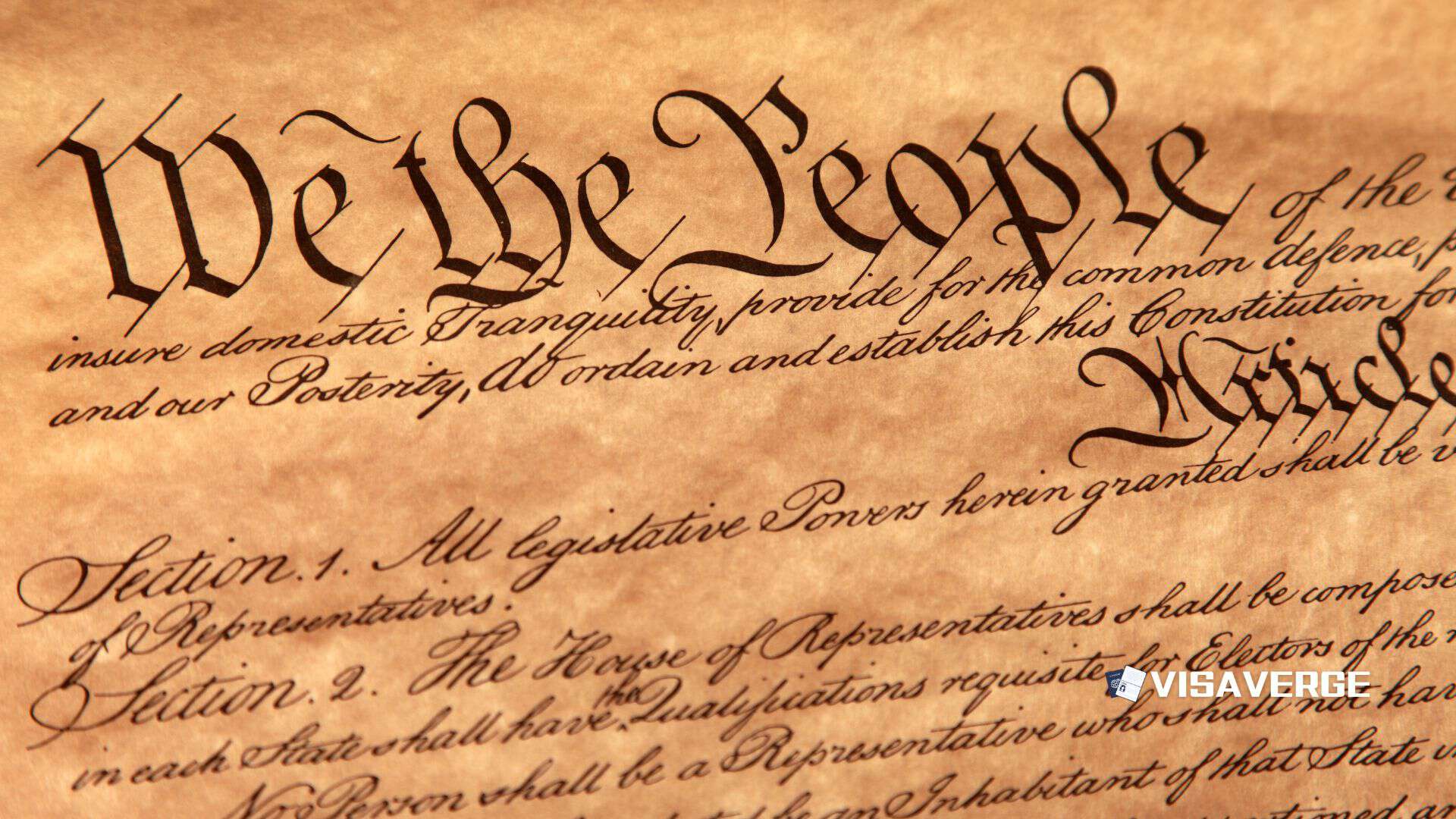
Denaturalization is a legal process the government uses to revoke citizenship it says was obtained unlawfully, typically by proving illegal procurement or concealment of a material fact in federal court.
As of February 12, 2026, the heightened emphasis comes through official reports and internal guidance tied to USCIS and DHS that point to more aggressive screening and more referrals to the Department of Justice for litigation.
Officials have presented the initiative as enforcement aimed at fraud rather than a broad review of naturalization grants, but the scope of the new referral targets suggests a sharp increase in the volume of cases the administration wants pursued.
A USCIS spokesperson addressed the direction of the effort after reports about new internal guidance, emphasizing enforcement priorities. “It is not a secret that the agency’s ‘war on fraud’ prioritizes people who unlawfully obtained U.S. citizenship. We will pursue denaturalization proceedings for those individuals lying or misrepresenting themselves during the naturalization process,” the spokesperson said in a December 19, 2025 response cited in news reports.
Tricia McLaughlin, Assistant Secretary for Homeland Security, pointed to the legal premise behind such cases in public messaging in December 2025. “Under U.S. law, if an individual procures citizenship on a fraudulent basis, that is grounds for denaturalization,” McLaughlin said.
President Donald Trump addressed the idea in a January 9, 2026 interview with The New York Times, signaling his willingness to strip citizenship in cases he described as dishonest. “I would do it in a heartbeat if they were dishonest. If they deserve to be stripped, I would, yes,” Trump said.
Inside the Justice Department, an internal memorandum in Summer 2025 instructed the Civil Division to intensify the approach where the law allows. “Prioritize and maximally pursue denaturalization proceedings in all cases permitted by law and supported by the evidence,” the memo said.
Operationally, the most significant element described in December 2025 internal USCIS guidance was the introduction of numerical quotas for denaturalization referrals, a move described as unprecedented in modern U.S. history.
Field offices received instructions to identify and refer 100 to 200 denaturalization cases per month to the DOJ’s Office of Immigration Litigation for the 2026 fiscal year, according to the guidance described in the material. The target annual goal tied to that range totals 1,200 to 2,400 cases.
Those referral targets do not determine outcomes, because the Justice Department still must decide which cases to litigate and federal judges still decide whether the government meets its burden. Even so, quotas can shape day-to-day agency work by driving how cases get flagged, reviewed, and prepared for potential court action.
USCIS and DHS have described priority categories that the administration wants elevated for possible denaturalization review, including individuals with links to gangs or cartels, those involved in human trafficking, individuals who committed financial fraud including government-funded program fraud, and individuals who obtained citizenship despite having previous undisclosed removal orders.
The enforcement push also comes with comparisons that show how far the 2026 target departs from prior levels of denaturalization litigation.
From 1990 – 2017, the average number of denaturalization cases per year was ~11, according to the figures presented in the material. During 2017 – 2021 (Trump 1.0), the average was ~42 cases per year, and during 2021 – 2024 (Biden) the average was ~15 cases per year.
The Trump 2.0 target for 2026, at 1,200 – 2,400 cases, represents a step-change from those historical averages, turning what was previously a relatively rare form of citizenship enforcement into a much higher-volume pipeline of referrals.
Denaturalization generally proceeds under 8 U.S.C. § 1451 through civil and/or criminal litigation routes, and the government cannot unilaterally revoke citizenship through USCIS alone under the framework described.
Instead, the government must file a civil or criminal suit in federal court, and it bears a high evidentiary standard. The burden of proof is “clear, unequivocal, and convincing” evidence that citizenship was “illegally procured” or obtained by “concealment of a material fact.”
The pathway described in the material places USCIS as the identifying and referring agency, while DOJ’s Office of Immigration Litigation pursues cases where it concludes the evidence supports proceedings permitted by law.
Beyond the people ultimately targeted, broader enforcement messaging can affect far more naturalized citizens than the number of cases filed, because it can raise concern that old applications and supporting documents may be re-examined.
The Immigrant Legal Resource Center has criticized quota-driven denaturalization enforcement and warned about how it can change the way naturalized status is perceived. The organization said it creates “second-class citizenship,” where a blue passport is no longer considered “bulletproof.”
The policy shift also raises practical questions of capacity, because each denaturalization case requires a full judicial proceeding, and the described guidance would increase referrals up to 200 per month.
The material pointed to strain on the DOJ’s Office of Immigration Litigation and the federal court system as a result of higher referral volumes, as more cases move from agency review into contested litigation.
USCIS and DHS have emphasized fraud as the central justification for the push, with USCIS tying it to its “war on fraud” framing and DHS highlighting that fraudulent procurement can be grounds for denaturalization under U.S. law.
Trump’s January comments, meanwhile, indicated the White House’s political backing for stripping citizenship from people he described as dishonest, aligning public messaging with Justice Department direction that encouraged prosecutors to push denaturalization where evidence supports it.
Naturalized citizens seeking official updates can monitor the USCIS website’s USCIS Newsroom and DHS announcements through DHS Press Releases.
USCIS also outlines the legal grounds for revocation of naturalization in its public guidance, including in the USCIS Policy Manual (Volume 12, Part L), as the Trump administration’s broadened enforcement posture takes shape across USCIS and the Justice Department.