- Federal courts blocked the $1,000 daily fine policy for non-compliance with final removal orders as of April 2026.
- DHS is prioritizing deportations and visa restrictions through Proclamations 10949 and 10998 affecting 39 countries.
- The CBP Home app offers voluntary departure incentives, including a $1,000 stipend and free travel.
(UNITED STATES) The Trump administration has not put a $1,000 daily fines policy into effect for unlawful presence or missed removal deadlines as of April 2026. Instead, enforcement is centered on deportations, visa restrictions, and the CBP Home app, which offers voluntary departure incentives.

That matters for immigrants with final removal orders, overstays, and mixed-status families. It also matters for employers, schools, and lawyers tracking a fast-moving enforcement regime that is still being challenged in court.
Legal Authority and the Blocked Fine Plan
The government’s power to fine noncitizens comes from the Immigration and Nationality Act, especially provisions tied to removal orders and unlawful presence. Under that framework, civil penalties already exist for people who do not leave after a final order.
In 2025, the administration moved to expand that authority. A proposed interim final rule, published in the Federal Register on June 27, 2025, would have allowed fines of up to $1,000 per day for non-compliance with final removal orders. It also would have removed the earlier 30-day warning period and added penalties of $100 to $500 for illegal entry, plus up to $10,000 for a first failure to depart.
Those penalties have not taken hold nationwide. Federal courts, including the Southern District of New York and the Ninth Circuit, have issued injunctions tied to due process concerns under the Fifth Amendment and rulemaking problems under the Administrative Procedure Act. A Supreme Court hearing on related executive power disputes, including the birthright citizenship fight, is scheduled for oral arguments around April 1, 2026.
Enforcement Now Runs Through Deportations and Visa Restrictions
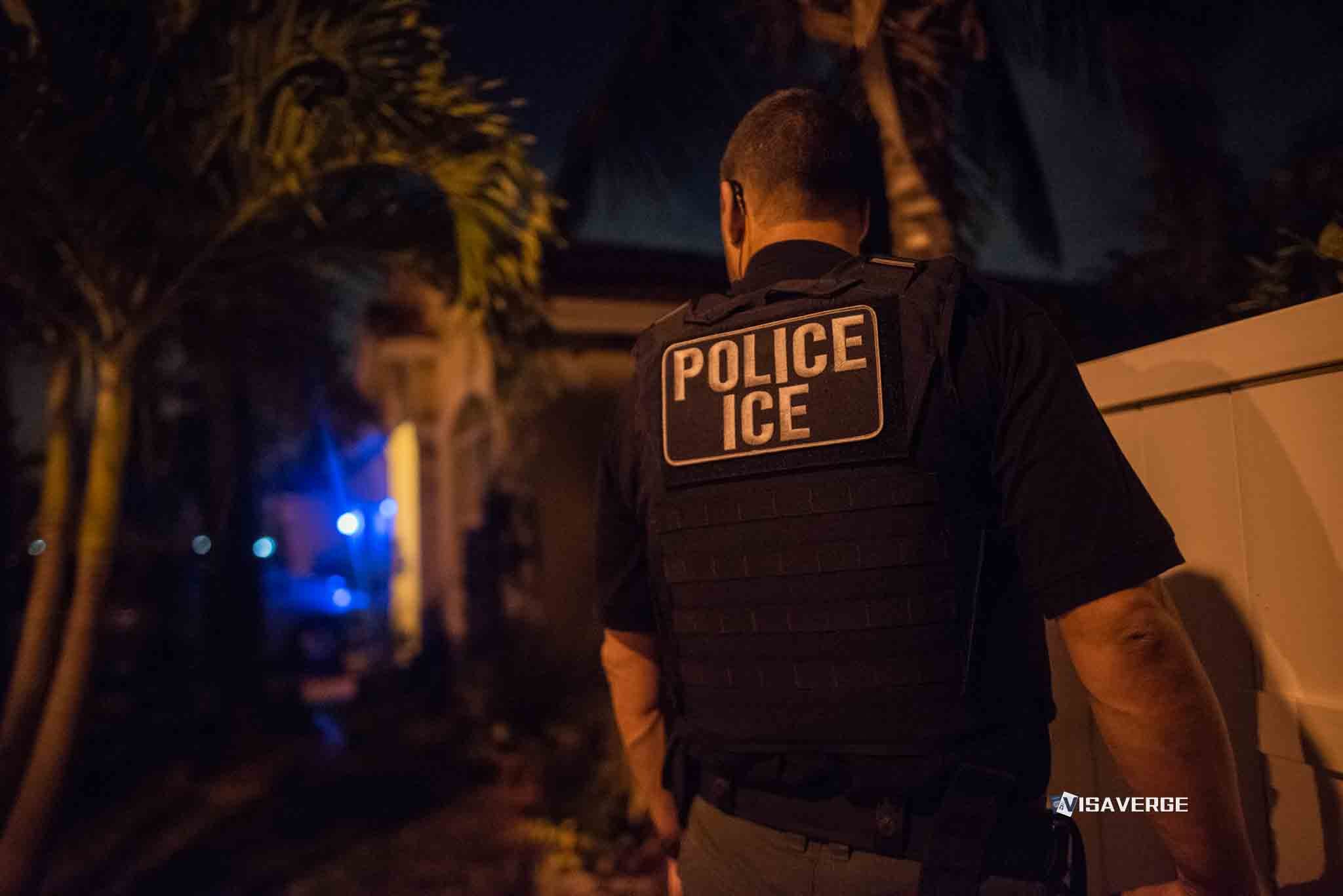
Instead of a daily fine system, DHS is pushing removal and deterrence. The department has leaned on third-country transfer deals, expanded 287(g) agreements with local police, and a sharper focus on people already in removal proceedings.
Travel restrictions have become a larger tool. Proclamation 10949, issued in October 2025, suspended entry from 12 high-risk countries. Proclamation 10998, issued in December 2025 and effective January 1, 2026, expanded that list to 39 countries, including Syria, Yemen, and Burkina Faso. The State Department also paused immigrant visas for 75 countries and non-immigrant visas for 19 countries.
USCIS has also tightened vetting and limited some employment authorization document validity to 18 months. According to analysis by VisaVerge.com, the combined effect is a system that uses delay, denial, and removal pressure more often than cash penalties.
CBP Home App and Voluntary Departure
The CBP Home app sits at the center of the voluntary departure push. DHS says the app lets some people register their departure, arrange travel, and qualify for a $1,000 stipend, free travel, and waivers of penalties tied to the proposed fine program.
Officials say the app has been used more than 50,000 times since 2025. DHS has framed it as a cheaper and faster alternative to physical arrest and transport. The administration also argues that voluntary departure reduces the burden on detention and court systems.
The same system is also part of the pressure campaign. People who do not use the app, and who later face renewed enforcement, could still encounter fines if the blocked rule is revived after litigation.
Who Faces the Highest Risk
The people most exposed are noncitizens with final removal orders, people who entered without inspection, and those who overstayed visas after lawful admission. The government has said more than 1.2 million people had pending removal issues in 2025.
The risks reach beyond the person named in a removal order.
- Undocumented workers could face debt, wage garnishment, or asset seizures if enforcement resumes.
- Families in mixed-status households face separation if one parent is removed.
- Employers face more I-9 reverifications because of shorter work permit periods.
- Sanctuary jurisdictions face pressure from expanded cooperation programs and possible funding threats.
DHS has also reported more than 1.5 million revocations of Temporary Protected Status and humanitarian parole since 2025. More than 100,000 student and worker visas have been revoked since 2025 as well.
Courts, Shutdowns, and the Policy Grind
The enforcement drive is happening during a 45-day partial shutdown in early April 2026, the longest in U.S. history. Congressional fights over enforcement funding have slowed some processing, including new fine notices.
That slowdown matters because the fine regime already struggled to collect money. In mid-2025, the administration sent out more than 10,000 notices totaling nearly $3 billion, but less than 5% was recovered. Many targeted people had little or no money to collect.
Court fights continue on several fronts. The ACLU and the National Immigration Law Center argue that immediate fines deny proper notice and hearing rights. Business groups oppose broader crackdowns because they disrupt labor supply. Immigration hardliners say consequences are needed to make the law matter.
What Immigrants, Families, and Employers Are Doing Now
People with pending or final immigration cases are watching the Federal Register, DHS notices, and court calendars closely. The official DHS site at DHS.gov remains the main government source for policy updates and enforcement notices.
People facing possible removal are also checking whether they qualify for asylum, withholding of removal, cancellation of removal, or other relief under the Immigration and Nationality Act. Others are using the CBP Home app to avoid arrest and try to leave on controlled terms.
Employers are moving faster on document reviews because short work permit validity creates compliance risk. Families with visa backlogs are watching the Visa Bulletin, but travel bans override many routine pathways. Green card and visa applicants from restricted countries face the heaviest delays.
For now, the answer to the daily-fine question is clear: the $1,000 daily fines policy has been proposed, challenged, and blocked, but not broadly enforced. The larger system is already changing through bans, removals, app-based departure programs, and the courts that are still deciding how far the executive branch can go.