(UNITED STATES) — The U.S. Supreme Court ruled on February 20, 2026, in Learning Resources, Inc. v. Trump that President Trump’s tariffs imposed under the International Emergency Economic Powers Act (IEEPA) are unlawful, a decision that could expose $175 billion in collected import duties to refund claims by importers.
Economists estimate that more than $175 billion in tariff collections could now be subject to refund claims from importers and corporations, but government lawyers have warned the path to Trump Tariff Refunds will be slow and contested. Refunds are not automatic, and timelines could stretch from months to years as companies work through U.S. Customs and Border Protection (CBP) procedures and court fights.
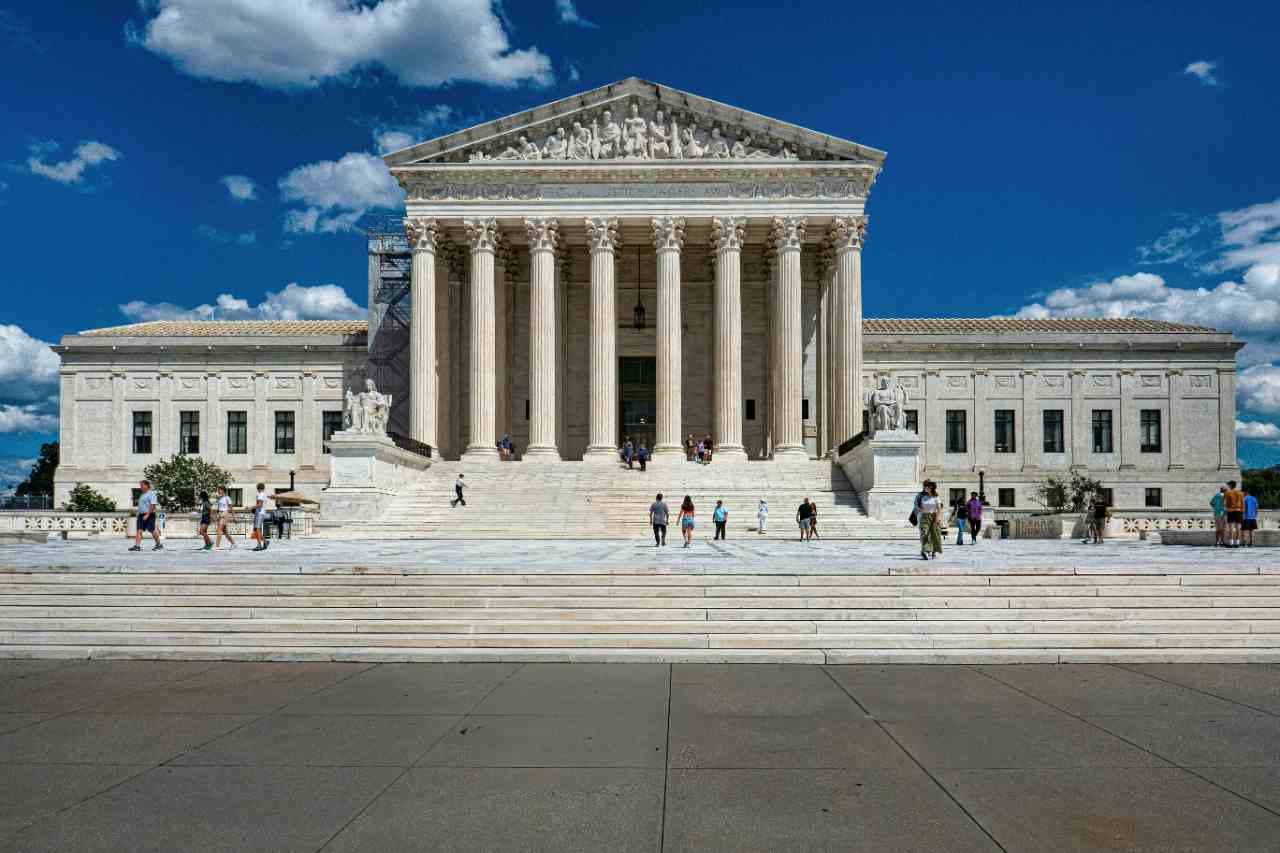
Businesses quickly began positioning for repayment after the Supreme Court ruling, while also confronting the possibility that new tariffs replace some of the struck-down duties. Hours after the decision, Trump imposed a 10% global import tariff effective February 24, 2026, under Section 122 of the Trade Act of 1974, later raised to 15% and set to expire in 150 days on July 24, 2026, unless Congress extends it.
Chief Justice John Roberts wrote the 6-3 majority opinion limiting presidential tariff authority under IEEPA. The Court held that IEEPA’s terms—“regulate” and “importation”—do not authorize the president to impose broad tariffs absent a clear congressional delegation, invoking the major questions doctrine.
Justices Neil Gorsuch and Amy Coney Barrett joined key parts emphasizing limits on executive power to avoid “unbounded tariffs” during declared emergencies. Justice Brett Kavanaugh dissented, arguing IEEPA’s text, history, and precedents support presidential authority.
The decision knocked out tariffs rooted in IEEPA but left intact other trade tools that have shaped U.S. tariff policy for years. Tariffs imposed under Section 232, tied to national security, and Section 301, tied to unfair practices, were not invalidated by this ruling.
Importers and trade lawyers said the narrowness matters because it changes how companies frame refund demands and how the executive branch pursues future tariff actions. The ruling cut off one legal route while preserving others, leaving companies to manage both refund claims and a shifting tariff environment.
Refund mechanics now sit at the center of the dispute, and the government has signaled resistance to fast payouts. U.S. Department of Justice filings warned that the refund process involves complicated legal and administrative review, courts have not yet finalized how payments should be calculated, and the government wants additional time to evaluate legal options before moving forward.
No centralized refund mechanism exists yet, forcing companies to pursue claims entry by entry through CBP systems or through litigation. Trade analysts cautioned that verifying eligibility, recalculating duties, and processing claims across thousands of companies could take months — or even years.
The most immediate dividing line for companies is whether entries are liquidated or unliquidated, a technical status that determines the available remedy and the clock for action. Unliquidated entries, not yet finalized and typically within 314 days of entry, allow importers to submit corrections within 300 days of entry or 15 days before liquidation.
Liquidated entries require a different, deadline-driven track. Importers must file a protest, using CBP Form 19 via the ACE portal, within 180 days of liquidation; missing the protest deadline bars administrative recovery.
CBP then has a long window to act on those protests. The agency has up to 2 years to decide, or an importer can sue in the U.S. Court of International Trade (CIT) under 28 U.S.C. § 1581(i), a route companies are already using in an effort to speed or preserve claims.
Payments systems also factor into how refunds, if granted, reach companies. CBP has issued refunds electronically via Automated Clearing House (ACH) since February 6, 2026, a change that could shape how quickly money moves once claims clear legal and administrative hurdles.
Litigation over timing intensified in the days after the ruling. On February 24, 2026, importers in the original case urged the Federal Circuit to order swift CIT relief, citing prior government admissions of refund obligations with interest if tariffs are unlawful.
Companies have already begun testing the refund channels. Logistics giant FedEx has filed a lawsuit seeking full reimbursement, and logistics firms and retailers lead filings in CIT as they push for recovery of import duties paid under the invalidated tariffs.
More than 1,000 companies, including major importers, have initiated claims, according to the figures cited in the dispute. The volume raises questions about administrative capacity as CBP processes protests and potential duty recalculations across thousands of entries.
For finance teams, “refund exposure” has become a cash-flow issue as much as a legal one. Importers paid an estimated $175 billion total, and even partial recoveries could affect quarterly results, inventory costs, and compliance budgets, while uncertainty forces companies to keep documentation and audit trails ready for review.
Lawmakers have also moved to shape the outcome, even as court cases proceed. The Tariff Refund Act of 2026, introduced by Senators Ron Wyden, Ed Markey, Jeanne Shaheen, and 23 Democrats, aims to mandate CBP refunds with interest within 180 days of enactment, prioritizing small businesses with Small Business Administration support and requiring 30-day congressional reports.
The bill had not passed as of February 28, 2026, leaving companies to rely on existing processes rather than a standardized program. That status matters for near-term expectations because it leaves the timetable dependent on agency action, court orders, and the pace of individual claims rather than a single statutory deadline.
Some lawmakers have argued refunds should reach consumers, saying American households indirectly paid higher prices because of the tariffs. The Wyden bill includes a sense of Congress urging it, but it does not impose a mandate.
Trump rejected the idea that the Supreme Court ruling immediately settles what happens next. President Trump stated on February 20, 2026, the ruling does not address refunds, anticipating years of litigation.
His administration pivoted quickly to a new tariff basis. The Section 122 action began with a 10% global import tariff and later rose to 15%, justified under the Trade Act of 1974 for balance-of-payments deficits, and its 150-day expiration window injects new deadlines into pricing decisions and contract negotiations.
For importers, the overlap creates a dual challenge: pursuing Trump Tariff Refunds tied to the Supreme Court ruling while paying new import duties under a different authority. Companies said that complicates landed-cost forecasts and can force frequent updates to purchasing plans as suppliers and customers renegotiate who absorbs duty changes.
The legal landscape remains active beyond the Supreme Court, with cases pending in the CIT and the Federal Circuit. That litigation posture affects how quickly businesses see decisions on protests, whether courts order broader relief, and whether the government continues to fight the scope and timing of refunds.
Trade uncertainty also spills into hiring and cross-border staffing decisions, especially for employers tied to trade-dependent sectors. Tariff volatility can slow hiring or delay projects in technology, logistics, automotive manufacturing, and supply chain management, sectors that employ large numbers of international workers and often depend on predictable budgets.
Companies facing shifting import costs may delay headcount approvals, and that can affect decisions on H-1B sponsorships, talent transfers, and multinational staffing. Employers weighing relocation packages can also adjust compensation offers when prices and input costs move quickly.
Cost pressures remain part of the debate because tariffs historically increase import costs. Previous estimates suggested U.S. households paid roughly $1,000 more annually due to tariff-driven price increases, a factor that can affect relocation affordability for international workers and influence salary negotiations for foreign professionals.
International students, skilled workers, and digital nomads often feel the impact through slower corporate expansion and tighter spending plans. Trade wars can translate into hiring freezes, slower visa sponsorship, and delayed expansion abroad, as companies wait for costs and demand to stabilize.
Despite the Supreme Court’s limit on IEEPA tariffs, several questions continue to drive boardroom and legal strategy. Eligibility turns on whether duties were paid under IEEPA and whether the relevant entries are liquidated or unliquidated, a distinction that determines the remedy path and the deadlines that control it.
Another open issue is who ultimately keeps any refunded money. Whether refunds are retained by importers or passed downstream can vary by contract terms, competitive pressures, and supply-chain relationships, leaving consumer impact uncertain even if companies recover large sums.
Timing remains hard to predict even with clear day-count rules, because administrative processing, disputes over calculations, and payment execution can extend timelines. The Supreme Court ruling set the legal baseline, but it did not create a court-ordered payment deadline for refunds, and the government has signaled it will contest key steps.
Replacement tariffs add another layer. With the Section 122 tariff active at 15% through July 2026 unless Congress extends it, importers must decide how to price goods and negotiate contracts even as they pursue refunds for earlier duties, keeping the broader trade fight alive in courts, agencies, and Congress.
Supreme Court Invalidates Trump Tariffs, but Refunds Face Lengthy Delays
The Supreme Court’s ruling in Learning Resources, Inc. v. Trump has invalidated IEEPA-based tariffs, opening the door for $175 billion in corporate refunds. However, the recovery process remains slow and contested, requiring specific filings through CBP. Simultaneously, the Trump administration has implemented new global tariffs, maintaining trade volatility. This legal shift forces companies to manage complex refund litigation while adapting to a rapidly changing regulatory environment.