- 01The Supreme Court delayed its decision on the legality of Trump’s expansive tariff regime until mid-January.
- 02The case examines whether the President overstepped authority by bypasssing Congress to impose high import duties.
- 03Market uncertainty is stalling hiring and investment, particularly affecting trade relations between India and the United States.
(WASHINGTON, D.C.) — The US Supreme Court on January 9, 2026, declined to issue a decision on the legality of President Donald Trump’s sweeping tariff regime, prolonging uncertainty for global markets and cross-border business tied to India and the United States.
The ruling, anticipated by investors and trade partners, was postponed with the court expected to resume decisions by January 14, 2026. The case, Learning Resources Inc. v. Trump, challenges whether the president can impose sweeping tariffs under the International Emergency Economic Powers Act (IEEPA) without explicit Congressional approval.
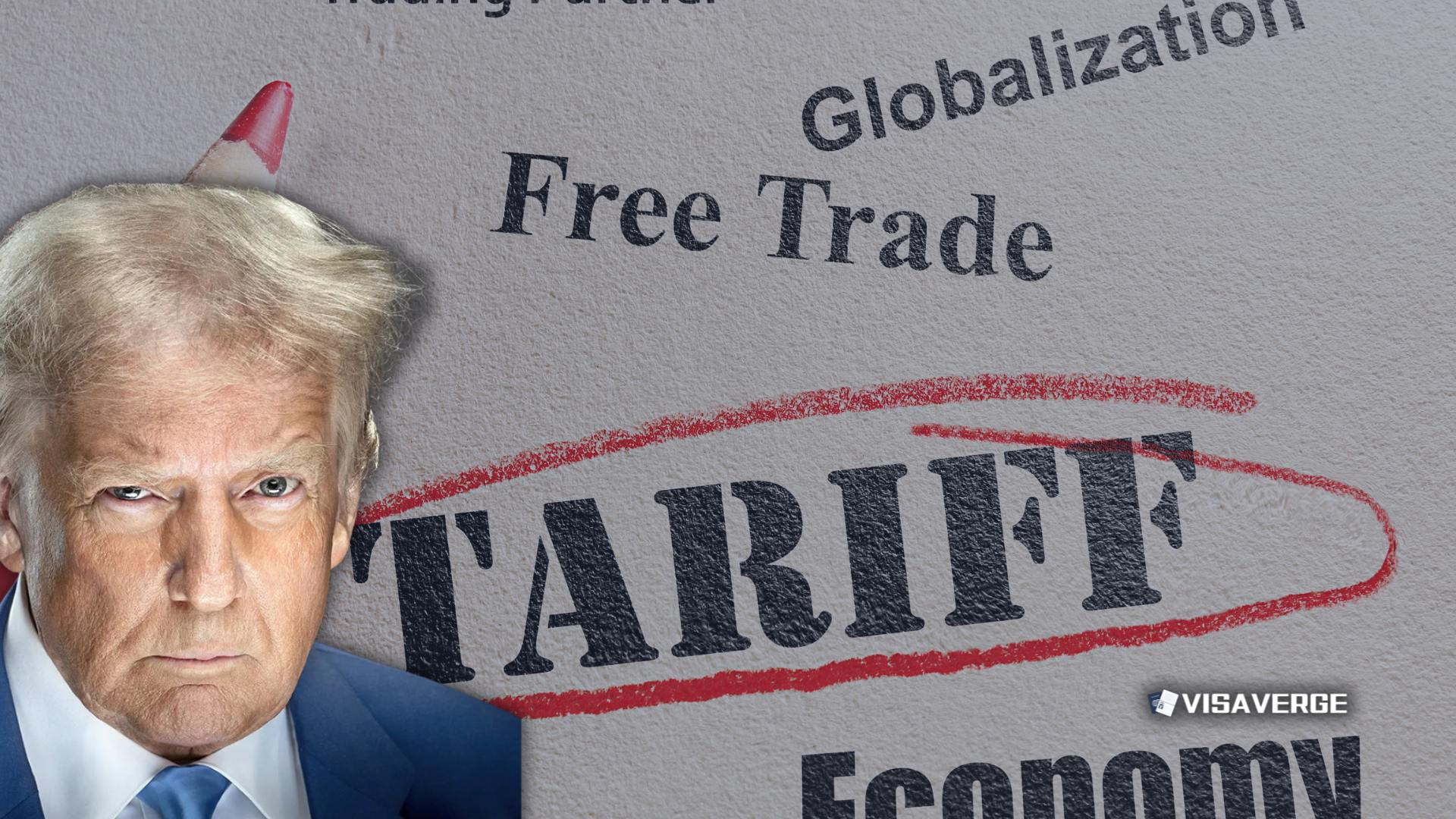
the delay extends a period of ambiguity that has rippled beyond trade and into hiring, study plans, and travel-linked business activity. Employers and institutions are weighing budgets amid shifting costs and demand caused by the tariff uncertainty.
Core Legal Issue and Lower Court Rulings
At the center of the dispute is whether IEEPA authorizes a president to impose broad tariffs without Congress specifically approving them. Trump’s measures imposed 10–50% duties on numerous imports, including on countries like India, and were justified by the administration on grounds such as trade imbalances and national security concerns.
lower courts have ruled that the president exceeded his authority under IEEPA. By holding back a decision on January 9, the Supreme Court left unresolved how far the statute reaches when a president seeks to “regulate importation” through duties that function like taxes on imports.
during oral arguments on November 5, 2025, justices grappled with the meaning of “regulate importation” in IEEPA. Some pressed the administration on whether “regulate” equates to the power to “tax,” a framing that placed the case at the intersection of trade policy and constitutional limits on who can raise revenue.
The court is weighing two central questions: whether Congress delegated tariff authority to the president under IEEPA, and whether the statute’s language permits such expansive tariff imposition. The deliberations have also centered on two constitutional doctrines, the major questions doctrine and the non-delegation doctrine.
CB S News legal contributor Jessica Levinson attributed the delay to timing, noting the case was argued November 5 followed by Thanksgiving and the holiday break. The justices raised serious questions about presidential authority during oral arguments, suggesting the complexity of the issues requires careful deliberation.
Court Schedule and Next Steps
The next potential opinion session is scheduled for January 14, 2026. The court indicated opinions may also come in the second week of the January sitting, with the next non-argument day scheduled for February 20.
Market and Economic Effects
Markets have reacted to the lingering uncertainty, with India’s benchmark indices the Sensex and Nifty falling for the fifth consecutive session. Export-oriented sectors, particularly those tied to trade with the U.S., were particularly affected as investors tried to price in the risk that the tariff regime could be either upheld or dismantled.
The ambiguity has weighed on foreign institutional investment flows, which are closely watched by Indian markets and can affect consumer confidence and jobs. For companies that import into the United States or build supply chains around U.S.-bound exports, the absence of a Supreme Court answer has kept planning tied to scenarios rather than settled rules.
More than 1,000 companies are suing Trump over his tariffs in anticipation of potential refund obligations if the president loses the Supreme Court case. The tariffs have generated billions of dollars in revenue and significantly impacted global trade relationships, adding to the stakes of a ruling that could force repayment and trigger administrative and financial challenges for the government.
Impacts on Hiring, Immigration, and Education
For employers, the tariff uncertainty also intersects with immigration choices, even though visas are not directly set by tariff law. U.S. companies that hire skilled professionals on H-1B visas, including many Indian nationals, may face indirect pressure if tariff-linked economic slowdown impacts hiring plans or budgets.
That pressure can appear first in forecasting and staffing decisions rather than in formal immigration policy. Companies may trim new roles, delay start dates, or reconsider expansion plans when import costs rise or export demand becomes harder to predict, potentially influencing how many H-1B positions they pursue in a given cycle.
The same uncertainty can spill into employment-based permanent residence. Companies sponsoring employment-based Green Cards could adjust hiring timelines or job offers if broader uncertainty affects business strategy, particularly when projects depend on cross-border sourcing, pricing stability, or predictable customer demand.
Non-resident Indians involved in consulting, travel, or business can also be exposed to the indirect effects. Trade tension signals may affect short-term project flows, particularly in sectors like technology, education services, and professional training, as clients respond to tighter budgets or shifting priorities.
Digital nomads and remote workers serving U.S. clients may face contract and project volatility, especially where foreign exchange, tariffs, or supply chain challenges influence client budgets. The pressure point is not immigration status, but payment cycles and the willingness of firms to commit to new work during tariff uncertainty.
The student pipeline is another area where trade policy can reverberate through labor markets. Many Indian students pursue undergraduate and graduate degrees in the U.S. on F-1 visas, and the tariff issue, while not directly linked to visas, can influence post-study job prospects if economic headwinds hit hiring.
Graduate employment opportunities in sectors such as finance, engineering, IT and manufacturing can be affected when multinational firms reconsider costs and expansion. Optional Practical Training (OPT) roles, common in STEM fields, may see reduced availability if companies implement hiring freezes or cuts in response to weaker demand or higher input costs.
Internship placements with multinational companies can also shift if corporate demand changes. Institutions with strong career services may adjust outreach and employer engagement strategies in anticipation of changes in corporate recruiting, as students and schools track which sectors remain active and which pull back.
Broader Administrative and Legal Context
The uncertainty is amplified because the Supreme Court case sits at the junction of emergency powers and trade. If the court limits executive tariff authority, it could signal relief for global trade flows and reduce uncertainty in markets, giving importers and exporters clearer expectations for pricing and supply decisions.
If the court upholds broad presidential tariff powers under IEEPA, trade tensions may persist or expand, potentially affecting cross-border supply chains, import and export pricing, investor sentiment and hiring plans among multinational employers. The question is not simply whether a given duty stays in place, but how much future tariff policy can be driven by presidential emergency authority.
The broader administrative context has become more complex as the United States adds layers to its tariff toolkit. The number of U.S. tariff legal regimes increased from 18 in December 2025 to 20 in January 2026, adding to compliance burdens for companies already tracking multiple overlapping rules.
Section 301 tariff measures addressing China’s semiconductor interventions and Nicaragua’s labor practices were finalized in December, though tariffs will not be imposed until 2027. By the end of 2025, there were 50 tariff-related modifications to the U.S. tariff code, adding more than 100 pages to the base document.
Customs rulings issued in 2025 exceeded 2,100 through mid-December, reflecting frequent changes and aggressive federal enforcement actions that can force companies to revisit classifications, pricing, and sourcing. For firms operating between India and the United States, that compliance churn can translate into higher administrative costs and delays that filter into staffing and investment choices.
The Supreme Court’s eventual decision is also being watched for what it signals about constitutional constraints. The court’s deliberations have addressed whether Congress must speak clearly when delegating authority over issues of vast economic significance, and how much discretion can be handed to the executive without clear standards.
Those questions matter to companies because they determine whether tariffs can become a more routine lever of executive action rather than a tool bounded by narrower statutory lanes. A broader reading could make tariff shocks more frequent, while a narrower one could reduce the odds of sudden swings driven by emergency declarations.
Practical Implications and Timing
The timing now concentrates attention on January 14, 2026. For markets, employers and students, the wait has become a planning problem measured in weeks, not years, as firms set quarterly budgets and students weigh internship and job timelines tied to academic calendars.
For Indians abroad and those preparing to study or work in the United States, the main effect is indirect and economic rather than procedural. The extended ambiguity in U.S. trade policy adds another layer to decisions about employment visas, job searches, and study prospects, as costs and hiring appetite can shift with each turn in the tariff debate.
For those planning U.S. travel, employment, study or long-term relocation, staying informed on policy changes including trade, tariffs, taxation and labor markets remains essential. The tariff regime now under review is shaping both pricing decisions and the pace of hiring tied to cross-border work.