- Indian citizens require an e-visa for Russia as of April 2026 because the visa-free deal remains pending.
- The electronic visa permits a 16-day stay for tourism, business, and cultural activities within its 60-day validity.
- Official talks continue with a potential rollout by late 2026 if bilateral discussions progress at the BRICS summit.
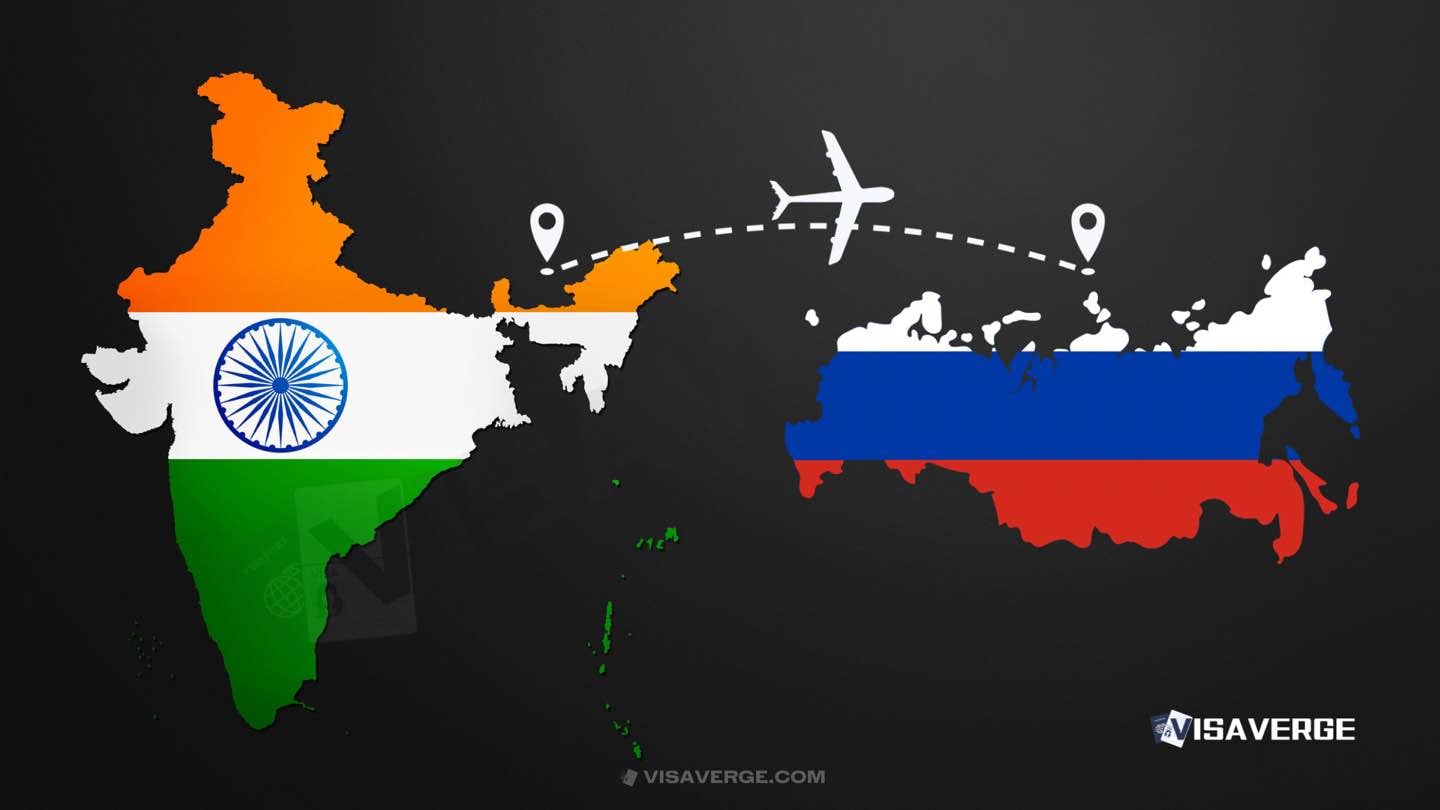
(RUSSIA) — Russia still requires Indian citizens to obtain a visa for entry, with the unified e-visa remaining the main route for short visits as of April 2026 and the proposed visa-free arrangement still not in force.

Indian nationals can use the single-entry e-visa for tourism, business, sports, cultural, scientific, or commercial activities that do not involve work. The document stays valid for 60 days from issuance and allows a maximum stay of 16 days from the entry date.
That leaves no visa-free option for Indian travelers despite a plan announced in late 2024 to introduce visa-free entry by spring 2025. Russian officials have not enacted that policy, and Indian passport holders must still apply for an e-visa, a regular tourist visa or another appropriate visa type.
The e-visa system, launched in August 2023, remains fully operational and now covers more nationalities. India, however, does not appear on Russia’s list of visa-exempt countries, even as it has become one of the heaviest users of the electronic system.
In late 2024, Evgeny Kozlov, Chairman of the Moscow City Tourism Committee, said Russia aimed to let Indian citizens enter visa-free for up to 30 days for tourism and business. The proposal was meant to mirror arrangements with 55+ countries including Thailand and UAE.
That plan stalled. Discussions slowed amid geopolitical tensions tied to Russia’s ongoing war in Ukraine, reciprocal travel restrictions, administrative delays and security vetting needs.
A January 2026 statement from the Russian Foreign Ministry confirmed there was no timeline for India and said Russia was prioritizing visa-free pacts with Gulf states. In a March 2026 interview, Kozlov said Moscow still backed the idea and projected a possible rollout by late 2026 if bilateral talks moved forward during the BRICS summit.
For now, the electronic system acts as a stopgap. Kozlov described a 20% rise in e-visa applications from Indians in Q1 2026 as a “bridge to visa-free future.”
Usage has climbed sharply. Russia issued over 12,000 e-visas to Indian citizens in the first half of 2025, up from 9,500 for all of 2023, making India one of the top recipient countries and accounting for roughly 7% of total e-visas.
Another set of figures points to wider uptake through the year. Russia issued 25,300 e-visas to Indians in 2025 from January to October, with 70% granted for tourism.
Applicants must file online through the Russian Ministry of Foreign Affairs e-visa portal, upload a passport photo, a scanned passport data page and proof of accommodation or invitation. For tourism, they do not need an invitation letter, which makes the process simpler than a traditional visa application.
Processing usually takes 4 calendar days. Russia does not offer an expedited option for the e-visa, and the fee stands at approximately 52 USD, or around 4,300 INR, on a non-refundable basis.
Travelers also face document checks at the border. They must carry a valid passport with at least 6 months validity beyond their planned departure from Russia, an approved e-visa printout, a return or onward ticket, proof of sufficient funds, a hotel booking or invitation letter, and travel medical insurance covering at least 30,000 EUR across Russia.
Officials can deny entry when documents are incomplete or do not match the application. Overstays can bring fines up to 5,000 RUB, about 500 INR, and possible bans.
The e-visa does not cover every type of trip. Holders cannot use it for employment, study or private visits, and they must enter and leave through designated airports, seaports or land borders such as Moscow’s Sheremetyevo and St. Petersburg’s Pulkovo.
Indian citizens who need longer stays or who travel for purposes outside the e-visa rules must use other visa categories. Russia offers a tourist visa for up to 30 days with single or double entry, a business visa for up to 90 days with multiple entry possible, a private visa for up to 90 days for visits to friends or relatives, and separate work and student visas handled through employers or universities.
Processing times for regular tourist visas run from 4-20 days through Russian consulates in Delhi, Mumbai and Chennai. Applicants can also use VFS Global centers in India, where fees range from 4,000-8,000 INR plus service charges.
Russia also introduced a group tourist e-visa pilot in 2025 for organized Indian tour groups of at least 3 people. The 16-day permit targeted wedding tourism, and more than 2,500 Indians had used it by Q4 2025.
Travel patterns show why the visa issue matters to both countries. Moscow received 35,200 Indian tourists in H1 2025, up 23% from 28,500 in H1 2024, and projections for full-year 2025 put arrivals at 85,000, up 42% from 60,000 in 2023.
Across the country, Russia hosted 122,000 Indian tourists in 2025. That ranked India fourth among non-CIS countries, behind China, Turkey and Iran.
Business travel also grew. India placed second among non-CIS business visitors to Moscow, with 12,400 arrivals in H1 2025 after a 35% rise that year.
Russian officials have tied the push for easier entry to that growth. Popular destinations for Indian travelers include Moscow’s Red Square, St. Petersburg’s Hermitage and events such as the 2026 BRICS Business Forum.
Trade and tourism figures add to the case for simpler travel. India-Russia bilateral trade reached $65 billion in 2025, and tourism contributed $250 million.
Russian planners say visa-free access could raise Indian spending sharply. Their target would double annual spending to $500 million.
Cultural ties have expanded as well. Moscow hosted 15 Indian cultural festivals in 2025 and drew 50,000 attendees, while Indian weddings in Russia rose 40% to 120 events and generated $15 million.
Officials have also pointed to infrastructure aimed at Indian travelers. Moscow added 8,000 hotel rooms by 2026 and remained on track for 25,700 by 2030.
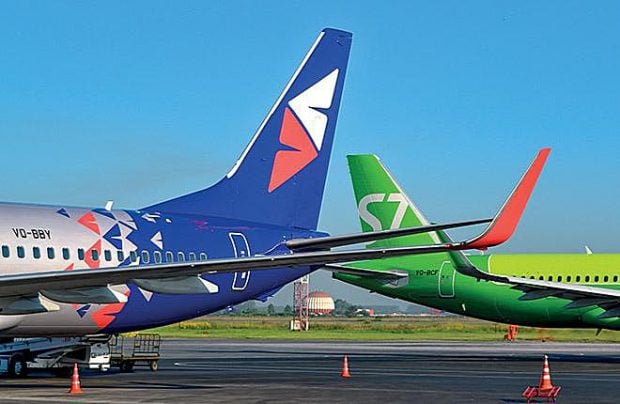
Air links have widened despite longer flight paths. Air India now operates a daily Moscow-Delhi route, while IndiGo runs a weekly St. Petersburg-Mumbai service.
Russian airports have added Hindi signage and Indian cuisine lounges. At the same time, flight bans from EU airspace have pushed up fares, with a Delhi-Moscow roundtrip costing 45,000-60,000 INR.
India’s Ministry of External Affairs has advised travelers to exercise caution because of the proximity of the Ukraine conflict. Russia has lifted COVID-era rules, but biometric entry scans remain mandatory at airports.
Russia’s broader visa policy shows the gap between political ties and travel access. The country’s visa-free list covered 64 countries as of 2026 and favored BRICS+ allies, yet India remained outside that group.
Russia added Saudi Arabia in Jan 2026 for stays of 90 days. Its e-visa system now covers 55 countries, and India has benefited from that system since 2023 rather than from visa-free travel.
For transit passengers, one limited exception exists. Indians can travel visa-free for 72 hours through Moscow/Sheremetyevo if they hold a confirmed onward ticket to a third country.
Russia does not offer visa on arrival for Indians. That leaves advance planning as a fixed part of travel.
Applicants with short itineraries still have a relatively straightforward route. Officials advise travelers to apply 2-4 weeks in advance, budget around 1,500 INR for insurance and keep all paperwork consistent from application to arrival.
The e-visa approval rate has remained high. Indian applications succeeded 95% of the time in 2025, though rejections rose for incomplete applications, reaching 10%.
Moscow and New Delhi have kept the issue alive at the political level. During the October 2025 India-Russia summit, Prime Minister Narendra Modi and President Vladimir Putin tasked ministers with finalizing a deal by 2027.
Tourism authorities have already projected what a deal might bring. The Moscow Tourism Committee forecasts 150,000 Indian visitors after visa-free travel begins, adding $400 million to the economy.
Until that happens, the rule for Indian citizens remains unchanged. They can travel to Russia, but they cannot do so visa-free, and the e-visa remains the practical entry document for most short trips.