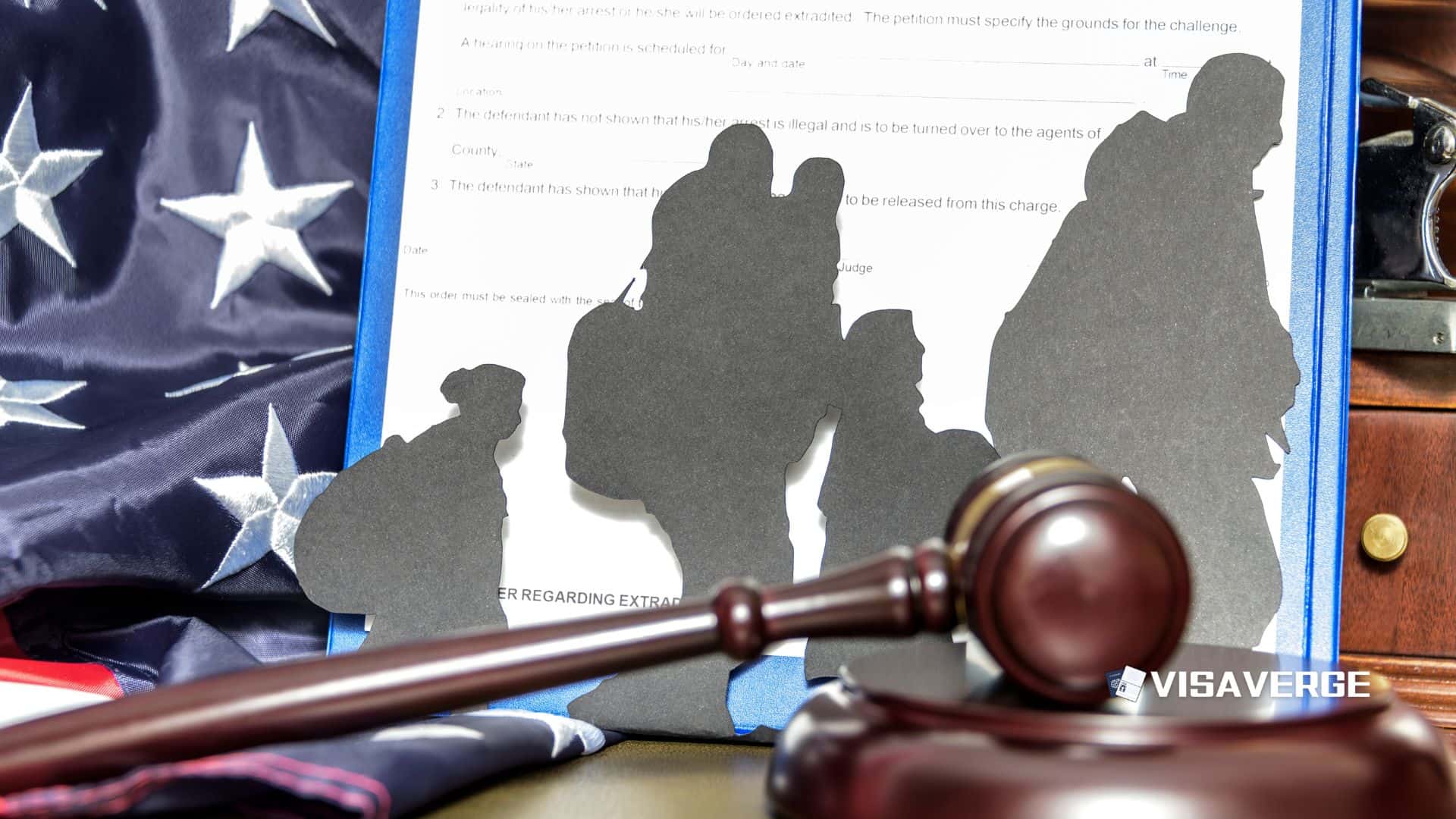
(MINNEAPOLIS, MINNESOTA) Concepcion Macias-Pulido, a 49-year-old woman from Rosemount, Minnesota, was taken into custody by ICE agents inside a federal building in Minneapolis on Wednesday after she showed up for what she believed was the final step in her long pursuit of a green card. Her family and lawyer say she walked into a U.S. Citizenship and Immigration Services interview and did not walk out, pulled aside because of a decades-old lie at the border.
What happened at the border in 1998
Attorney Sarah Dhawan-Maloney said the detention stems from Macias-Pulido’s entry to the United States 🇺🇸 from Mexico 🇲🇽 in 1998 with her then-2-year-old daughter. During that crossing, she briefly lost sight of the child, and relatives say panic and fear drove her to tell border officials she was a U.S. citizen. “She was desperate,” her adult son, Angel Silva, said in an interview, recalling family accounts of the moment.

Silva said his mother had hired smugglers (often called coyotes) to help her make the trip and to reunite with her daughter after the separation. That false claim, Dhawan-Maloney said, triggered a deportation order that never went away — even as Macias-Pulido built a life in the Twin Cities area, worked, and raised her children.
Over the years she obtained a work permit and a Social Security number, and later applied to adjust her status to become a lawful permanent resident.
Why the old statement matters legally
Dhawan-Maloney explained that U.S. immigration law treats a false claim to U.S. citizenship as one of the hardest mistakes to fix. Because Macias-Pulido was never “lawfully admitted” after that 1998 crossing, she was not eligible for the kind of green card processing that happens inside the country.
“Would she have been detained at the interview on Wednesday under a previous administration? No, probably not,” Dhawan-Maloney said.
Her lawyer said the old border statement made her ineligible and left ICE agents with an order they could act on as soon as she appeared for her interview.
Custody, likely deportation, and lack of ICE comment
Macias-Pulido remained in ICE custody as of the latest reports in December 2025, and her attorney said deportation appears likely unless a court or the Department of Homeland Security intervenes. ICE declined to comment on her case.
Context: Operation Metro Surge and community impact
The arrest has rattled immigrant families across Minnesota, coming as federal officers run what the Trump administration has labeled Operation Metro Surge, a targeted enforcement push that began on December 1, 2025.
The administration has described the operation as aimed at arresting “the worst of the worst,” including people with criminal histories and those with outstanding deportation orders. But lawyers say the sweep has also reached people who were trying to follow the rules, including those showing up for scheduled appointments with USCIS.
Macias-Pulido’s detention at a green card interview became a touchstone for that fear because it played out in a setting many immigrants view as a place to seek legal status, not a trapdoor into removal.
Legal challenges and community response
- Four immigrants arrested in Minneapolis since the operation began filed federal lawsuits challenging their detention.
- Court records show 11 such cases were filed in Minnesota federal court in December 2025.
- Many plaintiffs are seeking asylum or contesting whether they can legally be removed.
These suits highlight the pressure on local legal aid groups and private lawyers, who say they are rushing to file emergency requests for release while clients are transferred between detention facilities.
Statements from Minnesota officials
Gov. Tim Walz (D) has been among the loudest public critics, calling the ICE operations “chaotic,” “racially motivated,” and “reckless.” He said Somalis in particular have reported being questioned or stopped in ways that stoke distrust.
- Walz said he has sent letters to Homeland Security Secretary Kristi Noem but has not received answers.
- He pointed to reports of U.S. citizens being detained, including a Somali-born woman from Edina who was held for more than 24 hours and released only after producing a passport.
- Walz also cited a case involving a 20-year-old named Mubashir who was detained and later released.
In Rosemount, city officials moved quickly after the surge began. On December 2, 2025, the city said its police department will:
– not ask about a person’s immigration status,
– not help federal agents with enforcement work, and
– not hold someone solely for an immigration violation.
Those local assurances did not prevent Macias-Pulido’s arrest at her USCIS appointment in Minneapolis, underscoring that immigration enforcement is primarily a federal responsibility.
The practical fallout for applicants and families
Her family said she had prepared for the interview as a hopeful milestone, gathering records to show her ties to Minnesota and her work history. After she was detained, relatives said they were left scrambling for information, calling hotlines and trying to track where she was being held.
Dhawan-Maloney warned that arrests at interviews can deter other applicants from showing up, even when they have pending applications or mandatory appointments. According to analysis by VisaVerge.com, detentions tied to immigration interviews can spread quickly through immigrant networks and change behavior, even among people with valid work permits or pending petitions.
- Some clients have asked whether they should skip interviews or check-ins.
- Skipping an appointment can trigger denial of an application and, in some cases, lead to an arrest later.
The legal distinction at the heart of many cases
The legal issue often turns on the difference between being physically present in the United States 🇺🇸 and being admitted in a way immigration law recognizes.
Many people apply for permanent residence through a process called adjustment of status; USCIS explains that process on its official page about Adjustment of Status. But lawyers say that route is closed to people who:
– entered without inspection, or
– made a false claim to citizenship, unless a narrow exception applies.
In Macias-Pulido’s case, the old border statement made her ineligible for adjustment of status and left ICE with an outstanding order they could enforce at her interview.
Human implications for the family
For Macias-Pulido’s family, the case is less about policy labels than the idea that one mistake made in a moment of panic can erase years of steady work and parenting.
Silva said his mother has lived in Minnesota for decades, tried to keep her head down, and believed that applying for a green card showed good faith. The family is now weighing what deportation to Mexico 🇲🇽 would mean, including:
– separation from relatives who are U.S. citizens,
– loss of a job that helps pay Rosemount bills, and
– the emotional toll of sudden removal.
With no public comment from ICE on her file, Dhawan-Maloney keeps repeating the clear detail: the arrest happened at the interview itself, in plain view of the system she hoped would finally recognize her place here.
Broader patterns and next steps
Lawyers note that many people learn about an old deportation order only when they try to legalize their status, because notices were often mailed years earlier to addresses that changed. Once ICE takes someone into custody:
1. the government can move quickly to place them in removal proceedings before an immigration judge,
2. families scramble to find where their loved one is held, and
3. attorneys may file challenges to the way arrests were carried out or requests for release while claims are adjudicated.
In Minnesota, the recent wave of federal court filings shows some detainees are contesting their arrests or arguing for release during hearings. In Macias-Pulido’s case, no reports after December 2025 have described a release, and her lawyer said the lack of eligibility for adjustment leaves few options beyond fighting in court for now.
Concepcion Macias-Pulido, 49, was detained by ICE at a Minneapolis USCIS green card interview after a 1998 false claim to U.S. citizenship resurfaced, producing an outstanding deportation order. The arrest occurred during Operation Metro Surge, which began Dec. 1, 2025, and has prompted at least 11 federal cases in Minnesota. Lawyers and local officials criticize the sweeps for reaching people pursuing legal status. Macias-Pulido remains in custody as legal challenges continue.