(DOHA, QATAR) — Qatar Airways suspended all flights on March 1, 2026, after the closure of Qatari airspace amid regional hostilities, stranding transit passengers in Doha and disrupting travel plans for people trying to reach or depart the United States.
The airline’s operations remained halted until at least midnight UTC on March 2, 2026, a cutoff that left many connecting itineraries in limbo as airlines and airports tried to reposition aircraft and crews.
Doha’s role as a major Gulf hub made the stoppage an immediate problem for families, corporate travelers and visitors trying to keep to tight travel schedules, including U.S. visitors who must depart on time to avoid immigration consequences.
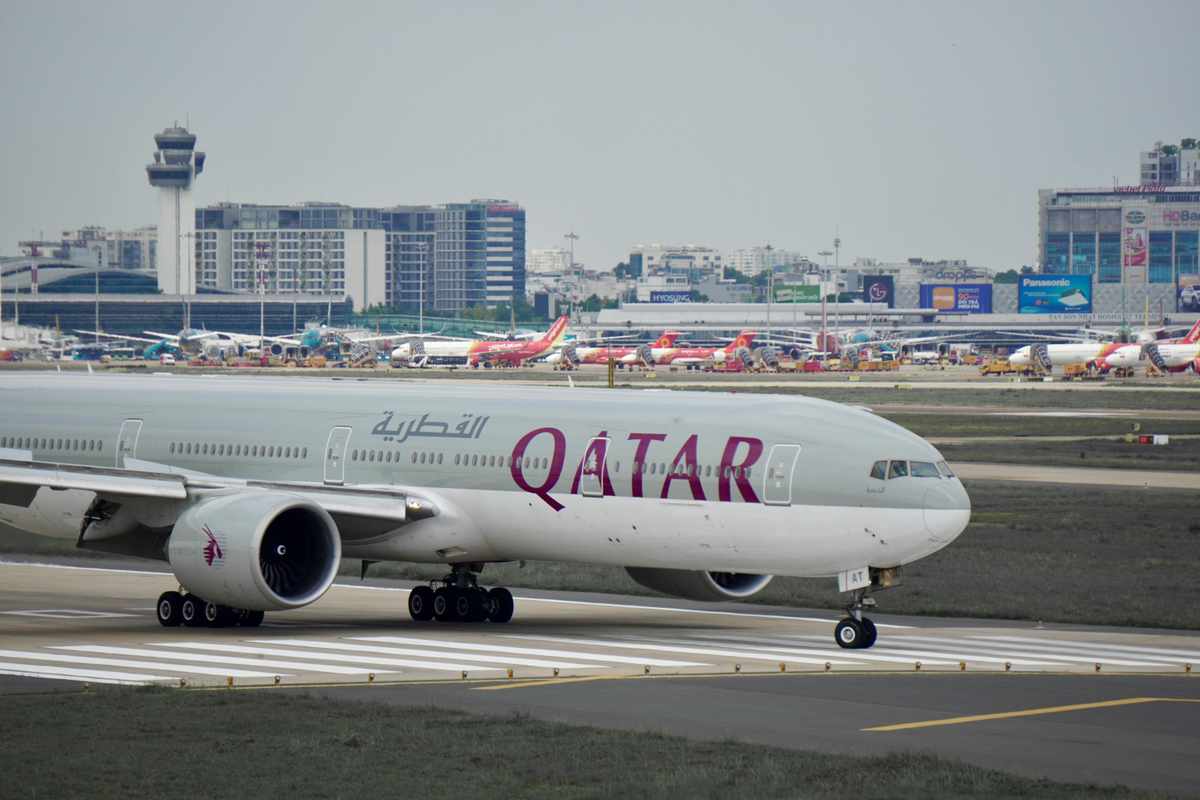
The disruption hit key corridors between Doha and India, with routes to cities including Delhi, Mumbai, Bengaluru, Hyderabad, Chennai, and Kochi among those affected, limiting options for passengers who rely on the carrier to connect between North America and South Asia.
Many of those travelers use short stays in the United States on a B-1/B-2 visa, a category that covers business and tourism and often involves fixed return dates tied to work, family obligations, or onward travel arrangements.
When flights are canceled and seats become scarce, travelers can find themselves unable to leave the United States before their authorized stay ends, turning an airline disruption into an immigration problem with long-term consequences.
A core issue for nonimmigrants is the difference between visa validity and authorized stay, because the visa stamp does not control how long someone can remain in the United States.
The I-94 record controls the period of authorized stay, and for some travelers caught in this disruption, that “admit until” date can fall in the middle of canceled flights and limited rebooking options.
Under INA Section 222(g), B-1/B-2 visa holders whose authorized U.S. stay expires during this disruption face immediate visa cancellation if they remain even one day past their I-94 expiration, rendering the visa void for future U.S. entry.
That outcome can force travelers to seek a new visa at a U.S. consulate in their home country, even if they planned to make only a routine departure and return later on the same visa.
The highest pressure has fallen on itineraries that depend on Doha as a single connection point, because taking one major hub offline can cascade into missed connections, reroutes across multiple countries, and long waits for confirmed seats.
Passengers trying to return from the United States to India can face a bottleneck when large numbers of people try to rebook through a smaller pool of alternative routings, especially during a sudden stop tied to airspace restrictions.
Rerouting through other hubs can help, but the available seats may not match the immediate need of travelers whose status depends on departing before an I-94 expiration.
Alternatives cited by travelers and advisers include Istanbul or Addis Ababa hubs, though seats are scarce, creating a timing problem for people with imminent “admit until” deadlines.
Qatar Airways offered rebooking or refunds for the next 7 days through its website or mobile app, as stranded passengers sought to salvage itineraries and avoid further knock-on effects.
Some travelers have focused on getting out on any available route rather than waiting for a preferred itinerary, because departing promptly prevents the accrual of unlawful presence after the authorized stay ends.
Unlawful presence generally begins after the I-94 expiration, and even short overstays can create complications far beyond the immediate trip, including tougher scrutiny when applying for future U.S. visas.
One consequence highlighted by immigration advisers is that a visa can be automatically canceled under INA 222(g) after a 1+ day overstay without departure, with future visas denied or scrutinized via the Consular Lookout System (CLASS).
The legal escalation can become steeper if an overstay stretches from days into months, because statutory reentry bars can attach once certain thresholds are met.
A traveler who departs after 180+ days but less than 1 year of unlawful presence faces a 3-year reentry bar under 8 U.S.C. § 1182(a)(9)(B), according to the penalty framework cited by advisers.
A traveler who departs after 1+ year of unlawful presence faces a 10-year reentry bar, adding a long-term penalty that can reshape future work, family and travel plans.
The disruption itself does not automatically waive these rules, even if an overstay results from canceled flights and a sudden collapse of normal routing options.
Documentation can still matter later, because travelers may need to explain how they tried to depart, what cancellations occurred, and why they could not secure an earlier flight.
Even short overstays can carry other risks, including expedited removal risks, deportation proceedings, fines, and ineligibility for the Visa Waiver Program or bond programs.
One example cited in the overstay advisory notes is a 2025 DOS pilot requiring $5,000–$15,000 bonds for high-overstay countries, forfeited upon violation.
The immediate travel shock also spread beyond Doha, with Gulf hub closures in Doha, Dubai, and Abu Dhabi canceling more than 1,239 flights that day alone and stranding thousands, with Indian VFR and corporate travelers described as the most impacted.
Despite the intensity of the disruption, no widespread “panic” reports existed as of March 2, 2026, even as travelers and advisers warned that missed departures can have outsize immigration consequences.
A practical first step for affected U.S. visitors is verifying their exact authorized stay, because the relevant deadline is not the date on a ticket but the date on the I-94 record.
Travelers can verify their I-94 expiration through the U.S. government’s I-94 website at i94.cbp.dhs.gov, as advisers urged people to confirm the “admit until” date rather than relying on assumptions.
Some visitors who cannot depart in time consider asking the U.S. government for more time, but that route can be demanding and slow.
One commonly referenced option is filing an extension request with U.S. Citizenship and Immigration Services before the I-94 expiration using Form I-539, an application advisers described as requiring evidence of the need for extra time.
Processing can take about ~4–12 months, with a cited fee of about ~$470, which means the value of the filing often lies in meeting the deadline rather than receiving a quick decision.
Advisers also pointed to the importance of evidence, including Qatar Airways cancellation notices, rebooking attempts, and other records tied to unavoidable travel disruption.
Some travelers also seek guidance directly from USCIS at 1-800-375-5283 for case-specific advice, particularly when their I-94 deadline falls within the period of widespread cancellations.
The advisory notes also warned that overstay greater than 5 days bars MRV fee refunds without extension proof, adding another cost concern for people who later need to apply again after a visa becomes void.
For travelers who later face bars or other penalties, immigration attorneys have advised documenting airline emails and other disruption records for potential waiver eligibility, including Form I-601 if bars apply later.
In the near term, the practical problem remains seats and timing, because large-scale cancellations funnel passengers into competing reroute options while airlines manage aircraft availability and airport constraints.
That scramble can be especially acute for India-bound travelers who normally rely on Doha connections, because the affected routes include several of the biggest city pairs used by families and business travelers.
The resulting delays can place people in a narrow window where a single missed departure date may trigger INA Section 222(g) consequences, followed by additional penalties if unlawful presence accumulates.
In that environment, travelers have tried to balance the immediate need to leave with the longer-term need to preserve eligibility for future U.S. travel, including work trips, family visits, or repeat tourism.
For many, the decision comes down to whether they can depart promptly on any routing, or whether they must remain and seek an extension while collecting evidence that the disruption prevented a timely departure.
With Qatar Airways still halted until at least midnight UTC on March 2, 2026, and more than 1,239 flights canceled across Gulf hubs that day, the most immediate immigration stakes have centered on one document: the I-94 “admit until” date.