- Muscat International Airport remained a stable hub amidst widespread regional airspace closures and airline disruptions.
- Precision strikes on Tehran caused Dubai International closure, forcing nearly 1,800 flight cancellations across the Gulf.
- Airlines rerouted flights through Oman and Egypt to maintain connectivity between Asia and Europe.
(MUSCAT, OMAN) — Muscat International Airport kept flights moving as disruption rippled across Gulf aviation networks after precision strikes on Tehran triggered airspace closures and airport shutdowns across the region.
Airlines and travel agents shifted passengers and aircraft toward Oman’s capital because reliability, not size, became the decisive advantage in a week when major hubs lost their predictability.
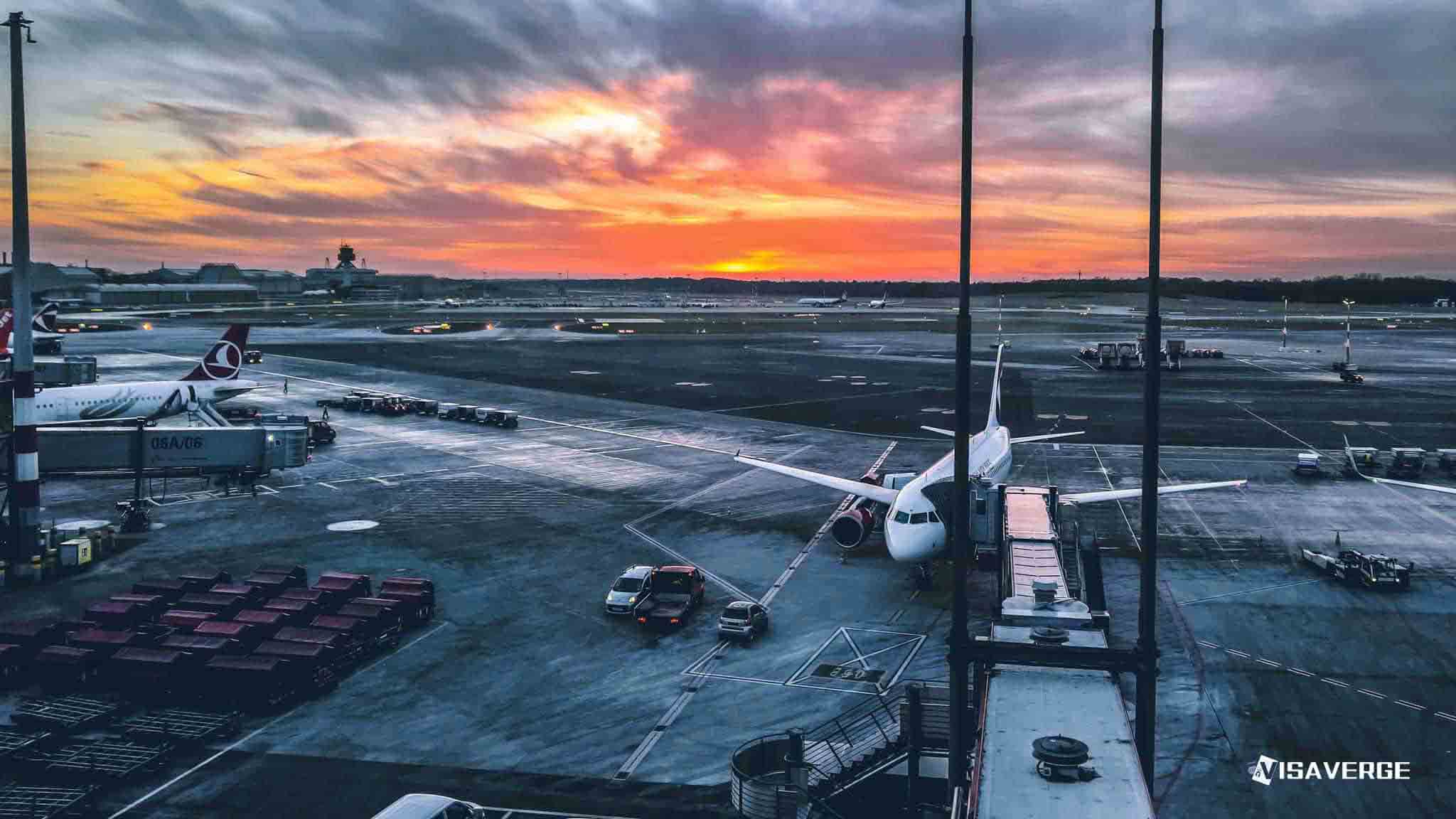
Muscat’s operational stability mattered for travelers trying to protect onward connections and for carriers trying to keep aircraft rotations intact, as diversions and cancellations spread well beyond the immediate conflict zone.
The aviation shock began after precision strikes on Tehran on February 28, 2026, which set off rapid restrictions that can propagate quickly through hub-and-spoke networks when carriers lose safe corridors and schedule buffers.
Dubai International Airport sustained damage and closed completely, removing a central transfer point and intensifying knock-on effects for airlines that typically rely on Dubai for regional and long-haul connectivity.
Across the Gulf, airspace closures and airport shutdowns forced carriers to cancel and reroute at speed, with uneven outcomes that left some airports effectively unusable for transfers while others stayed functional.
An estimated 1,800 flights were cancelled across the region, and flight maps showed a “ghost sky” over Iran, Iraq, Kuwait, Israel, and Bahrain.
The uneven pattern created acute passenger problems at transfer points, including Hamad International Airport in Doha and Charles de Gaulle in Paris, where travelers were stranded as Gulf connections broke and onward flights to Asia and the Americas became harder to reach.
For airlines, the challenge extended beyond a single closed runway or restricted corridor, because missed connections can cascade into crew displacement, aircraft out-of-position problems, and a fast-growing backlog of rebookings.
Muscat emerged as an alternative node because it stayed operational while neighboring states imposed precautionary restrictions, allowing carriers to preserve some continuity and rebuild connections through a still-usable hub.
The airport also benefited from crisis-era hub metrics that airlines track closely, including cancellation levels, reroute feasibility, onward connectivity, and the practical ability of ground handling systems to absorb irregular operations without stalling.
Oman’s relatively low flight cancellation rate contrasted with sharper disruption elsewhere in the region, pushing airlines and passengers to treat Muscat as an emergency exit when other Gulf routings failed.
Even in Oman, carriers trimmed operations to manage risk, with Saudi Airlines suspending select services and Oman Air announcing cancellations to destinations like Dubai, Doha, Kuwait and Bahrain, while keeping the wider airport operation functioning.
By March 3, 2026, Air India Express officially resumed operations from Muscat after temporary disruptions, a signal that at least some airlines saw the airport as stable enough to restart schedules.
Airlines weighed route continuity against fast-changing constraints, prioritizing safe corridors, workable aircraft rotations, and crew positioning that limits how long disruptions persist once the airspace picture begins to stabilize.
The closure of major Gulf airports created a bottleneck for international aviation, particularly on Asia–Europe flows where travelers often rely on Gulf hubs for transfers and where lost capacity can quickly spill into multi-day inventory shortages.
Airfares between Asia and Europe have significantly increased following the airport closures, with airline websites showing fully booked tickets for multiple days.
Andrew Stark, Global Managing Director of Flight Centre Travel Group Australia, reported a “75 percent increase in incoming calls” to the company’s stores and emergency hotlines since the crisis began.
To keep flying around closed Middle Eastern airspace, airlines routed flights either north over the Caucasus through Afghanistan or south via Egypt, Saudi Arabia, and Oman, increasing flight times and fuel burn as oil prices rose.
Eric Schouten, head of aviation security advisory Dyami, warned that “passengers and airlines can expect airspace to be shut for quite some time.”
Carriers and travelers will watch for concrete operational signals in the coming days, including changes to approved corridors and the pace at which hubs restore reliable connectivity, because Muscat’s role can persist as long as neighboring airspace remains restricted.