- 01Nationwide ‘ICE Out For Good’ protests erupted in Portland following recent federal shootings.
- 02Local and national groups demand accountability and transparency after the killing of Renée Nicole Good.
- 03Portland police arrested 79 individuals during demonstrations near a federal ICE facility.
(PORTLAND) — Hundreds of people rallied against ice and border Patrol in Portland on Saturday, joining a nationwide “ICE Out For Good” mobilization after the fatal shooting of 37-year-old Renée Nicole Good in Minneapolis and the wounding of two people by Border Patrol in Portland.
Organizers and participants cast the Portland demonstrations as both a local response and a solidarity action tied to Minneapolis, arguing that federal immigration enforcement tactics have put residents at risk in multiple cities.
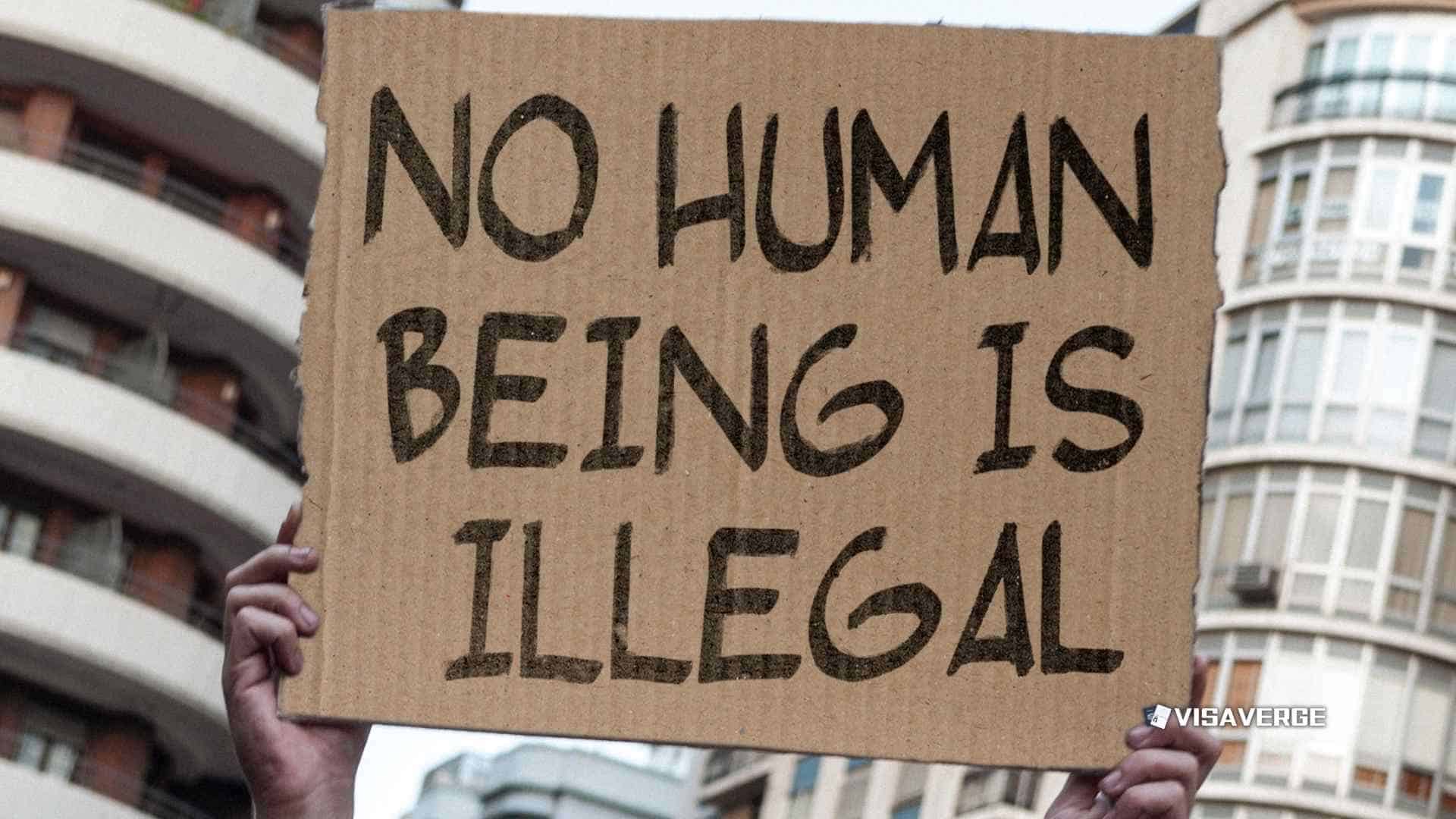
Saturday’s gathering unfolded in a city where protests have continued since Thursday’s Border Patrol shooting, and where police have monitored crowds near an ICE facility in the South Portland neighborhood.
The mobilization was planned for January 10 and 11, Axios reported, after ice officers shot and killed Good as she drove past immigration officers in Minneapolis on Wednesday.
Organizers told Axios that “Good and the victims in Portland represent a troubling and pattern of violence by federal enforcement agencies.”
In Minneapolis, ICE agent Jonathan Ross shot and killed Good in her vehicle, and the Trump administration claimed it was self‑defense as she allegedly tried to flee, a claim Minneapolis Mayor Jacob Frey rejected.
In a New York Times op‑ed, Frey called the shooting “sadly predictable” and demanded that federal agents “get the f*** out” of his city.
Thursday’s shooting in Portland involved U.S. Border Patrol agents who shot a man and a woman during what authorities described as “a targeted vehicle stop,” sending both to the hospital.
Oregon Public Broadcasting reported the shooting happened in Portland’s Hazelwood neighborhood, and said protests continued in the city on Saturday in response.
Politico reported that the protests are unfolding as the U.S. Department of Homeland Security carries out what it calls its “biggest‑ever immigration enforcement operation” in the Twin Cities.
The Trump administration has maintained that both the Minneapolis and Portland shootings were acts of self‑defense against drivers who “weaponized” their vehicles to attack officers, Politico reported.
Frey, responding to the federal deployment and the broader political reaction, warned that “This is what Donald Trump wants. He wants us to take the bait.”
Minnesota Gov. Tim Walz posted: “Trump sent thousands of armed federal officers into our state, and it took just one day for them to kill someone. Now he wants nothing more than to see chaos distract from that horrific action. Don’t give him what he wants.”
The ICE Out For Good Coalition coordinated the weekend protests, Mother Jones reported, describing a network that includes Indivisible, the American Civil Liberties Union, Voto Latino, United We Dream, and MoveOn.
Leah Greenberg, co‑executive director of Indivisible, told Mother Jones: “The murder of Renée Nicole Good has sparked outrage in all of us. Her death, and the horrific nature of it, was a turning point and a call to all of us to stand up against ICE’s inhumane and lawless operations that have already killed dozens before Renee.”
“The murder of Renée Nicole Good has sparked outrage in all of us. Her death, and the horrific nature of it, was a turning point and a call to all of us to stand up against ICE’s inhumane and lawless operations that have already killed dozens before Renee.”
Katie Bethell, civic action executive director for MoveOn, said: “For a full year, Trump’s masked agents have been abducting people off the streets, raiding schools, libraries, and churches. None of us want to live in a country where federal agents with guns are lurking and inciting violence at schools and in our communities.”
“For a full year, Trump’s masked agents have been abducting people off the streets, raiding schools, libraries, and churches. None of us want to live in a country where federal agents with guns are lurking and inciting violence at schools and in our communities.”
Deirdre Schifeling, chief political and advocacy officer with the ACLU, stated: “The shootings in Minneapolis and Portland were not the beginning of ICE’s cruelty, but they need to be the end. These tragedies are simply proof of one fact: the Trump administration and its federal agents are out of control, endangering our neighborhoods, and trampling on our rights and freedom. This weekend Americans all across the country are demanding that they stop.”
“The shootings in Minneapolis and Portland were not the beginning of ICE’s cruelty, but they need to be the end.”
Accounts of what happened in Minneapolis and Portland have diverged sharply, with federal officials describing the shootings as defensive actions while local leaders and advocates press for scrutiny and an independent accounting.
Mother Jones identified the slain driver as Renée Nicole Good and the ICE shooter as agent Jonathan Ross in Minneapolis, and confirmed that Border Patrol shot a man and a woman in a car in Portland.
In Portland, the police response has focused on managing crowds near the ICE facility while distinguishing local law enforcement from federal immigration enforcement.
The Portland Police Bureau said it activated an Incident Management Team on the evening of Thursday, January 8, 2026, to monitor protest activity near the ICE facility in the South Portland neighborhood.
PPB deployed the Rapid Response Team, Dialogue Liaison Officers, Mobile Field Forces, and a Sound Truck, describing a posture aimed at crowd management as demonstrations moved near streets and the building.
PPB described a crowd near the ICE building where, around 9 p.m., officers repeatedly broadcasted requests for people to move to the sidewalk while traffic remained open.
Targeted arrests followed, with police identifying those taken into custody and listing charges that included Riot, Disorderly Conduct II, and Interfering with a Peace Officer.
Police identified Ezekiel Mclain, 28, of Portland, and said he was charged with Riot, Disorderly Conduct II, Interfering with a Peace Officer.
PPB identified Benjamin J. Davis, 24, of Portland, and said he was charged with Riot, Disorderly Conduct II, Interfering with a Peace Officer.
Officers arrested Seth Todd, 24, of Clackamas, Oregon, and said he was charged with Disorderly Conduct II, Interfering with a Peace Officer.
Police identified Jordan Brokaw, 28, of Portland, and said he was charged with Disorderly Conduct II.
PPB identified Ashley Daugherty, 48, and said she was charged with Disorderly Conduct II, Interfering with a Peace Officer.
At 11:30 p.m., PPB reported a separate arrest of Daryn Herzberg, 35, of Portland, for Disorderly Conduct II after allegedly refusing to stop using amplified sound equipment despite warnings.
All were booked into Multnomah County Detention Center, police said.
PPB said that, “to date, the total number of arrests related to ICE protest activity is 79.”
The bureau also sought to draw a clear boundary between city policing and federal immigration action, emphasizing that it “does not engage in immigration enforcement” under PPB Directive 810.10, but is “responsible for maintaining public safety and enforcing state laws.”
The Portland protests have been framed by participants as a response to shootings in two cities, with Minneapolis and Portland repeatedly paired in signs, chants, and statements from national groups involved in the ICE Out For Good Coalition.
In that framing, Good’s killing has served as a catalyst for the weekend actions, with organizers presenting the Minneapolis death as an inflection point and the Portland shooting as evidence of immediate local stakes.
Politico, describing the national context around the protests, highlighted personal stories from outside the Pacific Northwest as people traveled or gathered in their own cities.
Steven Eubanks, 51, attended a protest in Durham, North Carolina, because of what he called the “horrifying” killing of Renée Good, Politico reported.
“We can’t allow it,” Eubanks said. “We have to stand up.”
Axois reported that as of Friday evening there were 580 events planned nationwide and organizers expected more than 1,000 would ultimately take place.
Mother Jones likewise noted that “more than 1,000 demonstrations are slated for Saturday and Sunday” after federal immigration agents shot three people in the past week, killing one.
Even as the events rolled out city by city, organizers emphasized a shared set of demands centered on accountability and oversight, linking calls for investigations to broader objections to the presence and tactics of ICE and Border Patrol in communities.
The coalition’s stated goals for the weekend protests include to “Demand accountability, transparency, and an immediate investigation into the killing of Renee Nicole Good,” “Build public pressure on elected officials and federal agencies,” and “Call for ICE to leave our communities,” according to Mother Jones.
In Portland, that message has traveled alongside a separate set of local questions about what happened in Hazelwood, where Oregon Public Broadcasting reported Border Patrol shot a man and a woman in a car during the stop federal authorities described as “a targeted vehicle stop.”
In Minneapolis, the political argument has been more explicit, with Frey rejecting the administration’s self‑defense description and publicly confronting the federal presence in his city, including with the op‑ed demand for agents to “get the f*** out.”
Walz, in his statement, urged residents not to be drawn into “chaos,” while focusing attention on the death itself and the federal deployment that preceded it.
As the weekend demonstrations continue, the immediate next steps many protesters are pressing for are investigative and procedural, not rhetorical, including demands for “accountability” and “transparency” and for an “immediate investigation” into Good’s killing.
Organizers have also sought to keep pressure on elected officials and federal agencies, presenting the coordinated ICE Out For Good actions as a sustained campaign rather than a single day of street protests.
For Portland, the focus has remained split between the broader national solidarity with Minneapolis and the city’s own confrontation with a Border Patrol shooting that sent two people to the hospital, keeping Minneapolis and Portland linked in the weekend’s calls for federal scrutiny and limits on enforcement activity in communities.