- Defense Secretary Pete Hegseth cancelled 93 fellowships at 22 elite universities and policy think tanks.
- The directive targets Senior Service College placements at institutions like Harvard, MIT, and Brookings starting 2026.
- Future partnerships will prioritize schools exhibiting alignment with American values and national security realism.
(UNITED STATES) — The Pentagon barred US Army officers from enrolling in Senior Service College fellowship programs at 22 universities and policy institutions and cancelled 93 fellowships, under a directive that takes effect in the 2026–2027 academic year.
US Defense Secretary Pete Hegseth issued the memorandum, titled “Aligning Senior Service College Opportunities with American Values,” on February 27, 2026, removing the schools from the approved Professional Military Education partner list for future placements.
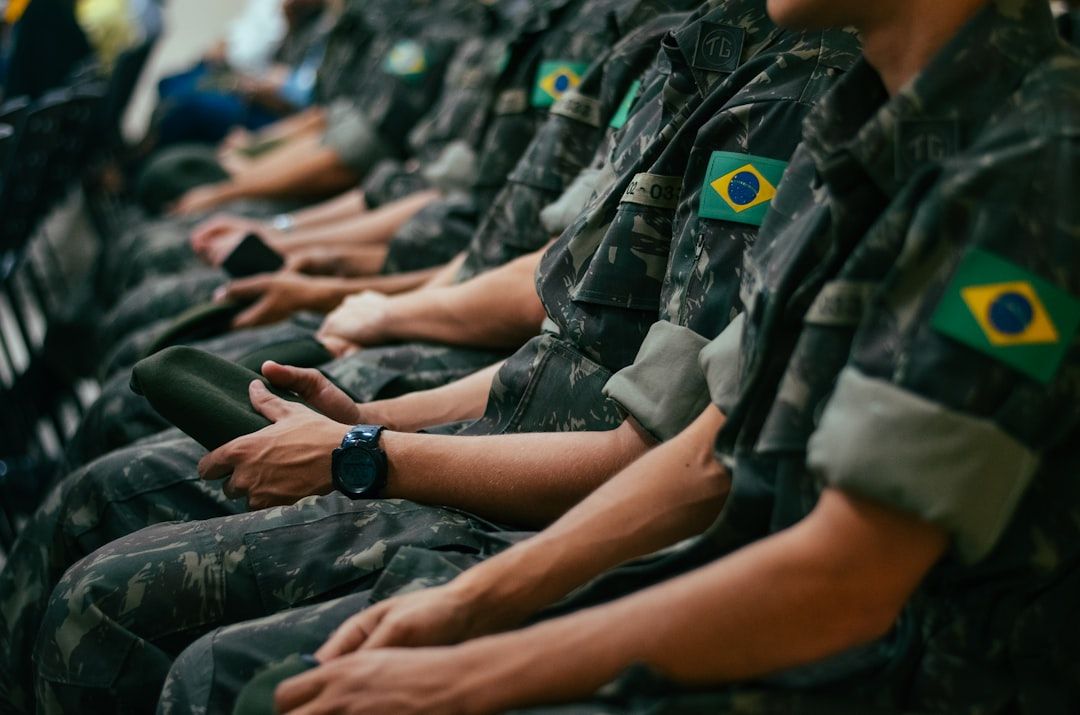
The change, often summarized as the Pentagon Bars move affecting US Army Officers and 93 Fellowships, targets Senior Service College fellowship slots tied to those partner institutions rather than establishing a broad prohibition on officers attending the schools through other routes.
The best-known institutions removed include Harvard University, the Massachusetts Institute of Technology, Yale University, Columbia University, Princeton University, Georgetown University, Brown University, Tufts University, Carnegie Mellon University, and George Washington University.
Canadian and Washington-based policy institutions also appear on the list, including Queen’s University, the Brookings Institution, the Atlantic Council, the Council on Foreign Relations, and the Center for Strategic and International Studies.
Hegseth’s directive applies only to future fellowship placements and allows officers already enrolled to complete their programs, the Pentagon said.
The memo frames new partner expectations around “intellectual freedom,” along with requirements that institutions maintain minimal relationships with adversaries and show limited public opposition to the department, while offering strong national security or public policy programs.
The list of 22 removed institutions includes Harvard University; Saint Louis University; MIT; Tufts University; Georgetown University; Carnegie Mellon University; Brown University; Columbia University; Yale University; Middlebury College; Princeton University; George Washington University; College of William and Mary; Queen’s University; Center for Strategic and International Studies; New America Foundation; The Brookings Institution; Atlantic Council; Center for a New American Security; Council on Foreign Relations; The Henry L. Stimson Center; and Johns Hopkins University SAIS – West Space Scholars Program.
While the directive identifies which institutions lose approval, the cancellations in practice translate into fewer civilian-campus placements for senior officers who use the fellowship year as part of strategic education.
For decades, Pentagon-funded fellowships at civilian universities have served as a route for senior officers to pursue advanced training in strategy, public policy, technology, international affairs, and defense-related research.
Those placements also embedded officers in university and think-tank networks that shape national security debates, often linking military education to external research communities and policy circles.
The shift lands on institutions with deep connections to defense and emerging technology, including Carnegie Mellon, which India Today noted hosts the Army’s Artificial Intelligence Integration Center.
Johns Hopkins University SAIS also holds defense-related links through Space Force partnerships, one example cited as the Pentagon narrows the approved list of Senior Service College fellowship partners.
Hegseth tied the February 27 memorandum to an earlier directive, “Rebuilding the Warrior Ethos in Professional Military Education,” which he issued on February 6, 2026.
The Department of Defense also cast the fellowship decision as part of a broader “Rapid Force-Wide Review of Military Standards,” linking partner eligibility to wider standards the department says it is applying across military education.
In describing what should replace the cancelled placements, the memo points toward a revised partner group that includes a mix of civilian institutions, senior military colleges, and Defense Department-affiliated programs and centers.
Potential replacements named include Liberty University, George Mason University, Pepperdine University, the University of Michigan, and the University of Florida.
The memo also points to senior military colleges including The Citadel and Virginia Polytechnic Institute, alongside Defense Department programs such as the Africa Center for Strategic Studies.
Other civilian institutions referenced as potential replacements include Hillsdale College, Clemson University, Baylor University, and Auburn University, as the Pentagon directs services to identify and onboard revised partners.
For officers, a reshaped partner list can alter the geographic hubs where fellows spend their year, the curricula emphasized during the placement, and the professional networks built through campus and policy-institution ties.
The directive also sets out transition rules that preserve continuity for current participants, by keeping in place programs already underway while closing off new fellowship starts at the removed institutions for the 2026–2027 academic year.
Hegseth said the policy aims to sharpen senior leader education around realism and the country’s founding principles.
“We must develop strategic thinkers through education grounded in the founding principles. focused on our national strategies and grounded in realism. We will no longer invest in institutions that fail to sharpen our leaders’ warfighting capabilities or that undermine the very values they are sworn to defend,” Hegseth said in the memo and a February 27, 2026, video on X.
He also used broader language to describe the institutions removed from the approved list.
Hegseth described removed schools as “factories of anti-American resentment and military disdain” that have “gorged themselves on a trust fund of American taxpayer dollars” while promoting “wokeness and weakness.”
The February 6 action that preceded the wider February 27 directive included a line aimed at Harvard, where Hegseth said, “Harvard is woke; The War Department is not.”
The operational effect of the new standards is that future Senior Service College fellowship partners must meet criteria the Pentagon links to “rigor, realism, and mission relevance,” while also satisfying the requirements it laid out on intellectual freedom, limited adversary ties, limited public opposition to the department, and strong graduate-level programs in national security, international affairs, or public policy.
In higher education, the directive signals a shift in how Washington chooses to route Pentagon-funded fellowship flows, potentially changing which programs receive cohorts of senior officers who often contribute to seminars, research groups, and policy projects during a fellowship year.
Several of the removed institutions sit at the center of national security research and technology discussions, and the cancellation of fellowship slots reduces one of the formal channels that placed senior officers inside those ecosystems.
The move does not create a general admissions ban, and it does not prevent domestic or international students from applying to the affected universities and policy institutions.
The directive also does not, by itself, change student visa eligibility rules, even as universities and international students track how national security priorities influence higher education partnerships and the prestige attached to certain programs.
For universities, the immediate impact is concentrated on Pentagon-funded Senior Service College fellowship placements, a narrow but visible marker of institutional standing in military education circles.
For international students, faculty, and visiting scholars, the policy change serves mainly as a signal about federal priorities and how defense-facing relationships may shape collaboration narratives, rather than as a direct change to immigration policy.
The Pentagon’s focus on future placements means the near-term disruption centers on the selection and matching process for the 2026–2027 academic year, as services adjust approved partner options and rebalance fellowship cohorts.
The department’s direction toward a revised partner group also suggests further administrative steps, including updated approved lists and service-by-service guidance that typically cascades through military education channels as selection cycles proceed.
As the 2026–27 cycle approaches, officers competing for Senior Service College fellowships and institutions seeking partner status are likely to watch for updated lists and implementation guidance, while the Pentagon continues to reshape where senior leaders spend a year of civilian-affiliated study.