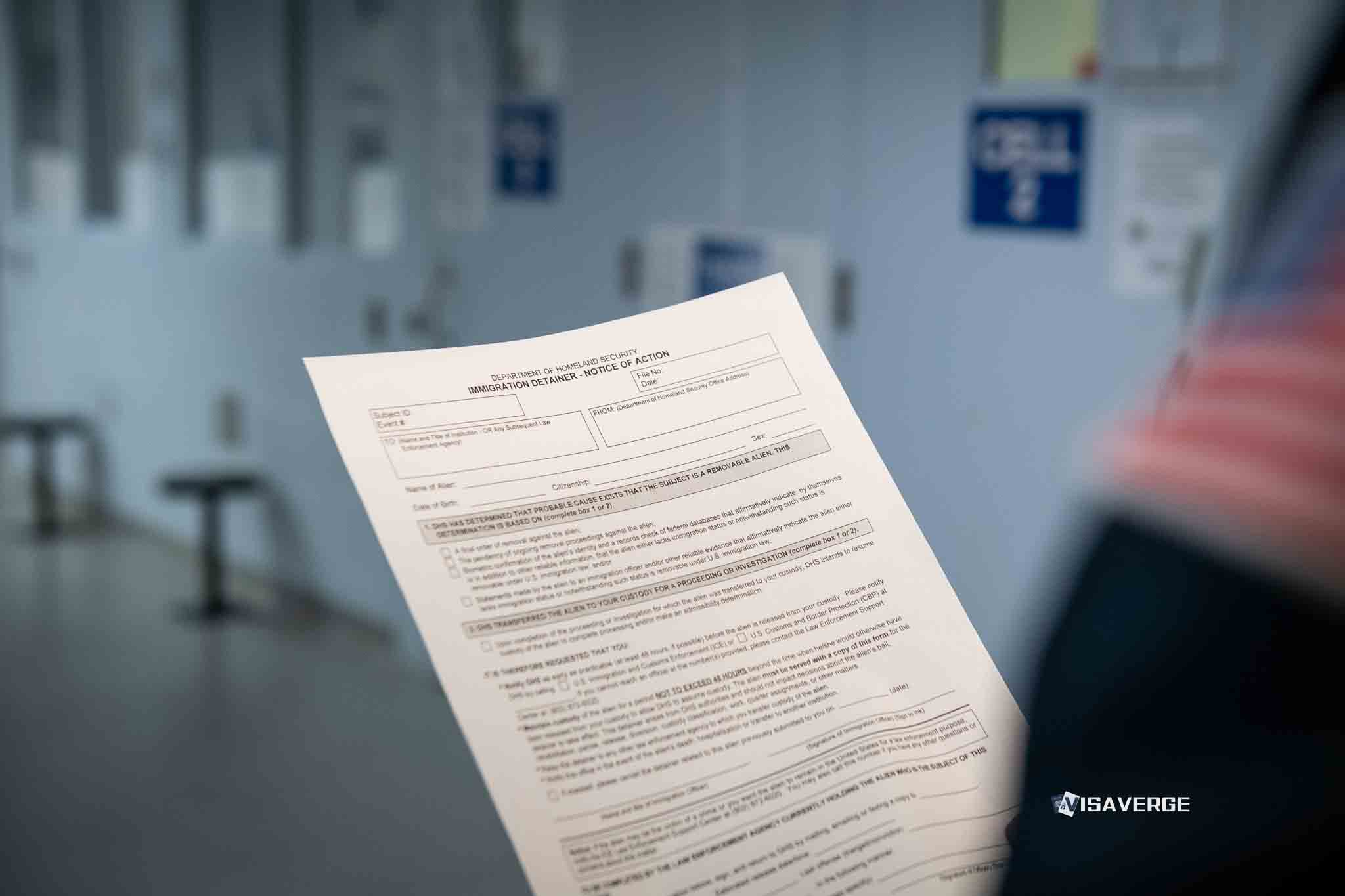
- ICE arrested over 206 people in Maine during ‘Operation Catch of the Day’ in late January.
- Detainees are being scattered across six states, often without notice to families or their legal counsel.
- Federal judges found ICE violated no-transfer orders, leading to the mandated release of several detained individuals.
After ICE arrested over 200 people in Maine during “Operation Catch of the Day,” families and lawyers say detainees are being scattered to facilities across six or more states — often without notice. Attorneys report ICE’s own tracking system has become unreliable, leaving loved ones desperate to find where detained immigrants have been taken.

ICE Detainee Tracking System Unreliable
Immigration attorneys report that ICE’s online detainee locator has become increasingly unreliable, with detainees appearing and disappearing from the system. Several people have been shuffled through five or more facilities in under three weeks. Neither ICE nor DHS responded to requests for comment.
Transfers Without Notice
Lawyers report that ICE is moving detainees without notifying attorneys or family members. While ICE policy requires notifying detainees and their attorneys, the agency is not required to alert family members. Multiple attorneys have filed statements saying clients were moved “very suddenly, without notice.”
What Happened: Operation Catch of the Day
On January 20, 2026, ICE launched “Operation Catch of the Day” across Maine, describing it as an effort targeting “the worst of the worst criminal illegal aliens.” The operation, which ran through January 24, resulted in 206 confirmed arrests — primarily in Greater Portland and Lewiston. DHS said the operation targeted approximately 1,400 people in total. However, reporting from multiple Maine news organizations suggests the operation swept up many people with no criminal records, including asylum seekers, workers with valid visas, and even corrections officers.
📅 Key Events Timeline
Where Detainees Are Being Held
Maine does not have a dedicated ICE detention facility, so detainees are held at local jails under federal contracts or transferred out of state. Since the Cumberland County Jail in Portland stopped holding ICE detainees, the problem has worsened. Attorneys say detainees from Maine have been identified at facilities in at least six states, often far from their families and legal counsel.
| Facility / Location | State | Distance from Portland, ME | Notes |
|---|---|---|---|
| Plymouth County Correctional Facility | Massachusetts | ~100 miles | Regional holding; receives frequent transfers from Maine |
| ICE Boston Field Office (Burlington) | Massachusetts | ~100 miles | Processing center for New England detainees |
| Donald W. Wyatt Detention Facility | Rhode Island | ~180 miles | Received some Cumberland County transfers |
| Federal Correctional Institution Berlin | New Hampshire | ~170 miles | Proposed 1,500-bed ICE facility in Merrimack, NH under review |
| South Louisiana ICE Processing Center | Louisiana (Basile) | ~1,700 miles | At least 9 Maine detainees identified; tent conditions reported |
| ICE Staging Center (Alexandria) | Louisiana | ~1,600 miles | Transit facility; detainees moved onward to other states |
| Detention facilities (Mesa & Florence) | Arizona | ~2,500 miles | At least one Maine detainee held after multiple transfers |
| ICE facility (unspecified) | Texas (near San Antonio) | ~2,000 miles | Multiple Maine residents transferred here |
| ICE facility (unspecified) | Missouri | ~1,400 miles | Erik Orellana-Mejia most recently held here |
Why Are Transfers Happening?
Attorneys for federal agencies have said detainees are sometimes transferred because of insufficient bed space in New England. However, immigrant rights advocates and Maine officials have questioned this explanation, particularly after ICE chose to stop holding immigrants at the Cumberland County Jail following the sheriff’s public criticism. Advocacy groups say the transfers are being used punitively to cut detainees off from legal help and family support.
Documented Cases: Detainees Shuttled Across States
Several individual cases illustrate the chaos that families and attorneys are facing as detainees are moved repeatedly, sometimes in violation of federal court orders.
A Brazilian contractor and asylum seeker, arrested on his way to work. His pending green card application — filed through his U.S. citizen wife — was not considered. He has been held at five facilities in under three weeks: Plymouth County, MA → Basile, LA → Alexandria, LA → Mesa, AZ → Florence, AZ. His wife says he “constantly disappeared from” ICE’s online tracker.
Currently Detained — ArizonaArrested at his worksite on January 20. Transferred to Massachusetts, Rhode Island, Louisiana, and most recently Missouri. His family — wife and two teenagers — sometimes goes days without hearing from him. His 16-year-old daughter Vanessa returned to school to find empty seats in her classrooms.
Multiple Transfers — Last Known: MissouriA 56-year-old Chinese national who has lived in the U.S. for over 30 years and owns a restaurant in Bangor. ICE determined in 2020 that his removal to China was “not likely in the foreseeable future.” He was complying with ICE conditions of release for five years when arrested. Transferred to Plymouth County, MA in violation of a federal judge’s order to keep him in Maine.
Ordered Released by JudgeTransferred from Cumberland County Jail to Massachusetts in direct violation of a federal court order that barred ICE from moving her out of Maine. Chief U.S. District Court Judge John Woodcock ordered her immediate release and barred ICE from re-detaining her pending a final ruling.
Ordered Released by JudgeFederal Judges Find ICE Violated Court Orders
In multiple Maine cases, federal judges have found that ICE violated no-transfer orders by moving detainees out of state. The U.S. Attorney’s Office for the District of Maine acknowledged it wasn’t aware of some transfers until after they occurred and admitted the agency violated judges’ orders.
The Legal Response & Advocacy Efforts
Immigration lawyers and advocacy organizations have mobilized rapidly in response to the enforcement surge. Filing habeas corpus petitions and securing no-transfer orders from federal judges has become a critical strategy for keeping detainees within reach of their legal counsel.
⚖️ Key Legal Organizations
🛡️ Legal Strategies Being Used
Habeas corpus petitions — Filed to challenge detention as unconstitutional, triggering judicial review.
No-transfer orders — Courts bar ICE from moving detainees while cases are considered. Violations have led to ordered releases.
Duplicate checker via ICE locator — Families and lawyers use ICE’s online tool, though reliability has worsened.
Maine Solidarity Fund — New statewide fund to pool resources for bail, bond, and legal support.
Governor Mills Demands Transparency
Gov. Janet Mills and Attorney General Aaron Frey wrote to federal officials: “There are people across our state today who do not know where their loved ones are because of you.” They demanded a full accounting of all 206 detained individuals — their names, legal basis for detention, current locations, and the government’s plans for each. The administration has provided details on only 10 of the 206.
What Families and Detainees Can Do
✅ Steps for Families of Detained Individuals
Cumberland County Jail No Longer Holding ICE Detainees
Following the January 23 dispute between Sheriff Kevin Joyce and ICE, the Cumberland County Jail in Portland — previously Maine’s primary immigration detention hub — is no longer receiving ICE detainees. The county had been paid $150 per detainee per day. Public records confirm ICE is pursuing a 1,500-bed facility in Merrimack, New Hampshire, which local officials have raised concerns about.
Disclaimer: This article is for informational purposes only and does not constitute legal advice. If you or a loved one has been detained by ICE, contact an immigration attorney or the Immigrant Legal Advocacy Project (ILAP) at ilapmaine.org for free legal assistance. Information is current as of February 5, 2026, and is subject to change as this situation develops.