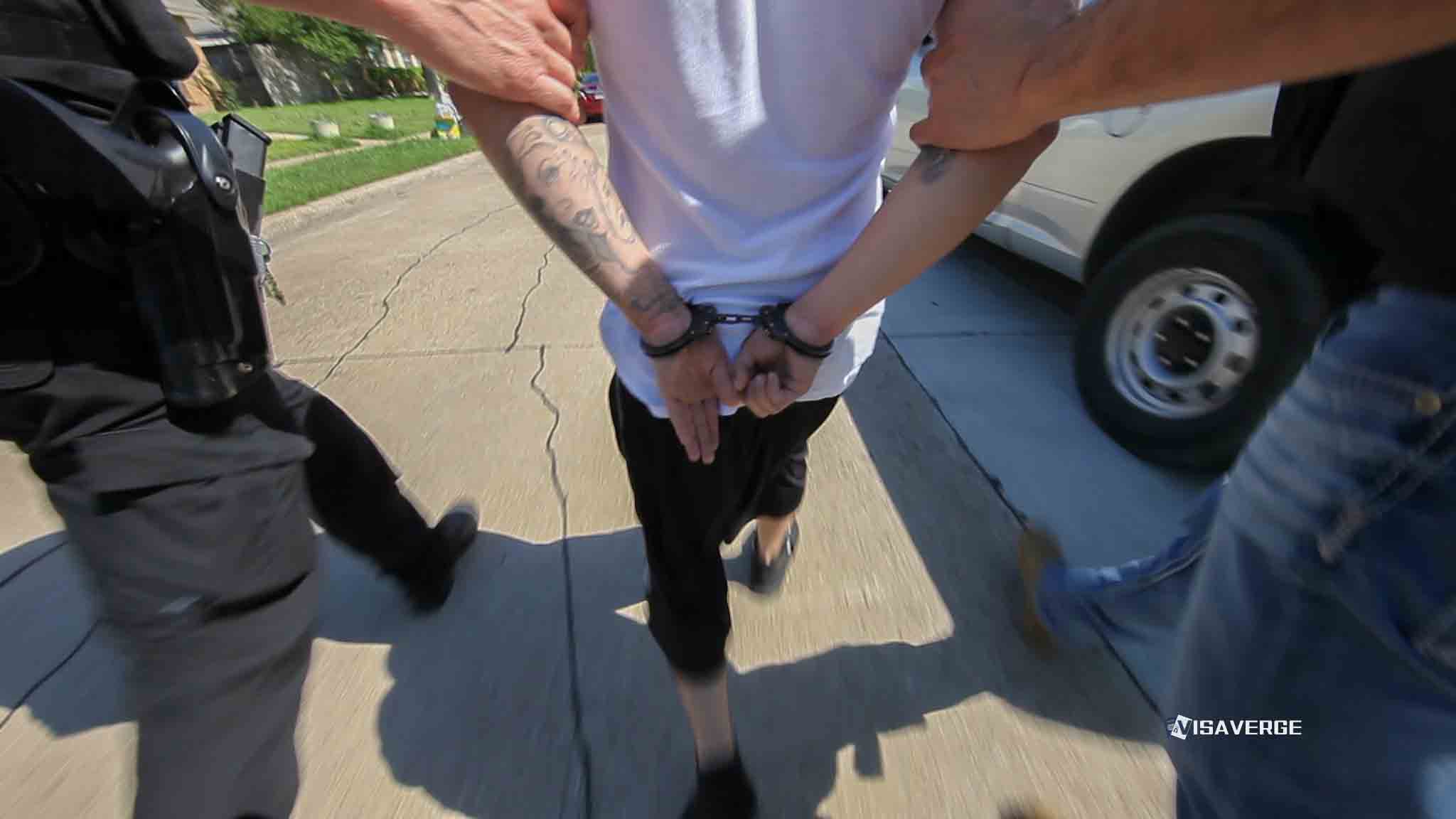
(ORANGE COUNTY, CALIFORNIA) Federal immigration sweeps across Southern California this year have pushed many immigrant families into panic, and consumer advocates say that fear is being turned into a business by fraudulent notaries promising “quick fixes” under President Trump’s 2025 immigration crackdown. In storefront offices from Santa Ana to Anaheim, people seeking asylum or work permits report paying hundreds or thousands of dollars to a notary who claimed they could file immigration papers, represent them in court, or “guarantee” legal status—services a U.S. notary public is not allowed to provide.
How the scams work and why they resurge
The scams are not new, but lawyers and community groups say they have resurged as enforcement expands beyond the border and into neighborhoods and workplaces.
“It’s a crime targeting the most needy and desperate people,” said Victor D. Lopez, a professor of legal studies at Hofstra University, pointing to a patchwork of state rules that leave wide openings for fraud.
Lopez said few states, beyond Colorado, have built strong systems to stop notario fraud, even though the victims often lose not just money but their chance to stay in the United States 🇺🇸.
Language and cultural confusion
At the center of the confusion is language. In much of Latin America, “notarios públicos” are trained legal professionals who can draft contracts and give legal advice. In the United States, a notary is usually a commissioned witness who verifies identity and observes signatures. Scammers exploit that gap by:
- Advertising in Spanish
- Presenting official-sounding seals
- Implying they are lawyers
Victims often only learn the difference when a deadline is missed or a hearing goes unattended.
“The victims often lose not just money but their chance to stay in the United States.” — Victor D. Lopez
Real-life consequences
One Orange County victim, Gutierrez Aragon, who immigrated from Mexico, said he paid a notary who promised full immigration representation but delivered fake documents and then failed to show up for a court hearing. The result, advocates said, can be devastating:
- An asylum claim can be denied for missing evidence or missing court.
- A person may be left with a removal order that makes future relief harder.
Another victim, Marquez Cortes, said a notary pressured him with threats that he would lose his chance at citizenship unless he paid quickly, then presented English-language paperwork that looked like it was from an Orange County law firm—but was bogus.
Policy context: enforcement and its ripple effects
The spike comes as the Trump administration rolls out executive actions that place deportations at the center of domestic policy. One order, “Protecting the American People Against Invasion” (PAPAI), prioritizes mass removals, expands civil fines, and promotes “voluntary departures,” according to advocates tracking the policy.
PAPAI also supports wider use of 287(g) agreements, which allow local law enforcement to perform certain immigration enforcement functions under federal supervision. That shift can make routine interactions—like traffic stops or local jail bookings—carry immigration consequences.
Claims and criticism around enforcement data
South Dakota Gov. Kristi Noem, a leading voice on immigration enforcement, said on December 13, 2025, that 2.5 million illegal migrants have been removed by year’s end, that border crossings are down 93% year-over-year, and that there have been zero releases into communities for seven months. Supporters cite those figures as proof the crackdown is working.
Critics say the tempo of enforcement has rippled into cities far from the border, creating openings for scammers who promise to “fix” status before agents arrive.
Local impacts: Los Angeles and community reaction
In Los Angeles, the fear has been visible in the streets: troop deployments, federal agent operations, and protests that drew police response. LAPD Chief Jim McDonnell described the strain on officers, saying they can face “loyalty, frustration, fear, or sometimes even shame.”
Community leaders say those same emotions drive immigrants to seek help quickly—sometimes from the wrong person—especially when rumors spread that:
- Expedited removals have been expanded nationwide to people who have been in the country less than two years, or
- Mandatory detention can be triggered by minor crimes such as shoplifting.
Advice from legal professionals
Immigration attorney Sebastian Simon warns the safest course is to avoid anyone marketing themselves as a notary who “specializes” in immigration. He urges people to:
- Confirm a representative is licensed.
- Be wary of guarantees.
- Ask for credentials and verify them.
- Seek help from real lawyers or accredited representatives who can explain options, deadlines, and risks.
A notary cannot provide legal representation. When victims report fraud, they often bring stacks of receipts, copied passports, and half-filled forms—evidence that a scam can also create identity theft risk.
State responses and legislation
States have begun tightening rules, but enforcement still varies.
- In Florida, Gov. Ron DeSantis signed HB 915, which takes effect July 1, 2025. The law:
- Bans notaries from advertising with the terms “notario,” “notario público,” or “immigration consultant” unless they are licensed.
- Requires multilingual disclaimers so customers know a notary is not an attorney.
- The measure was sponsored by Sen. Tina Scott Polsky and Reps. Johanna López and Marie Woodson.
- In California, officials have repeatedly warned residents about notario fraud, especially as federal pressures rise. Attorney General Rob Bonta has:
- Challenged Trump administration actions in court, including a lawsuit tied to efforts to end birthright citizenship that resulted in a preliminary injunction in February 2025, according to advocates following the litigation.
- Encouraged consumers to report immigration services scams and to seek legitimate legal help through trusted referrals.
More information on how to spot fraud and where to file complaints is available through the California Department of Justice at California Department of Justice at oag.ca.gov/consumers/general/immigration.
Why a bad filing matters
For many immigrants, the damage from a bad filing is hard to undo. Common consequences include:
- Missing a court date
- Losing eligibility for certain relief
- Triggering faster removal after signing papers they don’t understand
Advocates say the mix of high-stakes enforcement and misinformation has made the notary desk a frontline in the immigration crackdown, where a single false promise can cost a family its savings and its future.
Trends and local observations
According to analysis by VisaVerge.com, the resurgence of notario fraud tends to track moments when policy shifts create confusion, and 2025 has brought both fear and opportunity for scammers. Local advocates in Orange County report:
- Calls spike after each raid rumor
- Victims often feel too scared to testify or return for refunds in court
“A single false promise can cost a family its savings and its future.” — advocates tracking the scams
If you or someone you know is seeking immigration help, confirm credentials, avoid guarantees, and use trusted legal referrals.
Federal immigration enforcement in 2025 has increased fear in immigrant communities, fueling a resurgence of notario fraud in Southern California. Scammers advertise in Spanish, promise legal representation, and charge large fees while producing fake documents. States have responded with laws and warnings—Florida’s HB 915 restricts misleading titles—yet enforcement remains uneven. Advocates advise verifying licenses, avoiding guarantees, and seeking accredited legal help to prevent denials, missed hearings, or removal orders.