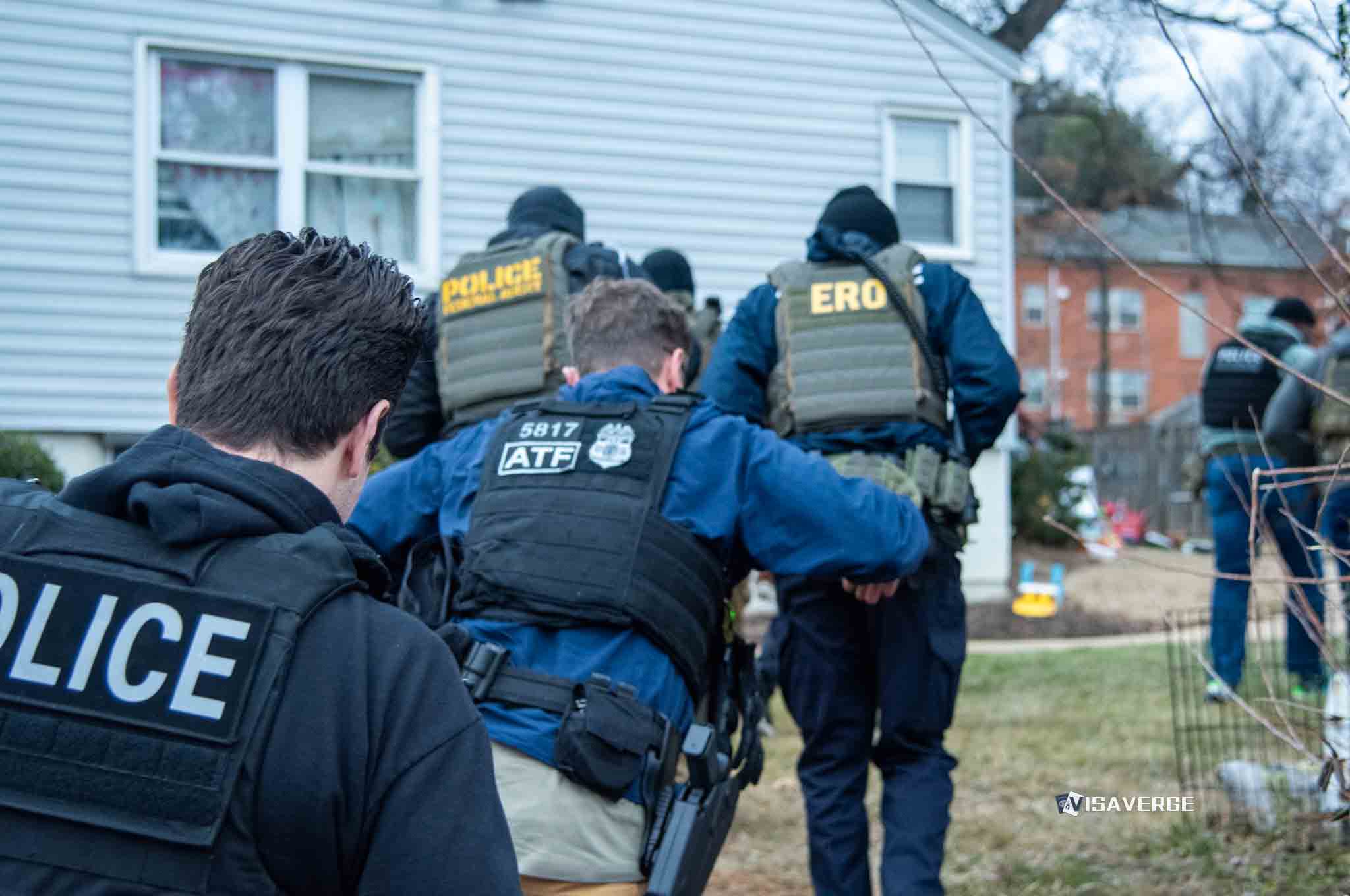
(MINNESOTA) Federal authorities are preparing an immigration enforcement operation in Minnesota that will focus on Somali immigrants, according to an Associated Press source, raising fears in one of the largest Somali communities in the United States and reviving old tensions over past Trump-era policies, including efforts to end Temporary Protected Status (TPS) for Somalis.
Details of the planned operation, including timing, scale and the agencies involved, have not been made public. Authorities have not issued any formal announcement, and the Associated Press report, based on a single unnamed federal source, remains the only description of what is being prepared. That lack of clarity has left Somali immigrants in Minnesota trying to work out whether routine trips to work, school or the mosque could expose them to arrest.
Minnesota’s Somali community has long been at the center of national political debate. During his presidency, President Trump repeatedly singled out Somali immigrants in Minnesota, casting them as security risks and alleging large-scale fraud. He announced plans to terminate Temporary Protected Status (TPS) for Somali nationals, a move that alarmed families who had built lives in Minneapolis, St. Paul and smaller cities across the state. TPS is a humanitarian program that allows people from countries facing war or disaster to live and work in the United States for limited periods while conditions in their home countries remain unsafe; information about TPS designations is posted on the U.S. Citizenship and Immigration Services website.
The Associated Press report about a targeted operation comes against that backdrop of past efforts to tighten immigration rules for Somalis. Trump’s past public claims linked Somali immigrants to terrorist organizations and alleged widespread abuse of immigration and welfare systems. Somali community groups and many Minnesota officials have rejected those characterizations, saying most Somali residents are long-term workers, students, parents and business owners who arrived legally and follow the law.
There’s no public timetable yet for the operation; rely on official guidance and avoid sharing sensitive status details with unfamiliar individuals to reduce confusion.
At the same time, federal prosecutors have in recent years brought high-profile fraud cases in Minnesota involving public assistance programs, some of which have touched members of the Somali community. Prosecutors have charged dozens of defendants in multiple schemes, including what they describe as a $250 million fraud involving the nonprofit Feeding Our Future. Other cases have focused on housing aid fraud and false autism service billing claims. Court documents in these cases describe complex webs of shell companies, falsified invoices and kickbacks tied to state and federal aid programs.
Some defendants in these fraud prosecutions are Somali Minnesotans, but Somali residents have also appeared in case files as complainants and victims. Community leaders have argued that singling out Somali immigrants as a group because of these crimes punishes entire neighborhoods for the actions of a limited number of people. They point to the many Somali families who rely on child care subsidies, housing programs and medical services honestly, and who are now worried that federal agents may treat them with open suspicion.
Scrutiny has grown further since Treasury Secretary Scott Bessent said the Treasury Department is investigating allegations that Minnesota welfare money may have been diverted to al-Shabaab, a U.S.-designated terrorist organization based in Somalia. The suggestion that state social programs could have been tapped—directly or indirectly—to send money to al‑Shabaab has sparked intense concern among law enforcement and politicians, but also deep unease among Somali immigrants who fear being broadly associated with extremist groups.
As word of the planned federal operation spreads, many Somali immigrants in Minnesota say they feel caught in the middle: wary of criminal activity that harms their community and equally afraid of sweeping law enforcement actions that could treat legal residents, TPS holders and U.S. citizens the same as those who may have broken immigration or criminal laws. Parents are discussing backup plans for school pick‑ups in case of sudden raids. Small business owners are considering whether to open shops if they believe federal agents could be waiting outside.
Create a quick plan: copy IDs and TPS documents, save attorney contact info, and rehearse where to seek help (hospital, police, school) without disclosing status.
Local officials in Minneapolis have tried to offer some assurance. The City of Minneapolis has reaffirmed its long-standing Separation Ordinance, which states that city services must remain available regardless of immigration status and that local agencies will not use city resources to carry out federal immigration enforcement. Under that policy, city workers such as police officers, firefighters and health staff are instructed not to ask people about their immigration status when they seek help. The ordinance is intended to prevent residents from avoiding hospitals, schools and police out of fear that a simple request for help could lead to deportation.
The renewed focus on Somali immigrants has also revived memories of earlier threats to end Temporary Protected Status (TPS) for Somali nationals. When the Trump administration moved to terminate TPS designations for several countries, Somali families in Minnesota faced the possibility that long-time residents who had fled civil war might be forced to leave. Advocacy groups warned that ending TPS would break apart mixed‑status families that include U.S.-born children, permanent residents and TPS holders under the same roof. Many of those families now worry that a new federal operation could be another blow, even for those who currently hold legal status.
Lawyers and service groups say the lack of formal information about the planned operation makes it harder to advise Somali immigrants about their rights. Without clear public guidance, they can only repeat the basics: keep copies of immigration documents, know how to contact an attorney, and understand that local city services in Minneapolis remain available under the Separation Ordinance. They stress that TPS holders, refugees with green cards and naturalized U.S. citizens from Somalia have different legal protections than undocumented residents, but that the fear of being swept up in a broad operation often blurs those distinctions in people’s minds.
Minneapolis’ Separation Ordinance guarantees access to city services regardless of immigration status—know this and use authorized channels if you need assistance or information.
Minnesota’s state leaders and members of Congress have not yet received detailed briefings on the operation, according to people familiar with their offices’ responses, leaving them little to say publicly beyond general calls for fairness and transparency. Community organizations that work with Somali immigrants are preparing to monitor any enforcement activity and to document cases in which TPS holders, asylum seekers or other legally present residents may be detained or questioned.
For now, the Associated Press report stands as the only direct description of federal plans to focus enforcement on Somali immigrants in Minnesota. The combination of that report, past Trump-era moves to end Temporary Protected Status (TPS) for Somalis, ongoing fraud prosecutions and a Treasury investigation into alleged links to al-Shabaab has created a tense and uncertain moment for Somali communities across the state. Families who once saw Minnesota as a stable home after years of conflict in Somalia are once again watching federal actions carefully, weighing whether they will be treated as neighbors or as targets.
An AP source says federal authorities are preparing an operation in Minnesota that would target Somali immigrants, though officials haven’t confirmed details. The report revives concerns rooted in prior Trump-era efforts to end Somali TPS, ongoing fraud prosecutions—including a $250 million case—and a Treasury probe into alleged diversion of welfare funds to al-Shabaab. Community groups and Minneapolis officials stress protections like the Separation Ordinance and call for transparency to protect lawful residents and TPS holders.