- U.S. Customs and Border Protection announced new user fees for fiscal year 2027 starting October 1, 2026.
- Commercial truck arrival charges increase to $7.60 while annual prepaid fees rise to $138.32.
- Adjustments include a 38.322% factor from the fiscal year 2014 base to account for inflation.
U.S. Customs and Border Protection will impose inflation-adjusted FY2027 Customs user fees beginning October 1, 2026, with the final notice setting the commercial truck arrival charge at $7.60 and the annual prepaid truck fee at $138.32. Those figures control the new fiscal-year schedule.
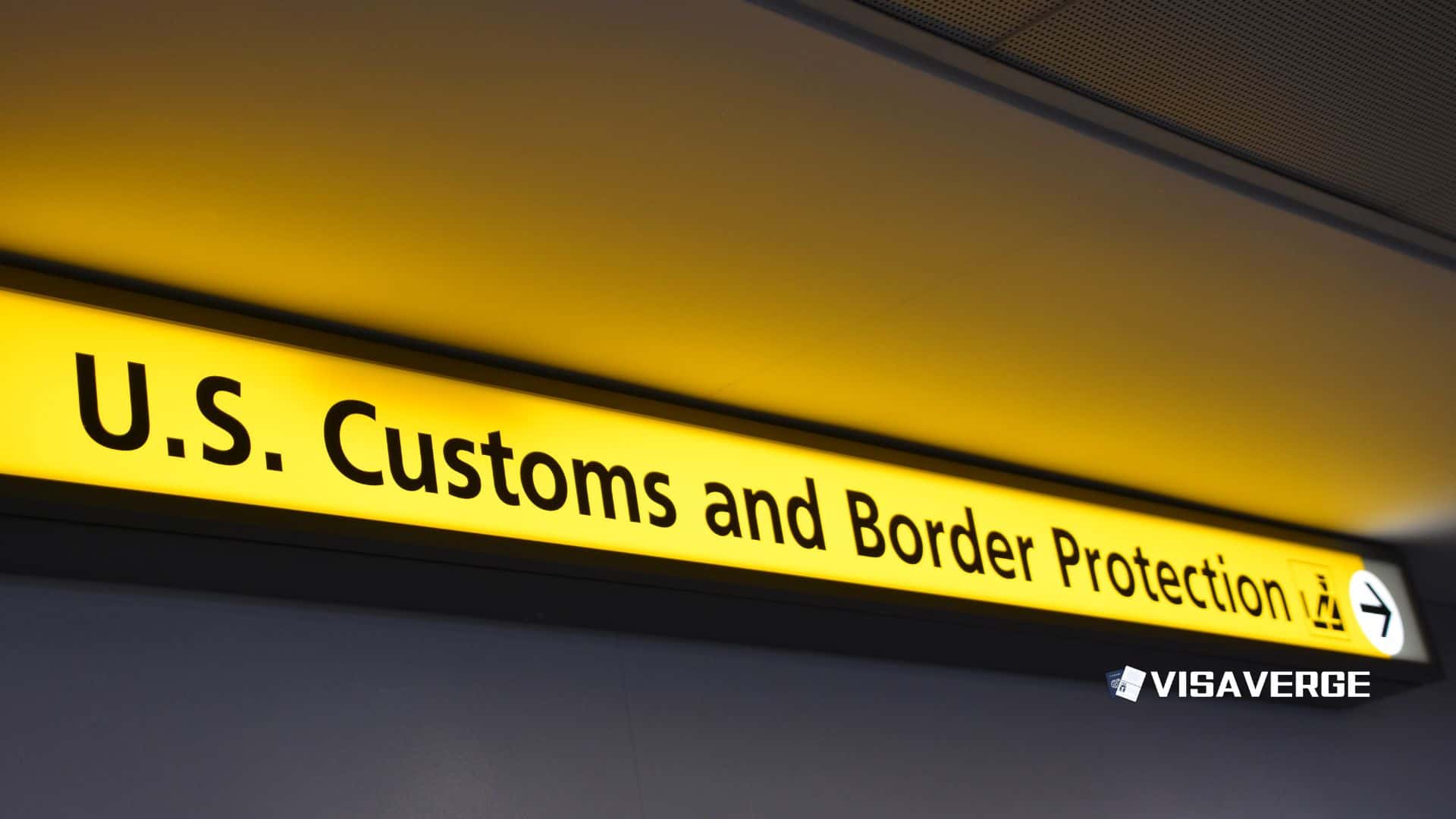
CBP released the General Notice on July 30, 2026, and scheduled it for publication in the Federal Register on July 31, 2026, under CBP Dec. 26-14. The notice covers fees for commercial arrivals, imported merchandise, mail, express shipments and related services.
The agency based the adjustment on a 38.322% factor tied to the FY2014 base year. The Consumer Price Index for All Urban Consumers rose 2.841% between June 2024–May 2025 and June 2025–May 2026.
The October deadline is firm. Importers and carriers must update automated accounting and booking systems before the new rates take effect.
CBP’s final FY2027 notice controls the truck figures. Earlier material listed $7.20 per arrival and $130.85 for the annual prepaid transponder, but those amounts should not be used as the final FY2027 rates. The final notice gives $7.60 and $138.32, with the annual prepayment covering the CBP fee only and excluding USDA/AQI fees.
The final notice raises several commercial and processing charges
The new schedule includes the following FY2027 amounts:
| Fee or charge | FY2027 amount |
|---|---|
| Commercial vessel arrival | $571.81 per arrival |
| Commercial vessel annual limit | $7,792.05 per vessel per calendar year |
| Commercial truck arrival | $7.60 per arrival |
| Commercial truck calendar-year prepayment | $138.32 |
| Dutiable mail | $7.20 per package |
| Express Consignment Carrier/Centralized Hub Facility | $1.38 per individual waybill or bill of lading |
| Express Consignment Carrier minimum | $0.48 |
| Express Consignment Carrier maximum | $1.38 |
| Express Mail Service | $1.00 per inbound EMS item |
| Commercial aircraft passenger arrival | $7.61 |
| Customs broker permit user fee | $190.89 |
| Formal entry MPF minimum | $34.58 |
| Formal entry ad valorem rate | 0.3464% |
| Formal entry MPF maximum | $670.83 |
| Manual entry surcharge | $4.15 |
| Informal entry charge | $2.62, $7.85 or $11.78 |
| APHIS commercial truck arrival | $12.40 per arrival |
| APHIS commercial truck annual prepaid fee | $622.00 |
The final notice’s formal-entry minimum and maximum are $34.58 and $670.83. Its manual surcharge is $4.15.
The express-consignment facility charge applies to each individual waybill or bill of lading. The commercial truck prepayment is separate from the APHIS annual fee.
CBP’s passenger and railroad page still displays FY2026 rates
A separate CBP schedule continues to show passenger and railroad charges effective October 1, 2025. Those listings remain identified as FY2026 rates:
| Fee or charge | Current FY2026 listing |
|---|---|
| Air passenger fee | $7.39 |
| Vessel passenger fee, non-exempt | $7.39 |
| Vessel passenger fee, exempt areas | $2.59 |
| Railroad car fee | $11.08 |
| Annual railcar prepayment | $134.33 |
The new notice separately identifies a $7.61 commercial-aircraft passenger arrival fee for FY2027. The passenger and railroad page, however, still displays the older $7.39, $2.59, $11.08 and $134.33 amounts under its October 1, 2025 effective date.
That split requires users to distinguish the FY2027 notice from the current passenger and railroad schedule. The older page does not replace the final notice’s commercial truck, merchandise-processing or other FY2027 figures.
FAST Act law sets the annual inflation adjustment
Section 32201 of the Fixing America’s Surface Transportation Act, Pub. L. 114-94, amended the Consolidated Omnibus Budget Reconciliation Act of 1985, or COBRA. The law requires the Secretary of the Treasury to adjust the charges annually when CPI-U growth exceeds 1%.
CBP applied that formula to the new fiscal year. The 38.322% factor reflects the cumulative adjustment from the FY2014 base year, while the 2.841% figure measures the latest comparison-period increase.
The official notice states:
"This document announces that U.S. Customs and Border Protection (CBP) is adjusting certain customs user fees and corresponding limitations established by the Consolidated Omnibus Budget Reconciliation Act (COBRA) for Fiscal Year 2027 in accordance with the Fixing America's Surface Transportation Act (FAST Act) as implemented by the CBP regulations."
Troy Miller is identified as Senior Official Performing the Duties of the Commissioner. Kari Deppe, Assistant Director of the User Fee and Reimbursable Controls Branch in the Office of Finance, is listed as the notice’s contact.
Deppe’s contact details are 317-294-2144 and UserFeeNotices@cbp.dhs.gov.
User-fee funding will cover 2,524 positions
The FY2027 budget adjustments account for a shift of 2,524 Full-Time Equivalents from appropriated funding to user-fee funding. Revenue from people and businesses using the covered services will support those positions rather than relying on general appropriations.
The changes also affect operators that must revise internal systems before the October start of the fiscal year. Rates embedded in accounting, booking and customs-entry software will need to match the final schedule.
Laura Everington, Director of International Operations and Regulations for the National Business Aviation Association, previously described the planning burden created by recurring annual changes:
"even incremental cost changes require careful planning,"
Everington urged association members to assess their operations ahead of the October implementation.
ACE modernization will run alongside the new fee schedule
As of July 31, 2026, CBP had integrated the fee changes into its Automated Commercial Environment modernization plans. The FY2027 budget request includes $136.1 million for ACE modernization.
The work is intended to improve visibility into the import lifecycle and automate manual processes. Manual processing can trigger the surcharge included in the final FY2027 schedule.
The new amounts begin on October 1, 2026. Until then, the passenger and railroad page continues to display its FY2026 listings, while the final notice supplies the controlling commercial and processing fees for FY2027.