- Investigations revealed multi-million dollar losses and maintenance contract irregularities at Iraqi Airways.
- The airline remains banned from European skies due to persistent safety and oversight gaps.
- Despite some progress, 25 aircraft remain grounded with suspicious maintenance costs cited in reports.
(IRAQ) — Investigations into Iraqi Airways uncovered multi-million dollar losses tied to aircraft maintenance contracts and safety risks that continue to keep the carrier off European Union skies, according to a report that described aircraft being grounded and parts swapped between planes.
The findings sharpen scrutiny on Iraq’s flag carrier as passengers face disruptions, regulators weigh oversight gaps, and the airline’s international standing remains tied to an EU ban imposed since 2015 for “serious safety concerns.”
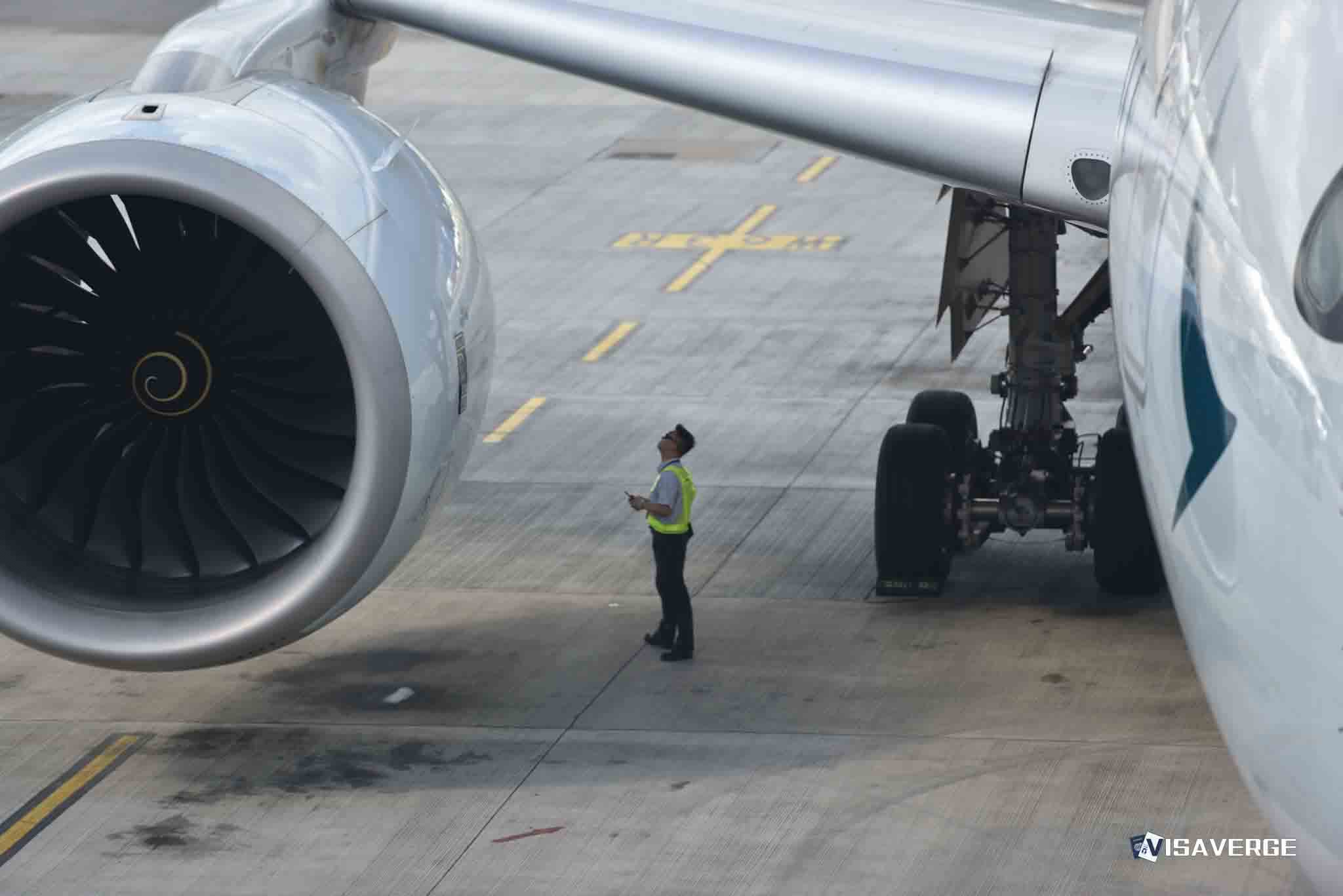
At the center of the allegations sits Ministerial Resolution No. 855 of 2024, which the report said Iraqi Airways approved and which mandates repairs by internationally certified companies under clause 4-A-B. Despite that requirement, the report said the airline contracted unaccredited firms, including Aet and Level Aero, for jet engine maintenance.
Observers described the pricing as “excessive and suspicious.” The report said the work was charged at $12-14 million per engine, while Iraqi Airways paid $60 million upfront for four engines on four planes.
Operational consequences followed, according to the report. Dozens of aircraft were affected, with 25 planes currently out of service, and parts were systematically swapped between aircraft, rendering even repaired ones unfit for flight.
The report linked the maintenance allegations to broader governance concerns at Iraqi Airways, including wasted funds, lack of transparency, partisan appointments, and delays in fleet renewal. Those issues, it said, add pressure as the airline tries to modernize while meeting international safety expectations.
European restrictions extend beyond one airline. The report said the EU restrictions cover Iraqi carriers including Iraqi Airways and Fly Baghdad, and it tied the continued limits to concerns about safety oversight, enforcement, and infrastructure.
The EU banned Iraqi Airways in 2015, citing “serious safety concerns,” and extended the restriction in June 2025 for six more months, the report said. It added that European regulators pointed to persistent gaps in oversight and compliance.
International audit results in the report placed Iraq below regional benchmarks. A 2024 ICAO audit scored Iraq below 55% for safety protocol implementation, compared with a Middle East average of over 70%, and the World Bank ranked Iraq’s airports poorly in 2025.
EASA reviews ongoing audits as part of the process tied to safety-list decisions, the report said. It also said decisions were pending late 2025 or early 2026, without setting out what any outcome would be.
Iraqi authorities and the airline pointed to progress, training, and new control systems. As of late 2025, Iraqi Airways completed 75-81% of corrective actions, including revised manuals, new management, compliance systems, an International Operations Control Center, and staff training, the report said.
Meitham al-Safi, a spokesman who was also cited as Maysam al-Safi, linked the work to targeted fixes for the IATA Operational Safety Audit (IOSA) and to Third Country Operator (TCO) certification objectives, according to the report. Those benchmarks connect directly to the kinds of compliance steps European regulators examine when assessing whether safety oversight meets required standards.
Transport Minister Razzaq Muhaibis reported 78% fulfillment of EU requirements at ITL Expo 2025, held October 15-18, the report said. Muhaibis also reported that Iraqi Airways added 13 new aircraft, with the fleet at over 40 and an aim to reach 53 by 2027, including a Boeing 787.
Non-technical risks also complicate recovery. Iraqi airspace, the ORBB/Baghdad FIR, carries high risks from Iranian-backed militants, missiles, drones, and air defenses, especially below FL320, according to EASA warnings issued after the June 2025 Israel-Iran ceasefire.
Legal and cost pressures sit alongside those security warnings. The report said Iraqi Airways faces a $787 million ruling in Cairo, which it plans to contest, and that regional tensions, including US-Iran issues, could add rerouting costs of $6,000-7,500 per flight hour for detours.
The report described a mixed picture on operational readiness. It said the airline expanded its fleet and Iraq pursued airport upgrades, including raising Baghdad’s capacity to 15 million passengers/year, but EU inspections were deferred in September 2025 for insufficient progress.
Key dates and targets now frame what comes next. The report anchored the timeline to the original 2015 ban, the June 2025 extension, audit findings cited in 2024, and a late-2025 or early-2026 decision window, while setting out modernization goals through 2027 that Muhaibis presented as plans, not guarantees, as scrutiny over contracts such as those involving Level Aero continues and observers warn of reputational damage without reforms.