(MARYLAND) — A federal judge in Maryland barred the U.S. government on December 24, 2025 from removing Dulce Consuelo Diaz Morales while her citizenship claim is reviewed, after she was detained by ICE and transferred out of state.
Judge’s order and immediate context
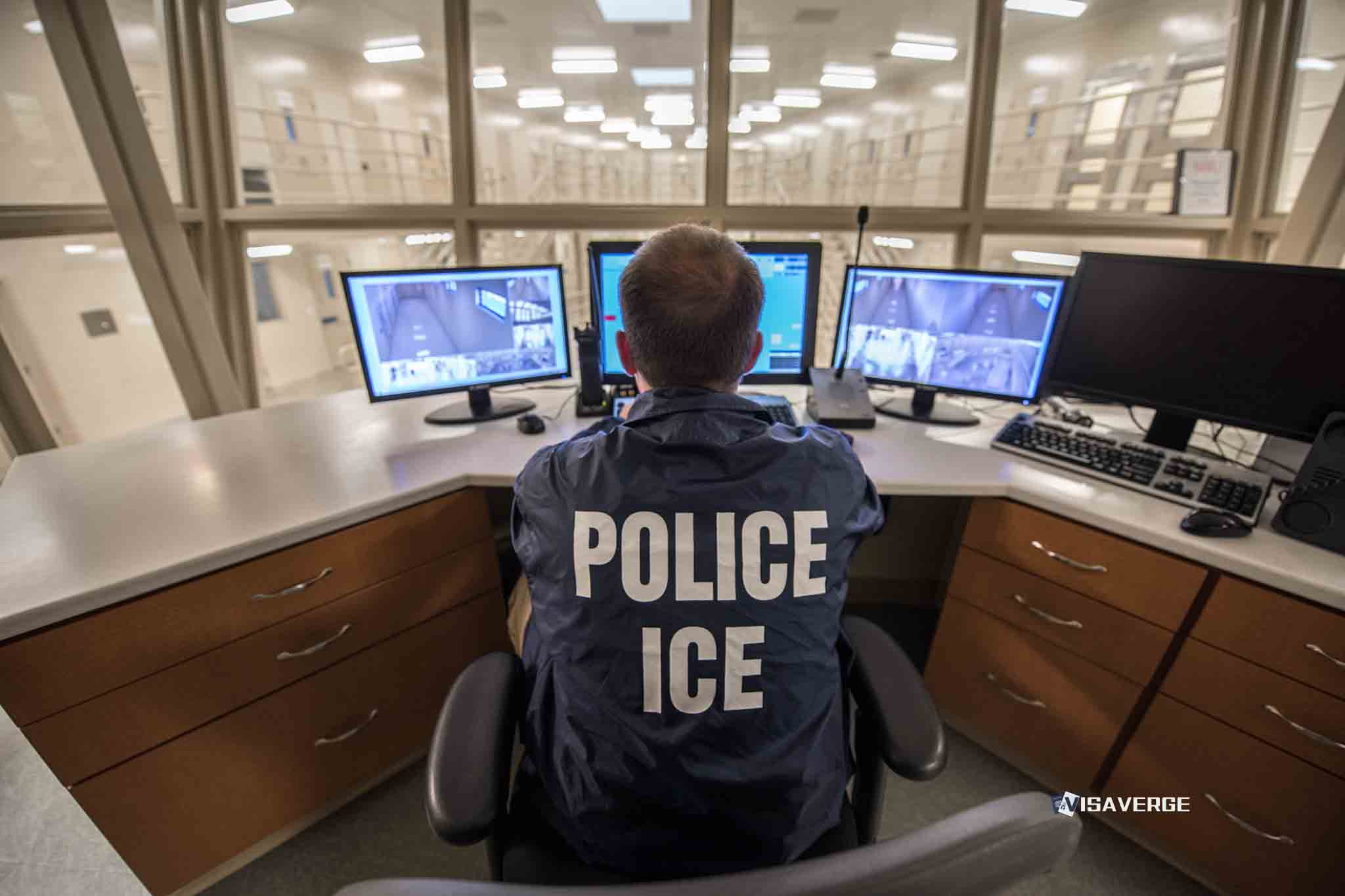
Maryland District Court Judge Brendan Hurson issued the order as Diaz Morales’ case drew attention to a late-2025 pattern in which immigrants arrested in Maryland are moved to detention centers in places such as Louisiana and Texas, often far from their families and lawyers.
The judge’s intervention prevented the government from removing Diaz Morales while her disputed citizenship claim is adjudicated. Attorneys had raised alarms that repeated transfers — she was moved three times in one week — made confidential attorney-client meetings difficult or impossible.
Government response and disputed facts
DHS spokeswoman Tricia McLaughlin rejected the notion that Diaz Morales is a U.S. citizen and defended the government’s handling of the case after reports that a 22-year-old Baltimore mother with a Maryland birth certificate was being held in Texas.
“Dulce Consuelo Madrigal Diaz is NOT a U.S. citizen—she is an illegal alien from Mexico. She did NOT provide a valid U.S. birth certificate or any evidence in support of her claim that she is a U.S. citizen. her case is being adjudicated, and she is receiving full due process. Any allegation that ICE does not allow detainees to contact legal assistance is false,” McLaughlin said.
Attorneys for Diaz Morales countered that her multiple transfers hindered their ability to meet with her confidentially.
Broader pattern of transfers from Maryland
The judge’s order highlighted wider legal and political contention around ICE transfers from Maryland to distant facilities. Family members and attorneys say these transfers can:
- Disrupt access to counsel
- Delay bond hearings and other proceedings
- Reset legal timelines when hearings are scheduled in Maryland
In Diaz Morales’ case, attorneys reported they were unable to reach her for confidential meetings because she was moved three times in one week — from Baltimore to Louisiana, then to Texas.
If you’re coordinating detainee counsel, insist on confidential meetings after any transfer; request a court-ordered review of removal proceedings to prevent silent resets.
Other Maryland cases with similar transfers
- Vanessa Parrazal, a Salisbury mother, was moved to Louisiana. An ICE spokesperson described her arrest after her transfer on December 21, 2025:
“ICE officers positively identified (Vanessa) Parrazal-Uscanga as she entered her vehicle and attempted to place her under arrest. [she] refused to comply with lawful orders. For the safety of the officers and the community, officers legally extracted the criminal alien from the vehicle,” the spokesperson said.
- Local jail transfers remain significant: Frederick, Harford, and Cecil counties led the state in ICE transfers from local jails, accounting for 119 transfers to federal custody in late 2025 alone.
Policies, authorities, and administration plans
DHS and ICE describe their enforcement approach as “targeted enforcement,” emphasizing arrests of individuals they say have criminal records. DHS reported that 70% of those arrested have criminal records. Advocacy groups and media analyses, however, note that an increasing number of detainees have no criminal convictions and are being arrested in “targeted operations” near schools or workplaces.
Key policy context:
- Under the 2025 National Detention Standards, ICE may transfer detainees for reasons including:
- medical care
- safety
- convenience of proceedings
- facility overcrowding
-
A separate policy directive, 11022.1, suggests prioritizing placement near a detainee’s “Area of Responsibility” (AOR). Despite this, Maryland detainees are increasingly being moved to the New Orleans Field Office AOR, which includes Louisiana.
-
ICE’s detention policy material and newsroom messaging referenced in this debate include:
- ICE Newsroom: ERO Baltimore Targeted Operations
- ICE Detention Management: 2025 National Detention Standards
Detention capacity expansion and “feeder system” claims
Internal documents revealed in December 2025 indicated the administration is seeking to expand detention capacity by 80,000 beds, primarily by renovating industrial warehouses in states including Louisiana, Texas, and Virginia. Those documents described this expansion as a “deliberate feeder system” to stage individuals for deportation, a framing that links transfer decisions to broader detention planning.
Administration messaging
Homeland Security Secretary Kristi Noem framed the enforcement posture as part of a broader crackdown during 2025. In a year-end review on December 19, 2025, she said:
“In record-time we have secured the border, taken the fight to cartels, and arrested thousands upon thousands of criminal illegal aliens. 2025 was historic, we won’t rest until the job is done.”
That statement is available on the DHS site: DHS Newsroom: Historic Year Under President Trump and Secretary Noem.
Impact on legal process and family access
For families, lawyers, and local advocates, the geographic shifts are not merely administrative. Transfers to Louisiana or Texas often:
- Delay bond hearings and other legal proceedings
- Reset scheduled hearings in Maryland, effectively delaying case timelines
- Make confidential attorney-client communication difficult, especially when detainees are moved repeatedly
The combination of at-large community arrests and local jail transfers has sharpened debate over:
– Who is being detained
– How quickly immigration cases move
– Where detainees are held
Repeated points in the debate
- DHS/ICE position:
- Transfers are part of targeted operations
- Detainees retain due process and access to counsel, per agency statements
- Enforcement framed as necessary to secure the border and public safety
-
Advocates’ and attorneys’ position:
- Distance and repeated transfers impede case preparation
- Transfers can delay hearings and reduce meaningful access to legal counsel
- Statements about “feeder systems” and large-scale bed expansions raise concerns about the strategic use of transfers
Key dates and events (summary table)
| Date | Event |
|---|---|
| December 19, 2025 | DHS year-end review by Secretary Kristi Noem characterizing 2025 enforcement as historic; statement published at DHS Newsroom. |
| December 21, 2025 | ICE transfer and arrest account for Vanessa Parrazal reported after her move to Louisiana. |
| December 24, 2025 | Judge Brendan Hurson barred removal of Dulce Consuelo Diaz Morales while her citizenship claim is reviewed. |
Takeaway
Judge Hurson’s order on December 24, 2025 inserted the court into a fast-moving dispute that unfolded across multiple detention locations in a matter of days, ensuring Diaz Morales would not be removed while her contested citizenship claim is reviewed. The case has become a flashpoint in a broader conversation about transfer practices, detention capacity expansion, and how those policies affect detainees’ access to counsel and the pace of immigration proceedings.
The Maryland immigration landscape in late 2025 is defined by a clash between aggressive ICE enforcement and judicial oversight. While DHS officials emphasize the arrest of criminal aliens and the expansion of detention capacity by 80,000 beds, legal advocates point to cases like Dulce Diaz Morales to argue that frequent transfers to remote states undermine constitutional rights and the ability to maintain confidential attorney-client relationships.