(UNITED STATES) Lufthansa is reportedly preparing to sell two of its Boeing 747-8 aircraft to the US Air Force, a move that—if confirmed—would send rare, modern jumbo jets from a commercial passenger fleet into the pipeline for possible military conversion at a time when Washington is grappling with delays to its next generation of presidential aircraft.
The aircraft at the center of the reported transaction are registered as D-ABYD and D-ABYG, according to aviation outlets including Simple Flying, Aviation A2Z and Aviation News Europe. Lufthansa has not publicly confirmed any sale as of December 15, 2025, and the US Air Force has not announced an agreement. Still, the reports have drawn sharp attention because of the aircraft type involved: the Boeing 747-8, a platform that is no longer in production but remains one of the few large airframes suited to highly specialized missions requiring space, power and long range.
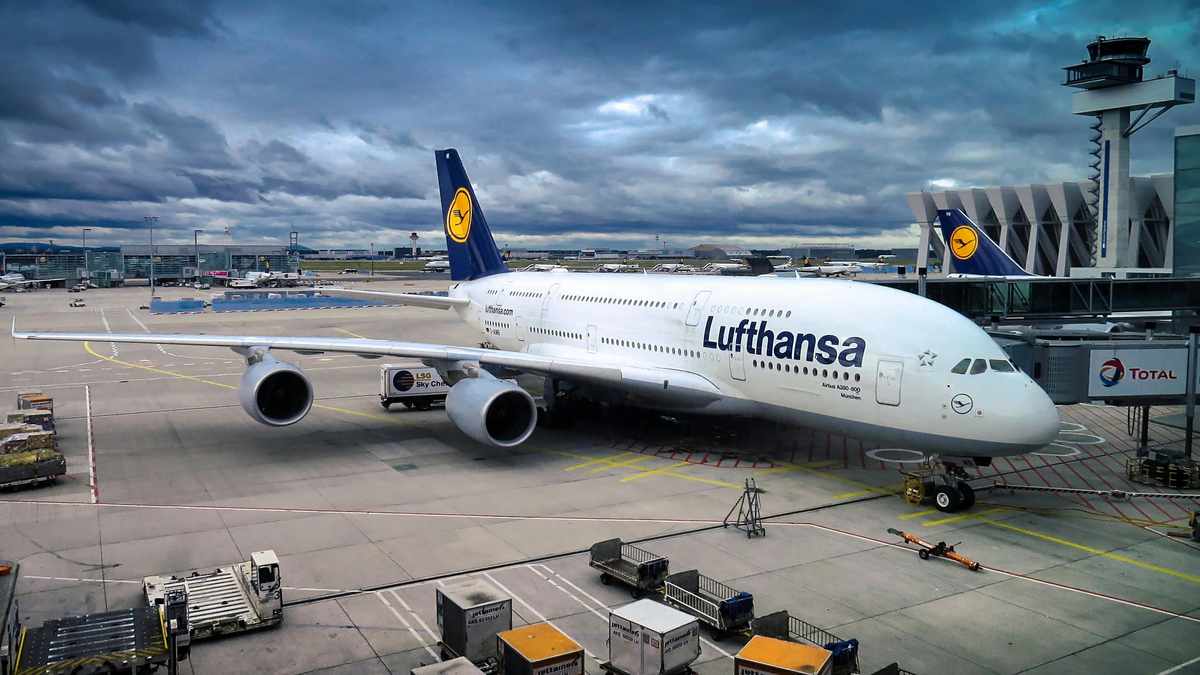
If the sale goes ahead, it would reduce Lufthansa’s 747-8 fleet from 19 aircraft to 17 in 2026, the reports say, even as the German carrier is working through its Allegris cabin retrofit programme that begins in 2025. Aviation watchers noted that Lufthansa had previously planned to keep its newer 747-8s in service into the 2030s, making any near-term decision to part with airframes notable.
One report described the potential deal as stemming from an
“offer it couldn’t refuse.”
The apparent US interest is tied to an urgent need for additional 747-8 airframes as the service struggles with the timetable for the VC-25B programme, the long-running effort to field two new Boeing 747-8s as replacements for the current presidential fleet. The VC-25B aircraft—intended as the next Air Force One jets—are now expected to be delivered in mid-2028, according to the reports, after a series of technical issues, Boeing problems and integration challenges.
Those delays have sharpened concern about a potential gap as the existing VC-25A aircraft age. The US Air Force currently operates two VC-25A jets, based on the Boeing 747-200B, for presidential transport. It also operates four E-4B “Nightwatch” aircraft for airborne command missions, a role designed to keep national command authority connected in extreme scenarios. Both fleets face
“maintenance challenges and parts shortages,”
and supply issues, according to the source material.
The scale and sensitivity of these missions make the 747-8 especially attractive, even years after Boeing delivered its last one. The aircraft’s
“large fuselage remains uniquely suited for military conversions requiring secure comms, defenses, and command spaces,”
the source material notes. That combination—size, range and the ability to support extensive onboard systems—helps explain why the US Air Force, and contractors working with it, continue to seek 747-8 airframes wherever they can be found.
Under the VC-25B programme, the US Air Force has been under contract since 2016 for two 747-8s, at a value of $3.9 billion, the source material says. The programme’s schedule drift has played out against heightened public scrutiny of Boeing’s performance across a range of commercial and defense projects, though the reports cited here focus on
“technical issues, Boeing problems, and integration challenges”
as drivers of the push to mid-2028.
At the same time, the Pentagon is already pursuing another major 747-8-based project: the Survivable Airborne Operations Center programme, known as SAOC and also referenced as the E-4C effort in the source material. Sierra Nevada Corporation was awarded the SAOC contract in 2024 for five ex-Korean Air 747-8s, the source material says. Flight testing began in early 2025, but the aircraft are not expected to enter service until 2032, with modifications that include upgrades for nuclear shielding, refueling and command systems.
That parallel programme matters to the Lufthansa reports because it underscores how narrow the pool of available 747-8s has become—and how strong the US Air Force’s incentive may be to secure additional aircraft when opportunities arise. Even though the Lufthansa jets would begin as civilian airframes, the 747-8’s physical capacity is central to why it is repeatedly selected for missions demanding heavy communications equipment, defensive systems and expansive working space.
The source material also notes that a separate idea—using a Qatar-gifted 747-8 for interim use—was considered as a stopgap, but faced legal scrutiny over foreign gifts. That episode, mentioned in the reports, highlights the political and legal sensitivities that can surround even temporary solutions when it comes to aircraft linked to the presidency and national command functions.
What remains unclear is how the reported Lufthansa aircraft would be used if acquired. The reporting cited in the source material connects the possible purchase to the VC-25B delays and the broader need for 747-8 airframes, but neither Lufthansa nor the US Air Force has confirmed the transaction or its purpose. Media coverage
“remains speculative based on unverified reports from Travel and Tour World, One Mile at a Time, and Air Data News,”
the source material says, reflecting how the story has moved quickly through aviation news sites without official documentation.
Lufthansa’s side of the equation is also opaque. The airline’s Boeing 747-8 fleet has been a flagship part of its long-haul operation, and the reports suggest the carrier was, until recently, planning to keep the type for years. The suggested reduction from 19 to 17 aircraft in 2026 would come while Lufthansa is investing in passenger-facing improvements through its Allegris programme starting in 2025, a juxtaposition that makes the rumored sale stand out even if it involves only two frames.
For the US Air Force, any move to secure additional 747-8 airframes would reflect a practical challenge as much as a strategic one: maintaining mission readiness as legacy aircraft age and replacement programmes stretch. The VC-25A fleet is based on a much older 747 variant, and the E-4B “Nightwatch” aircraft are also aging platforms, both subject to
“maintenance challenges and parts shortages,”
the source material says. The longer the wait for VC-25B deliveries and SAOC fielding, the more pressure builds to manage risk across fleets that were not designed to serve indefinitely.
The reports have also renewed attention on just how rare the 747-8 has become. With production ended, the available airframes are concentrated among a small number of operators, and the aircraft’s distinctive mix of range and internal volume makes it hard to substitute. While many modern twin-engine jets can fly long distances more efficiently, converting them into platforms with extensive command spaces, secure communications and defensive systems is a different task, and the source material underscores that the 747-8’s
“large fuselage”
continues to make it a preferred base.
Neither side has provided a timeline for any decision, and as of December 15, 2025, the story rests on aviation media reporting rather than public filings or official statements. Still, the specificity of the aircraft registrations—D-ABYD and D-ABYG—has fueled belief among industry observers that discussions are at least under way.
Readers looking for basic background on the current presidential aircraft can refer to the US Air Force’s official information on the US Air Force VC-25A fact sheet here: US Air Force VC-25A fact sheet. The fact sheet does not address the reported Lufthansa sale, but it provides the service’s overview of the aircraft now flying presidential missions.
For now, the central unanswered question is whether the reported Lufthansa sale is real—and if so, whether it is meant to cover a short-term gap created by the VC-25B delays, support another conversion pipeline, or simply secure scarce Boeing 747-8 airframes before they become even harder to obtain. With the US Air Force juggling ageing fleets, long lead times and highly specialized requirements, even two aircraft from a commercial operator like Lufthansa could carry outsized weight.
Aviation reports claim Lufthansa may sell two Boeing 747-8s (D-ABYD, D-ABYG) to the US Air Force, cutting its fleet from 19 to 17 in 2026. The potential purchase responds to VC-25B delivery delays now expected by mid-2028, increasing demand for available 747-8 airframes that suit military conversions. Neither Lufthansa nor the US Air Force has confirmed the deal; reporting is speculative and based on industry outlets. The 747-8’s size and range make it uniquely valuable for presidential and command missions.