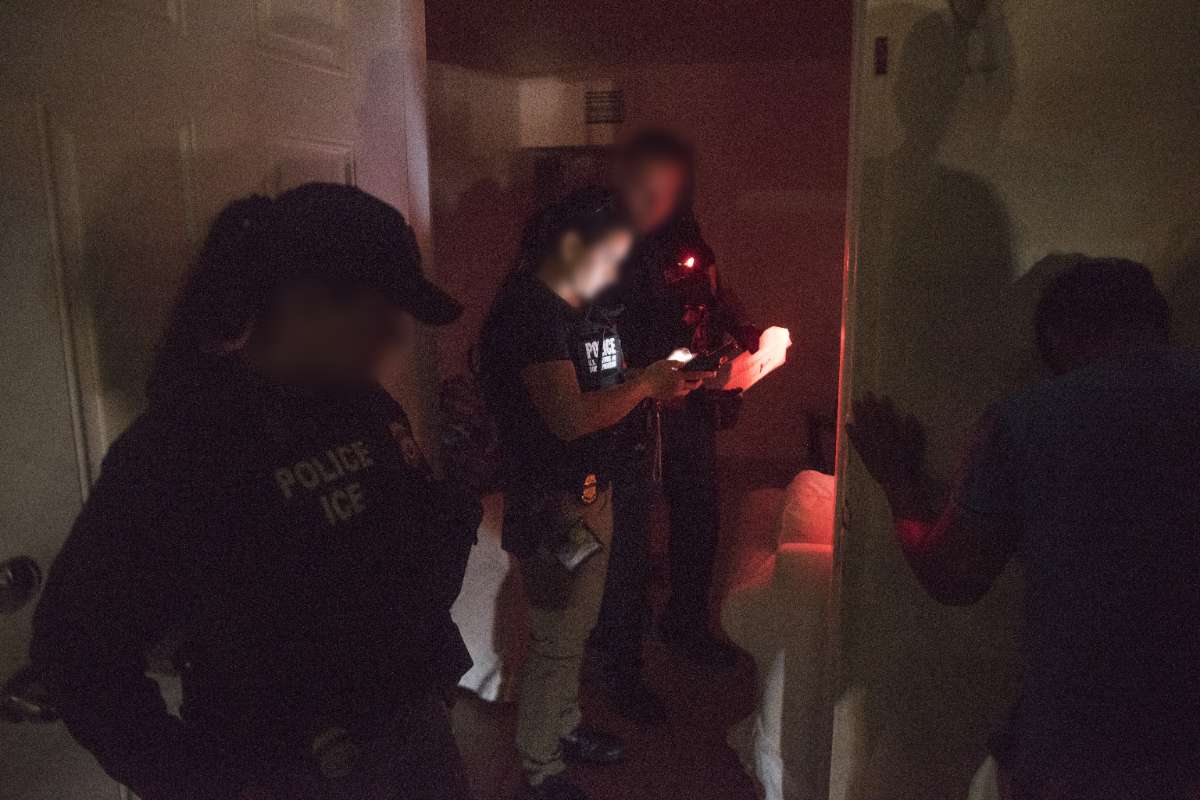
(MASSACHUSETTS) — U.S. immigration officials arranged a court-ordered flight to return Any Lucia Lopez Belloza to the United States, but the Babson College freshman refused to board after learning she could be detained and deported again.
Lopez Belloza, 20, has remained in Honduras as litigation continues over her November 2025 removal, which occurred after U.S. authorities detained her at Boston’s Logan International Airport during an attempted domestic trip to Texas.

A U.S. federal judge ordered the Trump administration to facilitate her return by February 27, 2026, and the government arranged travel from Honduras to Texas. The dispute now centers on what “facilitate” requires when the government also maintains it can take her into custody again under an older removal order.
DHS defended its actions after the deadline passed. “Immigration and Customs Enforcement attempted to comply with the court’s order by arranging Lopez Belloza’s return to the United States but she ‘failed to appear for her prearranged flight.’ ICE made multiple attempts to contact her,” a DHS spokesperson said in a February 27, 2026 statement.
The case began at a travel hub rather than a border crossing. On November 20, 2025, authorities detained Lopez Belloza at Logan International Airport while she tried to fly to Texas for Thanksgiving.
A federal judge then issued an emergency 72-hour stay of removal on November 21, 2025, barring deportation or transfer out of Massachusetts for that period. ICE deported her to Honduras on November 22, setting off a court fight over whether the government violated the stay and what remedy should follow.
In January 2026 court hearings, government lawyers initially apologized and called the removal a “mistake” due to a failure to flag the judicial stay in their system, the account of the proceedings said. DHS later disputed that framing.
“There was no ‘mistake.’ [Lopez Belloza] received full due process,” a DHS spokesperson said in a February 13, 2026 statement after the judge ordered her return.
That same day, U.S. District Judge Richard Stearns ordered the administration to facilitate her return by February 27, 2026, writing: “Wisdom counsels that redemption may be found by acknowledging and fixing our own errors.”
The order put the government under a deadline, but it did not resolve the central enforcement question that surfaced as the return approached: what would happen to Lopez Belloza upon arrival in the United States.
Lopez Belloza’s lawyers said ICE initially told her she would be released after landing, a representation that shaped her expectations about the trip. She then backed out after government filings indicated she could be taken into custody under a previous deportation order entered when she was a child.
On February 26, 2026, the government filed documents stating their intent to detain Lopez Belloza immediately upon her arrival in the U.S. and move for her second deportation within days, citing her original 2015 removal order, which the account said was issued when she was 11 years old. Lopez Belloza subsequently declined to board the flight from San Pedro Sula.
Her refusal turned a remedy ordered by a federal court into a new point of dispute. The government has argued the arranged travel satisfied what the court required, while her side has portrayed the offer as illusory if it led directly back into custody and toward another rapid removal.
U.S. Attorney’s Office (District of Massachusetts) also framed the planned travel as restoring conditions that existed before the November deportation. “The ICE-arranged flight was intended to restore the ‘status quo.’” a spokesperson for U.S. Attorney Leah Foley said in a February 27, 2026 statement.
Legal filings later clarified that “status quo” meant returning her to the same custodial status she held prior to deportation—under detention with an active removal order, the account said.
The argument exposes a recurring friction point in immigration litigation: a court can order the government to undo the practical consequences of an unlawful removal, yet immigration agencies can insist that existing enforcement authority still applies the moment the person comes back within reach of the system.
A judicial stay of removal is meant to pause deportation while a court considers a challenge, and the consequence of removing someone anyway can include litigation over compliance and remedies. In Lopez Belloza’s case, the alleged timing conflict—an emergency stay followed by a removal—became the foundation for the judge’s later directive to facilitate her return.
“Facilitate return” generally involves logistics that only the government can handle after a deportation, including travel arrangements and coordination across agencies. But the remedy does not necessarily answer whether the government will parole someone into the country, release them with conditions, or detain them under a standing order once they arrive, which is the uncertainty at the center of Lopez Belloza’s refusal.
The dispute also turns on the legal weight of the prior removal order. Government filings indicated that once she returned she could be taken back into custody under a previous deportation order originally entered when she was a child, creating the prospect that returning to U.S. soil would trigger reinstatement and renewed removal efforts.
DHS has asserted that earlier proceedings were sufficient. In a statement shortly after the initial deportation, DHS spokeswoman Tricia McLaughlin said: “She received full due process and was removed to Honduras. The individual was an illegal alien who entered the country in 2014 and was ordered removed by an immigration judge in 2015.”
Lopez Belloza and her supporters have argued the opposite: that she was wrongly deported, that the removal violated a federal judge’s stay, and that the government’s return offer did not provide meaningful protection against being detained and deported again.
Her lawyers said the shifting message about custody on arrival—first an assurance she would be released, then government filings warning she could be detained—changed the risk calculation for a young student trying to get back to school.
Instead of boarding, Lopez Belloza chose to remain in Honduras with her grandparents and continue her college studies online while pursuing further legal avenues to return, the account said. Her counsel described the situation as misleading and said they would keep fighting for her rights.
The academic disruption has been a concrete consequence of the dispute. Lopez Belloza, described as a business student on scholarship at Babson College, has tried to continue coursework remotely from Honduras after her deportation.
Her location in Honduras has also mattered to the case’s human stakes. The account said Lopez Belloza expressed fear for her safety while staying with grandparents in San Pedro Sula, and it stated that Honduras currently faces high rates of violence.
The refusal to board has procedural implications without resolving the underlying question of whether the November removal violated the stay. From the government’s perspective, the missed flight supports an argument that it complied with what the court ordered by arranging travel. From Lopez Belloza’s perspective, the offer did not provide a safe and workable path home if it meant she would be detained and pushed toward removal again within days.
The case has drawn attention because it began with a domestic travel attempt at a major U.S. airport. Airports can serve as enforcement touchpoints when identity checks and record matches trigger action, and the account described Lopez Belloza’s detention at Logan International Airport while she tried to fly to Texas to visit family.
It has also highlighted how older immigration orders can re-emerge in later years. The government pointed to a 2015 removal order, which the account said was issued when she was 11 years old, as a basis to detain her upon any return—even as a separate federal court case disputes the legality of what happened in November 2025.
For students and other noncitizens, the case illustrates a gap between what a court orders and what an agency will operationalize. A court directive can require the government to act, but the same government can maintain that statutory enforcement authority still controls custody decisions, travel conditions, and the pace of any renewed deportation attempt.
Communication has been central to the breakdown. Lopez Belloza’s lawyers said ICE told her she would be released after landing, while later government filings suggested detention and a second removal could follow quickly. The DHS statement after the deadline emphasized that she “’failed to appear for her prearranged flight,’” aligning the agency’s public position with a compliance narrative rather than the custody dispute.
The chronology of the court fight, from the airport detention through the emergency stay and removal and then the return order and proposed flight, has become the framework through which the judge and the parties argue about remedies and enforcement. The deadlines also matter because the judge ordered return by February 27, 2026, and DHS issued its statement on that date after the travel did not happen.
What remains unresolved is the mechanism for any future return attempt and whether the government would provide a custody assurance acceptable to Lopez Belloza and her counsel. The government’s filings indicated detention upon arrival, while her side has treated that prospect as a risk of a second deportation and as a reason to decline the flight.
Ongoing proceedings in federal court will determine what further steps the judge orders and how the government must demonstrate compliance with the directive to facilitate return. The litigation also keeps alive the underlying dispute over the November removal that followed the judge’s emergency 72-hour stay.
The case reflects a broader tension that repeats in immigration disputes: federal courts can order remedies for unlawful removals, yet immigration authorities can interpret compliance in ways that preserve detention and removal authority once a person re-enters U.S. control.
For now, Lopez Belloza remains in Honduras, continuing her studies online and weighing legal options while the government and her lawyers fight over what the court’s return order means in practice, and whether a return that leads back into custody can satisfy it.
Lucia Lopez Belloza Refuses Return to U.S., Fearing Detention at Logan
Any Lucia Lopez Belloza refused a government-arranged flight from Honduras to the U.S. after DHS confirmed she would be detained upon arrival. Although a judge ordered her return following an unlawful November 2025 deportation that violated a judicial stay, the government maintains its right to enforce a 2015 removal order. Lopez Belloza remains abroad, continuing her Babson College studies online while litigation over her status persists.