(AMSTERDAM, NETHERLANDS) KLM has retired its first Boeing 737-800, bringing down the curtain on a workhorse that carried passengers around Europe for more than a quarter-century and marking the first visible step in a €7 billion fleet renewal programme that will reshape jobs, training, and cross-border hiring across its short-haul network.
The aircraft, registered PH-BXK, made its last passenger flight into Amsterdam Schiphol and was then ferried on December 5, 2025 to Twente Airport, where it is due to be dismantled and recycled. KLM handed the aircraft over to AELS, a company that specializes in taking planes apart in a controlled way so usable items can be recovered and the rest can be recycled.
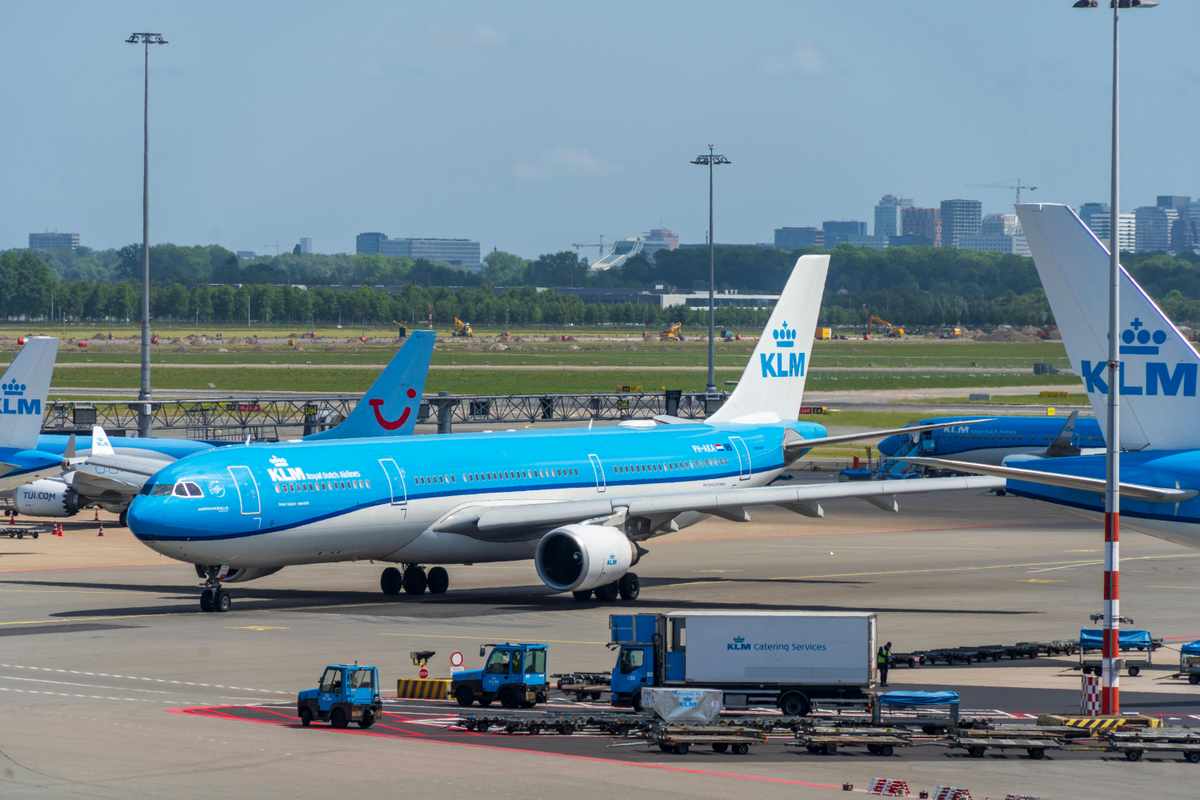
What happened to PH-BXK and why it matters
KLM said its own engineering unit removed the engines and the auxiliary power unit (APU) before the aircraft moved to Twente. The intention is to keep those parts in use rather than scrapping them. KLM Engineering & Maintenance also expects to extract 800 to 1,000 additional parts from the plane; those parts will be checked, re‑certified, and reused either by KLM or by other airlines.
Roel Toering, KLM’s Project Manager for Phase-out & Lease-In, described the approach as a way to keep valuable components flying rather than becoming scrap. This supports the remaining fleet and lowers the need to buy new spares.
AELS chief executive Johan Vlastuin explained the dismantling sequencing at Twente: “The aircraft arrives on our runway… first, the engines are removed, along with the APU.” The careful order of operations matters both for safety and for preserving value, since engines and many internal systems can be reconditioned while metal structures are recycled.
Timeline and near-term plans
- December 5, 2025 — PH-BXK ferried to Twente Airport for dismantling.
- January 2026 — A second Boeing 737-800 is expected to be retired and sent to Twente.
Expect a steady drumbeat of retirements, watched closely by airport teams and third‑party maintenance firms that depend on work from older aircraft types.
Fleet strategy and environmental aims
KLM is shifting away from older narrow-body jets on European routes in favor of newer Airbus models. The airline has stated plans to phase out Boeing 737-700s and 737-800s, replacing them with Airbus A320neo and A321neo aircraft. KLM argues the newer types:
- Are far quieter
- Are more fuel-efficient
- Produce lower CO₂ emissions
- Offer better passenger comfort and more seats
KLM and AELS framed the PH-BXK retirement as part of an environmental push: keep parts in circulation, recycle materials, and move to quieter, more efficient aircraft. For communities around airports, reduced noise can affect sleep, school days, and health. For passengers, changes may appear as different cabin layouts, updated overhead bins, and sometimes fewer delays linked to older aircraft maintenance.
Broader fleet changes (short- and long-haul)
KLM’s modernization extends beyond short-haul jets:
- KLM Cityhopper is replacing Embraer 190 aircraft with Embraer E195-E2s.
- The airline is adding four Boeing 787-10s, with the final one due in early 2026.
- KLM expects an Airbus A350-900 in 2026 to replace Boeing 777s and Airbus A330s.
- On the cargo side, KLM plans to introduce three Airbus A350F freighters as part of replacing Boeing 747 freighters.
Fleet change table (high-level)
| Area | From | To | Timing / Notes |
|---|---|---|---|
| Short-haul | Boeing 737-700 / 737-800 | Airbus A320neo / A321neo | Ongoing (PH-BXK retired Dec 5, 2025; next 737-800 Jan 2026) |
| Regional (Cityhopper) | Embraer 190 | Embraer E195-E2 | Underway |
| Long-haul | Boeing 777 / A330 | Airbus A350-900 | A350 expected in 2026 |
| Widebody additions | — | Boeing 787-10 | Final 787-10 due early 2026 |
| Freighter | Boeing 747F | Airbus A350F | Three A350F freighters planned |
Workforce, training, and immigration implications
For travelers, a retirement may seem routine, but for the airline and its workforce it means significant change:
- Pilots require new type ratings for different cockpits and avionics.
- Mechanics must retrain for new engines, systems, and maintenance routines.
- Employers may need to hire or relocate staff across borders to maintain schedules.
New aircraft bring different avionics, updated flight decks, and changed maintenance practices. Airlines commonly:
- Use manufacturer training pipelines.
- Recruit experienced specialists who have worked on similar types elsewhere.
- Bring in trainers, inspectors, and short-term specialist engineers during entry-into-service periods.
When specialists come from outside the EU, companies may need Dutch residence and work permission, even for short-term assignments. The Dutch Immigration and Naturalisation Service (IND) outlines employment-based routes and employer obligations at the official site: IND – Immigration and Naturalisation Service.
Remember that retirements shift schedules and can alter cabin layouts. Check updated seating, overhead bin configurations, or potential minor delays on your usual routes during the transition period.
Cross-border operational realities
- Maintenance checks often involve teams that move between countries on tight timelines, especially when swapping parts quickly.
- Pilots may be reassigned within corporate groups as routes and capacity change.
- Even though passengers usually face no border formalities within Europe, the staffing behind flights often depends on visas, background screening, and recognition of foreign licenses.
Large fleet transitions can raise demand for niche aviation talent, prompting cross-border recruitment when local labor pools are insufficient. (Analysis by VisaVerge.com)
Economic and community impacts
- Third‑party maintenance firms and ground teams may see changing workloads as older types phase out.
- Local communities may benefit from reduced noise and potential environmental gains.
- Suppliers of spares and training providers will need to adapt to new demand flows.
Key takeaways
The farewell to KLM’s first Boeing 737-800 is more than a single aircraft retirement. It signals a broader Airbus-led modernization that will:
– Recycle and reuse valuable aircraft components.
– Reduce noise and emissions around airports.
– Require extensive retraining, hiring, and cross-border staffing solutions.
– Reshape maintenance and support markets tied to older aircraft types.
For the many workers whose careers are built around specific aircraft, the retirement is a reminder that aviation is always in motion: the plane that helped KLM expand its European flying is now being broken down so its best parts can keep other jets flying, while the airline prepares for a next chapter that will test training systems, staffing plans, and the cross‑border rules that shape who does which job, and where.
KLM has retired its first Boeing 737-800, marking the start of a €7 billion fleet renewal program. The aircraft is being dismantled in Twente to recover 1,000 parts for reuse. Moving forward, KLM will replace its narrow-body fleet with Airbus A320neo and A321neo jets, focusing on efficiency and noise reduction, which will require significant training and cross-border staffing solutions.