- Aviation workers issued a seven-day strike ultimatum starting January 20, 2026, over failed mediation talks.
- Union demands include ending an eleven-year wage stagnation and moving to permanent employment contracts.
- A total shutdown would ground all Kenyan flights, severely impacting regional trade and tourism sectors.
KENYA — Kenya Aviation Workers Union (KAWU) issued a seven-day strike ultimatum on January 20, 2026, warning it could shut down Kenya’s airspace after court-ordered mediation talks with Kenya Civil Aviation Authority (KCAA) collapsed.
The union said the dispute escalated after the mediated process failed to produce an agreement, and it framed the ultimatum as a final window for government intervention before aviation operations across the country halt.
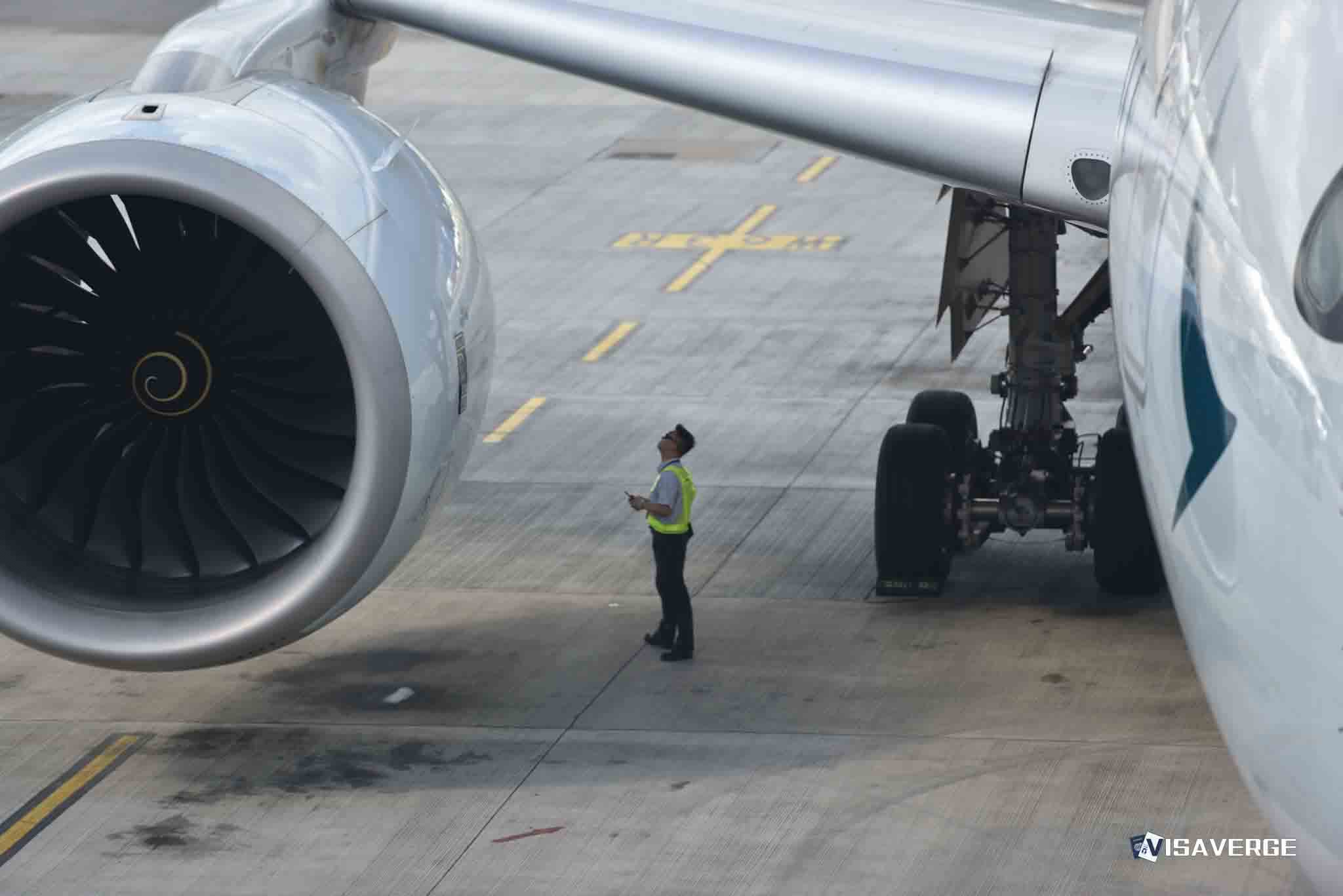
A nationwide work stoppage linked to KCAA would disrupt flights at Jomo Kenyatta International Airport (JKIA) and regional airports, with knock-on effects across daily aviation operations that depend on staffing, clearances and coordinated scheduling.
At the center of KAWU’s grievances sits what it described as 11 years without a salary review, a period the union said left workers behind as inflation reduced purchasing power.
Moses Ndiema, Secretary-General of KAWU, said workers faced wage stagnation and pointed to the last Collective Bargaining Agreement being signed in 2015.
KAWU tied its demands to pressures it described as cost-of-living and retention concerns, and it said the dispute now requires urgent decisions by the government, KCAA management and aviation stakeholders that rely on uninterrupted airspace operations.
One of the union’s demands calls for salary increases in the current financial year, an issue KCAA, in the union’s account of the dispute, said had not been budgeted.
Another demand targets contracting practices. KAWU wants workers shifted to permanent and long-term employment contracts instead of short-term contracts lasting three to six months.
KAWU also wants union membership rights for newly hired employees, which it alleged KCAA has prevented, making union access and organizing a live part of the dispute rather than a secondary issue.
Restructuring sits alongside pay and contracting in the union’s list of grievances. KAWU opposes a new organizational structure it said KCAA implemented without union consultation, and it asked for a reversal and a restoration of consultative processes.
Taken together, those issues set up a dispute that is both workplace-specific and operationally sensitive, because the union’s threatened action goes beyond a partial slowdown and into a complete halt of airspace activity.
KAWU said it has threatened a “total shutdown” of Kenya’s airspace that would ground all flights at JKIA and regional airports nationwide.
Ndiema tied the ultimatum directly to that threat, using language that left little room for a limited stoppage if talks do not move.
“We will close the airspace, ground everything, and shut down all Kenyan airports. This is a warning. If they do not intervene and resolve our issues within seven days, we will take action,” he said.
The countdown started with the ultimatum on January 20, 2026, placing the deadline around January 27, 2026, and giving a narrow window for renewed talks or a government-led intervention that could prevent a walkout.
A seven-day ultimatum can create immediate operational uncertainty even before any strike begins, as airlines, airport operators, and travelers weigh the prospect of sudden disruption and the limited time available for de-escalation.
KAWU’s threat focuses on a stoppage that would affect the airspace itself, a scenario that can ripple across aviation activity because flights cannot operate normally if the system that enables departures, arrivals and airport functioning stops.
Even without a detailed public plan for how a shutdown would unfold, the union’s stated intention to ground “everything” points to widespread disruptions that would not be confined to a single terminal, route or airport.
KAWU framed the ultimatum as a push for immediate action rather than a drawn-out negotiation, and it called for the government to step in before the deadline.
Walter Ongeri, Chairman of KAWU, urged intervention and presented it as a way to avert an escalation.
“We are asking the government to intervene now and save face before the situation escalates into a full-blown shutdown of operations,” Ongeri said.
The union’s statements also signaled internal solidarity across aviation workers affected by the dispute, linking KCAA employees’ grievances to wider labor concerns across the sector.
Daniel Yatich, KAWU Assistant Treasurer, directed his message at KCAA management and emphasized collective action.
“We want to tell KCAA management that an injury to one comrade from the aviation sector is an injury to all. We are in solidarity with our brothers and sisters from KCAA,” Yatich said.
The threatened shutdown carries economic stakes beyond the airports themselves, with KAWU and the broader public discussion around the ultimatum centering on tourism, trade, and regional air connectivity.
Kenya relies on air links for business travel and for time-sensitive cargo that cannot easily shift to slower modes of transport without cost, disruption and delays that compound across supply chains.
Nairobi’s role in regional connectivity also raises the risk of wider disruption if flights stop, because a halt at JKIA can break onward travel plans and connections that depend on the hub functioning smoothly.
The union’s warning arrives with fresh memories of earlier disruption in the sector. A strike, the union said, would represent the most significant aviation disruption since industrial actions in September 2025, when services were paralyzed at JKIA and other airports.
That reference has sharpened attention on whether the current standoff will follow a similar path, particularly as the ultimatum sets a clear time horizon for action and a clear target for government involvement.
KAWU’s core claims, however, focus on the longer arc of workplace change rather than a single recent decision, with the union presenting wage stagnation and employment insecurity as problems that accumulated for years.
By highlighting the last Collective Bargaining Agreement being signed in 2015, the union anchored its argument in a specific labor milestone and presented the period since then as one of unresolved pay issues and growing frustration.
The union’s pay demand centers on the current financial year, and it has linked the request to inflation’s impact on workers’ purchasing power, a framing that places day-to-day household costs alongside sector-wide staffing and retention concerns.
KCAA’s position on budgeting, as described by the union, adds another layer to the dispute because it raises the question of whether pay adjustments can be funded in the current financial year without wider government action.
Beyond pay, the demand for permanent and long-term contracts addresses how stable employment is structured for workers, with KAWU pointing to a short-term cycle lasting three to six months that it wants replaced by more secure terms.
Disputes about contract length can quickly become disputes about workforce continuity, as employees on short contracts can face uncertainty about their future status, while employers may see flexibility as part of staffing and cost control.
KAWU’s push for union membership rights for newly hired employees points to a dispute about representation and workplace voice, which can affect how grievances are raised, how negotiations proceed, and how the workforce responds to management changes.
The union also put consultation at the center of its objections to restructuring, saying KCAA implemented a new organizational structure without involving the union and calling for a reversal and renewed consultation.
Those demands collectively position the ultimatum as more than a single-issue dispute about a salary review, even though the “11 years without a salary review” claim remains the headline grievance.
Still, the ultimatum’s operational threat has become the immediate focus, because a “total shutdown” of airspace would create immediate disruption for travelers, airlines, airport businesses and cargo operators.
For passengers, a sudden halt of flights can mean cancellations, delays and uncertainty about rebooking and onward connections, especially when a central airport like JKIA cannot operate normally.
Airlines can also face operational pressure when a shutdown affects multiple airports at once, complicating aircraft positioning and crew scheduling while widening disruption beyond the first day of stoppage.
KAWU has not presented the ultimatum as a symbolic protest. Its leaders have described the threatened action as a practical step they will take if intervention does not arrive within the seven-day window.
The union’s repeated references to government intervention indicate it sees resolution requiring more than bilateral engagement with KCAA management, especially with KCAA described as saying salary increases in the current financial year were not budgeted.
With the deadline around January 27, 2026, the next few days will likely test whether the parties return to talks after the collapse of court-ordered mediation, or whether the dispute moves toward the shutdown KAWU has threatened.
Developments that signal de-escalation include renewed talks, court action, a revised ultimatum, or airline advisories that indicate operations will continue, while escalation would be marked by no talks, staffing walkouts, or operational restrictions consistent with the union’s “total shutdown” warning.
For now, KAWU’s message remains centered on urgency and solidarity, with leaders pairing demands for a salary review and job security with a direct warning about what happens if the clock runs out.
“We are asking the government to intervene now and save face before the situation escalates into a full-blown shutdown of operations,” Ongeri said.