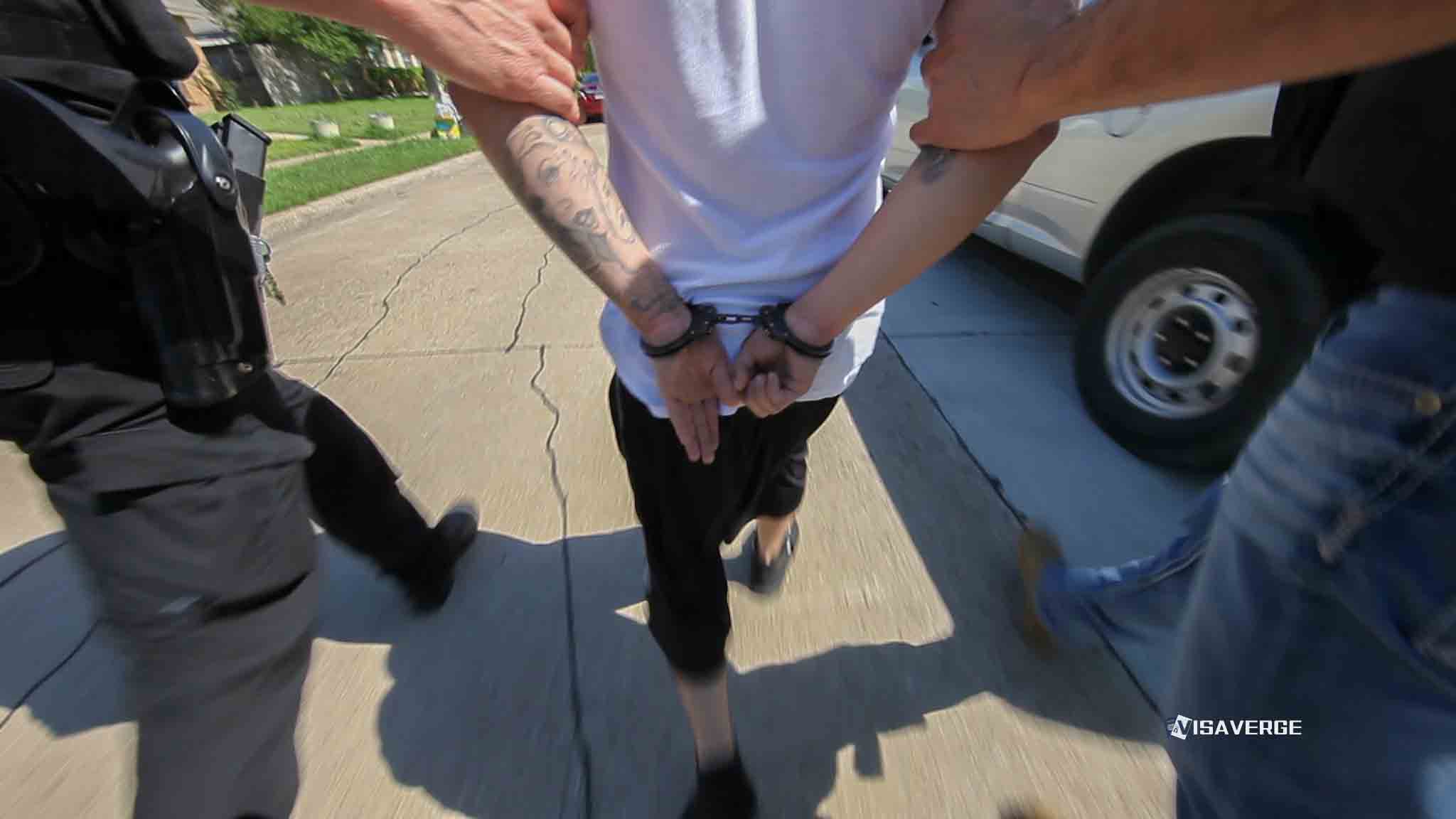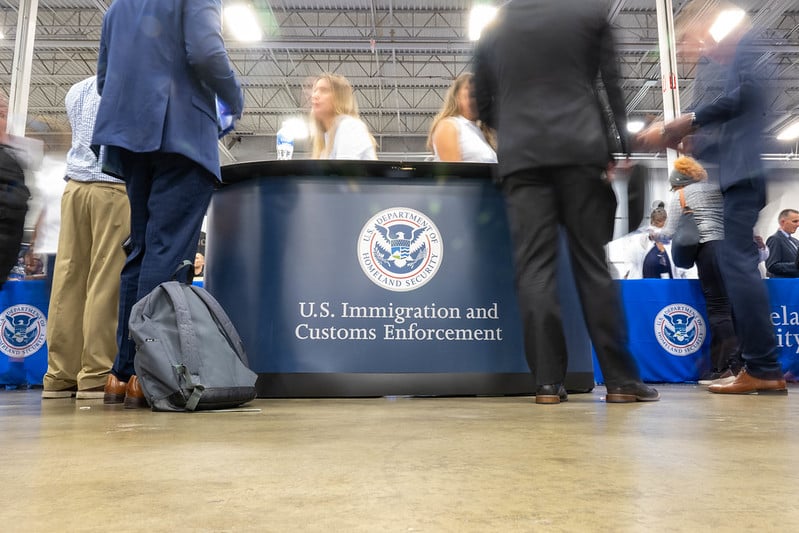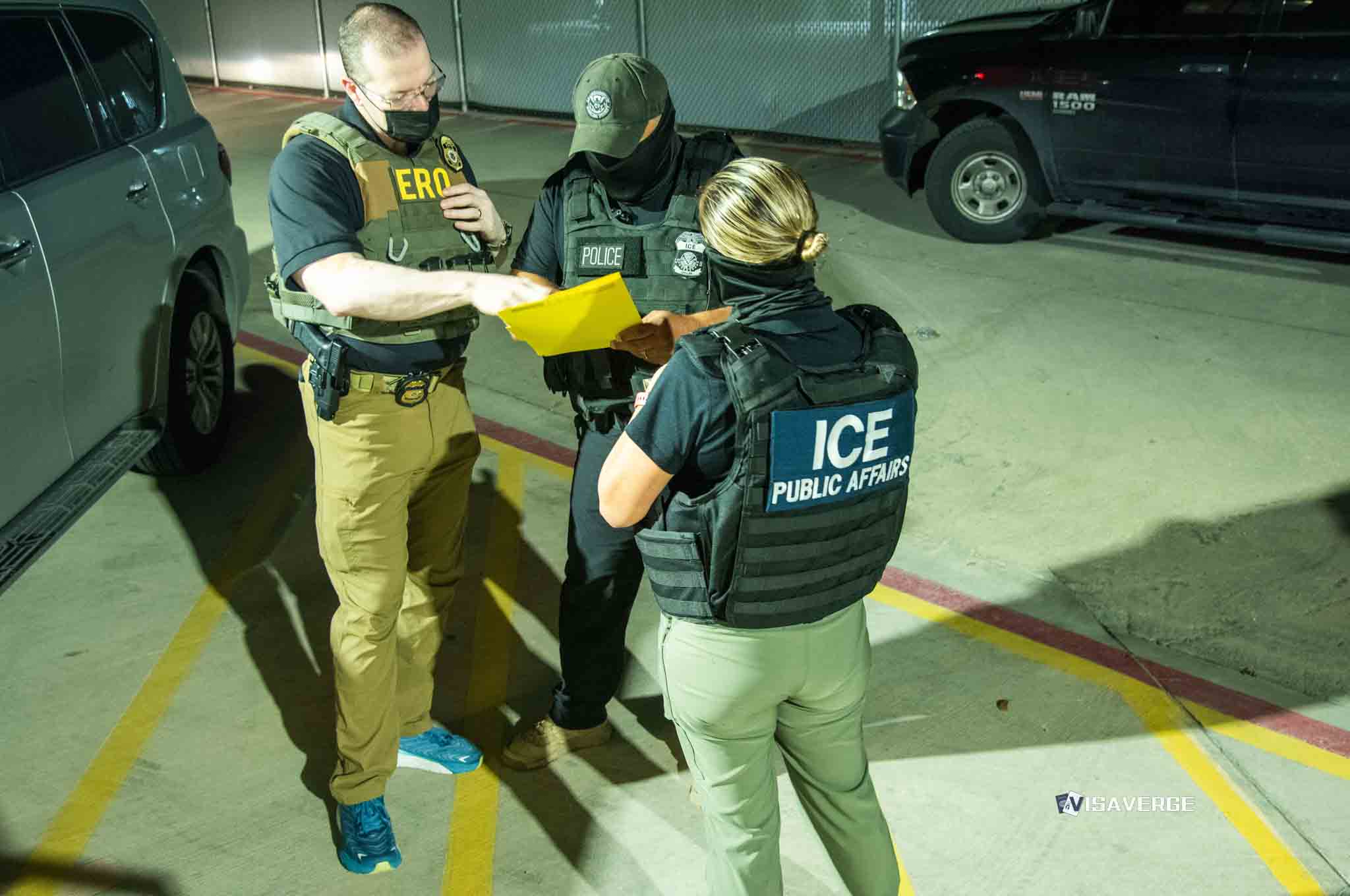
Kansas lawmakers are moving in opposite directions on immigration enforcement as ICE operations intensify across the country. Republican Senate President Ty Masterson introduced a bill to protect federal agents and criminalize obstruction of their activities, while Democratic Senator Cindy Holscher is backing legislation to ban officers from wearing masks during operations. The competing bills reflect a deep partisan divide in the state over whether to help or restrict ICE, fueled in large part by events in Minnesota and reports of increased federal agent activity near Kansas City.
Republican Bill: Protect Federal Agents
Senate President Ty Masterson (R-Andover) introduced a bill that would allow federal law enforcement to move vehicles that interfere with their activities and expand the crime of obstruction to include interfering with federal law enforcement operations. A hearing is scheduled for next week Thursday in the Federal and State Affairs Committee.
Democratic Bill: Restrict Agent Anonymity
Senator Cindy Holscher (D-Johnson County) is backing a bill that would prohibit officers from wearing masks, face coverings, or other gear that hides their identity during operations, unless the law specifically allows it. The bill was sent to the Senate Judiciary Committee and does not yet have a hearing set.
The Competing Bills: A Side-by-Side Comparison
The two bills introduced on February 4, 2026, take fundamentally different approaches to ICE operations in Kansas. Senate President Masterson’s bill would make it easier for federal agents to operate, while Senator Holscher’s bill would impose new requirements on how agents identify themselves. Both legislators cited events in Minnesota as motivating their proposals, but drew very different conclusions.
Would allow federal law enforcement to move vehicles that interfere with their operations. Expands the existing crime of interference to specifically include obstructing federal law enforcement activities. Masterson stated: “We’re not having Minneapolis come to Kansas.”
- Vehicle removal authority for federal agents
- Expanded obstruction penalties
- Targets protest-style interference
- Senate President as sponsor — strong procedural leverage
Would prohibit masks, face coverings, or other gear that conceals an officer’s identity unless state law specifically allows it. Holscher declared: “What we are seeing here is the denial of due process.”
- Bans identity-concealing gear for law enforcement
- Responds to masked ICE agent complaints nationwide
- Aligned with congressional Democratic demands
- Holscher is a 2026 Democratic candidate for governor
Law Enforcement Skepticism on Both Bills
Wabaunsee County Sheriff Eric Kirsch criticized both proposals. On Masterson’s bill, he cautioned: “Never ever give the federal government more power and authority. I think the existing federal laws and rules and regulations are sufficient enough.” His comments reflect broader unease among Kansas sheriffs about expanding federal reach regardless of the political direction.
Earlier Legislative Efforts: Democrats Push Back on ICE in Kansas
The February 2026 bills are the latest in an escalating series of legislative moves by both parties. Kansas Democrats have been particularly active with multiple attempts to restrict ICE operations since the 2026 session began in January.
📅 Kansas ICE Legislation Timeline
Political Context
Both Senate President Ty Masterson (R) and Senator Cindy Holscher (D) are running for governor in 2026. Their competing ICE bills have become a key policy battleground in the Kansas gubernatorial race, with immigration enforcement emerging as a defining issue for the campaigns.
Kansas & the 287(g) Program: Where Things Stand
Kansas has an evolving and complex relationship with federal immigration enforcement. While the state’s 287(g) participation has expanded significantly under the Trump administration, many local law enforcement leaders remain reluctant to take on immigration duties, citing resource constraints and community trust concerns.
📊 Kansas 287(g) Participation
🌎 National 287(g) Program
Understanding the 287(g) Models in Kansas
| 287(g) Model | How It Works | KS Usage | Controversy Level |
|---|---|---|---|
| Warrant Service (WSO) | Officers issue ICE warrants to hold people already in jail. ICE has 48 hours to pick up detainees. | Most common in Kansas | Moderate |
| Jail Enforcement (JEM) | Jail staff screen booked individuals for immigration status. ICE may start deportation if person is removable. | Some agencies | Moderate |
| Task Force (TFM) | Officers act as immigration enforcers during regular patrols. Most expansive and invasive model. | Rare in Kansas | High |
Key Distinction: Voluntary vs. Mandatory
All current 287(g) agreements in Kansas are voluntary. The 2025 SB 178 attempt to mandate participation stalled after pushback from law enforcement associations. Many Kansas sheriffs, including Sedgwick County’s Jeff Easter, have publicly stated they do not want officers acting as ICE agents, even while participating in the limited Warrant Service model.
What This Means for Immigrants in Kansas
The outcome of these competing bills will have real consequences for the immigrant community in Kansas. The state’s political landscape is shaped by its Republican supermajority in the Legislature, its outgoing Democratic governor, and a gubernatorial race where immigration enforcement is a central issue.
🔴 If Pro-Enforcement Bills Pass
- Obstructing or interfering with ICE operations becomes a state crime
- Protests that block federal agents could lead to arrests and vehicle seizures
- Federal agents gain authority to move obstructing vehicles
- Community advocates face greater legal risk when documenting operations
- May discourage “sanctuary”-style resistance at the local level
🔵 If Restrictive Bills Pass
- ICE agents in Kansas would have to show their identities during operations
- Agents could face accountability for conduct violations
- Warrantless raids could be limited within state jurisdiction
- Democratic bills face steep odds — unlikely to pass Republican supermajority
- Passage would align Kansas with congressional Democratic priorities
Know Your Rights
More than 35,000 Know Your Rights cards have been distributed throughout Kansas to educate people about their legal protections as immigration enforcement increases. Regardless of what legislation passes, immigrants retain constitutional rights including the right to remain silent, the right to refuse consent to search without a judicial warrant, and the right to an attorney.
Disclaimer: This article is for informational purposes only and does not constitute legal advice. Immigration laws and enforcement policies are subject to change. Consult with a qualified immigration attorney for advice specific to your situation. For the latest updates on Kansas legislation, visit the Kansas State Legislature website.