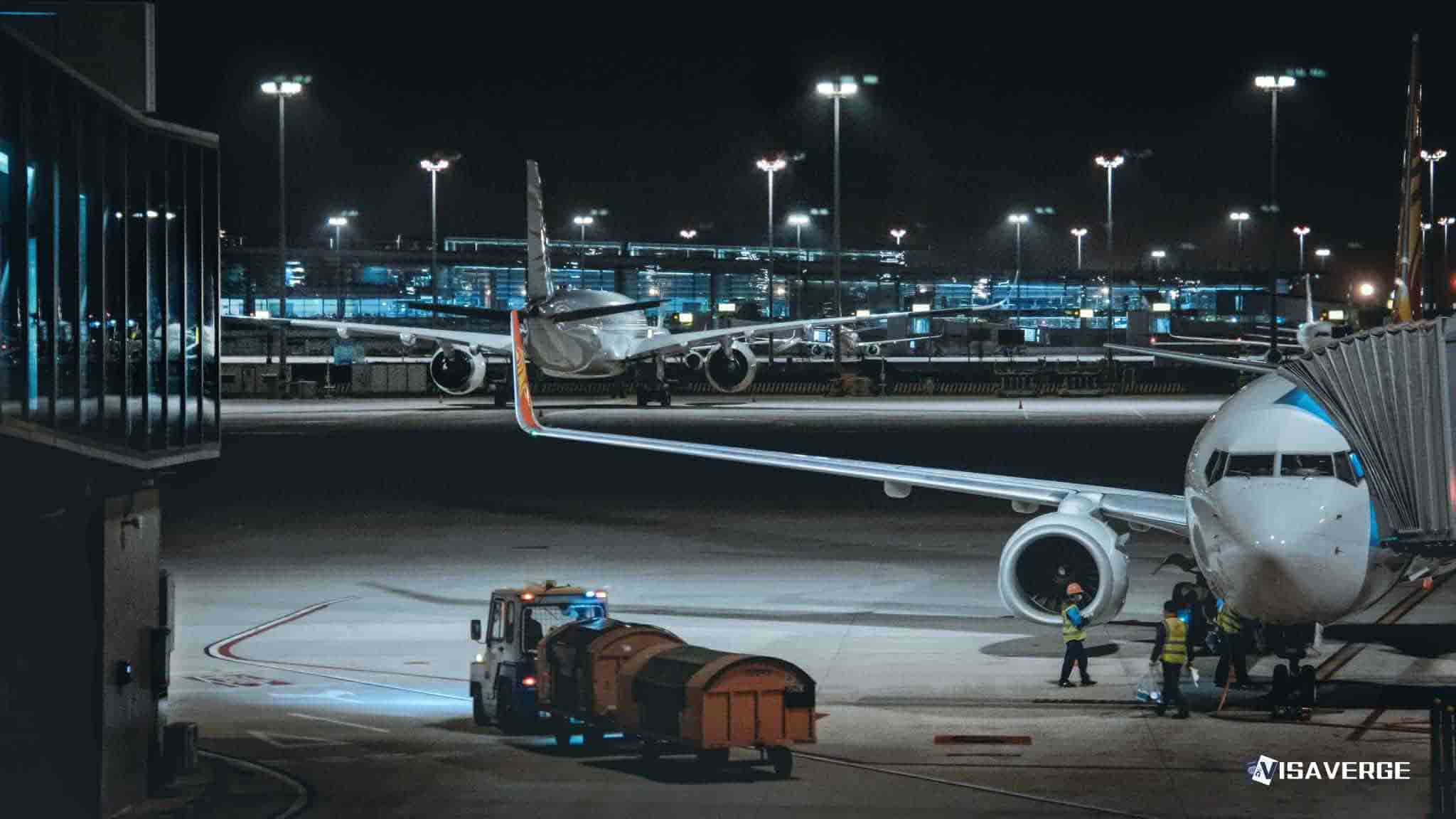
(SURABAYA, INDONESIA) — juanda international airport resumed normal operations after severe weather, including a weak tornado, disrupted activity and damaged equipment on the airside in Surabaya.
Summary of the incident
Juanda International Airport returned to normal operational status after a weather system produced a weak tornado and strong winds that damaged ground support equipment and affected flight movements. Several airlines reported delays and suspended services while airport teams worked to restore safe, routine operations.
Damage and operational impact
- The tornado and strong winds damaged baggage carriers, vehicles, and trees on and around the airside.
- Passenger stairs on the apron collapsed, and other ground support equipment was brought down by the winds.
- Damage to this equipment complicated routine tasks such as boarding, deplaning, baggage handling, and aircraft servicing, leading to cascading operational delays even where runway conditions remained acceptable.
Airlines affected
The disruption at Juanda rippled through airline schedules. Carriers reported delays, suspensions, or timetable adjustments during the period of poor weather.
| Airline | Reported effect |
|---|---|
| Garuda Indonesia | Flights delayed due to airport activity disruption |
| Citilink Indonesia | Flights delayed due to airport activity disruption |
| Nam Air | Flights delayed due to airport activity disruption |
| Batik Air | Suspended flights at Juanda; also suspended operations at other Indonesian airports (including Sultan Hasanuddin in Makassar) |
| Other carriers | Experienced delays and schedule adjustments across affected airports |
Broader regional impact
- The Juanda incident was part of wider weather challenges affecting multiple Indonesian regions.
- Indonesia’s aviation sector experienced cancellations and delays across key airports, placing pressure on airline schedules and airport recovery efforts.
- Batik Air’s simultaneous suspensions at Juanda and Sultan Hasanuddin (Makassar) illustrated that the weather system’s impact extended beyond Surabaya.
Passenger implications
- The episode highlighted that airport performance depends on more than runway availability; airside ground handling equipment and passenger boarding infrastructure are critical.
- When baggage handling and apron servicing slow or stop, disruptions can quickly cascade into broader delays and cancellations, even if aircraft themselves are airworthy.
- Damage to trees and vehicles around the airport added further complexity to restoring safe airside conditions.
Key takeaway: Strong winds and even a weak tornado can quickly disrupt airport operations by damaging ground support equipment and apron infrastructure, causing knock-on effects for airlines and passengers even when runways remain usable.
Recovery and lessons learned
- Airport crews restored operations after addressing the damage, resolving incidents, and enabling airlines to resume regular activity.
- The incident underscores the operational sensitivity of exposed airside equipment and the need for rapid response plans to protect or clear such equipment during severe weather.
- Restoring passenger services required not only runway clearance but also repairing or replacing damaged baggage carriers, passenger stairs, and other ground support machinery to return turnaround processes to normal.
Juanda International Airport’s return to normal service allowed routine processes—boarding arrangements, ground support workflows, and flight movements—to continue without the added complications posed by the storm-damaged equipment.
Juanda International Airport has restored regular flight services after a weak tornado and severe winds damaged ground support equipment. The storm caused passenger stairs to collapse and disrupted baggage handling, leading to cascading delays for several Indonesian airlines. While the runways were clear, the damaged infrastructure on the apron hindered routine aircraft servicing. Operations have since stabilized as crews repaired equipment and normalized schedules.