(MINNEAPOLIS, MINNESOTA) — Vice President JD Vance defended an immigration and customs enforcement (ICE) agent who shot and killed 37-year-old Renee Nicole Good during a federal immigration enforcement operation in Minneapolis, while warning that aggressive enforcement will intensify.
In a post on X responding to public outrage over the killing, Vance wrote: “the gaslighting is off the charts and I’m having none of it”.
“This guy was doing his job. She tried to stop him from doing his job. When he approached her car, she tried to hit him,” Vance wrote.
Good was shot and killed on Wednesday, January 7, 2026, in South Minneapolis near Portland Avenue South and East 33rd/34th Street, a few blocks from Powderhorn Park, during a federal immigration enforcement operation.
Family members identified Good as a wife and mother of three.
Homeland Security Secretary Kristi Noem, speaking at a news conference, said Good had been “stalking and impeding agents all day” and claimed she “weaponized her vehicle” and committed an “act of terrorism.”
dhs spokeswoman Tricia McLaughlin said Good was shot after she allegedly tried to run over law enforcement with her car.
Minneapolis Mayor Jacob Frey rejected that description after viewing video of the incident.
“Having seen the video myself, I want to tell everybody directly: That is bull—,” Frey said.
“This was an agent recklessly using power that resulted in somebody dying, getting killed,” Frey added.
Frey also publicly told ICE to “get the f*ck out of Minneapolis,” in comments reported in national coverage.
Video circulating on social media and described by the Los Angeles Times shows a maroon compact SUV reversing, then moving forward and turning to leave when an agent standing in front of the vehicle opens fire.
Noem said the agent involved had previously been dragged by a vehicle in June. She said he was hospitalized and released after that incident.
KARE 11 reported a large federal presence in the Twin Cities tied to what the Department of Homeland Security called its “largest immigration enforcement ever,” with about 2,000 federal agents deployed and 150 arrests in the preceding days.
vance framed criticism of the killing as a political attack on federal enforcement and blamed Good and those protesting the operation.
“A tragedy? Absolutely. But a tragedy that falls on this woman and all of the radicals who teach people that immigration is the one type of law that rioters are allowed to interfere with,” Vance wrote.
The confrontation, the video, and the sharply competing accounts have fueled protests in Minneapolis and beyond, with demonstrators linking Good’s death to broader fears about stepped-up interior enforcement.
Thousands gathered at the shooting site for a vigil hours after the killing, the Los Angeles Times reported.
Hundreds of demonstrators also protested at a federal courthouse in downtown Minneapolis, chanting “ICE out now!”
In downtown Los Angeles, dozens rallied at Placita Olvera, with additional protests outside the USCIS building, according to the Los Angeles Times.
Signs at the Los Angeles protests read “From Minneapolis to Los Angeles, stop ICE terror” and “ICE out of L.A.”
California Gov. Gavin Newsom blamed President Trump’s policies.
“His deliberate escalation of intimidation and chaos has consequences. His reckless crackdown must end,” Newsom said.
L.A. County Supervisor Janice Hahn called on Noem to withdraw ICE from L.A. County and elsewhere.
“These ICE agents are undertrained and trigger-happy and everyone who has seen this video knows ICE murdered this woman,” Hahn said.
“These ICE agents are too dangerous and they should not be operating on our streets,” she added.
Assemblymember Mark González (D-Los Angeles) called the killing a “public execution” and warned of wider risk from federal immigration operations.
“ICE does not give a single s— who you are, how long you’ve lived here, or how hard you’ve worked. They are coming for ALL of us. They are armed with fear, force, and zero accountability,” González wrote.
“The fatal shooting of Renee was a public execution, NOT self-defense,” he added.
Masih Fouladi, executive director of the California Immigrant Policy Center, said the case reflects a broader pattern in which immigration operations produce violence.
Fouladi said ICE enforcement has “resulted in violence and bloodshed” and that federal agents have fired on at least nine people in five states and Washington, D.C.
“The tragic killings of people by ICE agents are yet another example of how mass immigration raids endanger our communities and erode our constitutional rights,” Fouladi said.
The Minneapolis shooting is also being cited alongside other recent ICE shootings in California that have drawn scrutiny and anger, including incidents involving U.S. citizens.
On New Year’s Eve, Keith Porter Jr. was fatally shot by an off-duty ICE agent outside his apartment complex in Northridge, California, the Los Angeles Times reported.
Porter’s family and attorney said he was firing a gun into the air to celebrate and posed no threat, according to the Los Angeles Times.
In October, immigration agents shot and wounded Carlos Jimenez, a U.S. citizen, in Ontario, California, just days after TikTok streamer Carlitos Ricardo Parias was shot in the arm, the Los Angeles Times reported.
In August, a federal agent in San Bernardino opened fire on people inside a truck after smashing the driver’s side window, according to the Los Angeles Times.
The driver sped away, the Los Angeles Times reported.
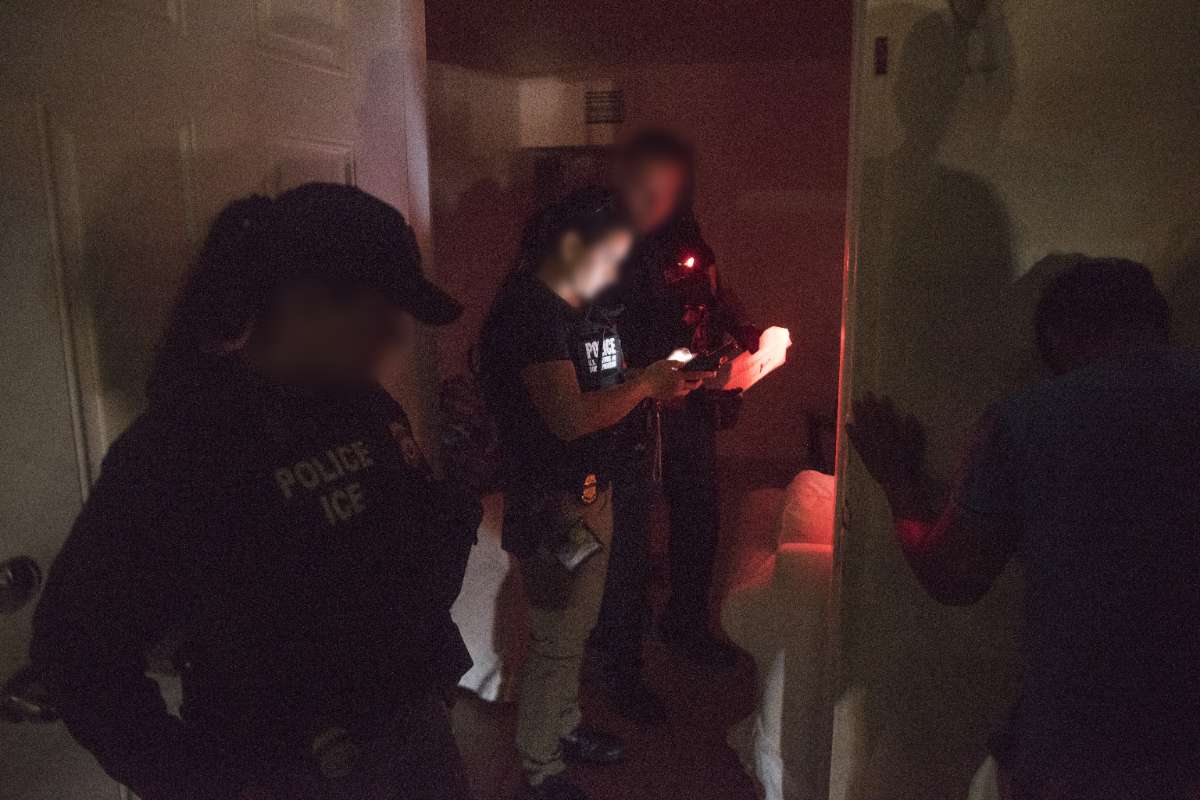
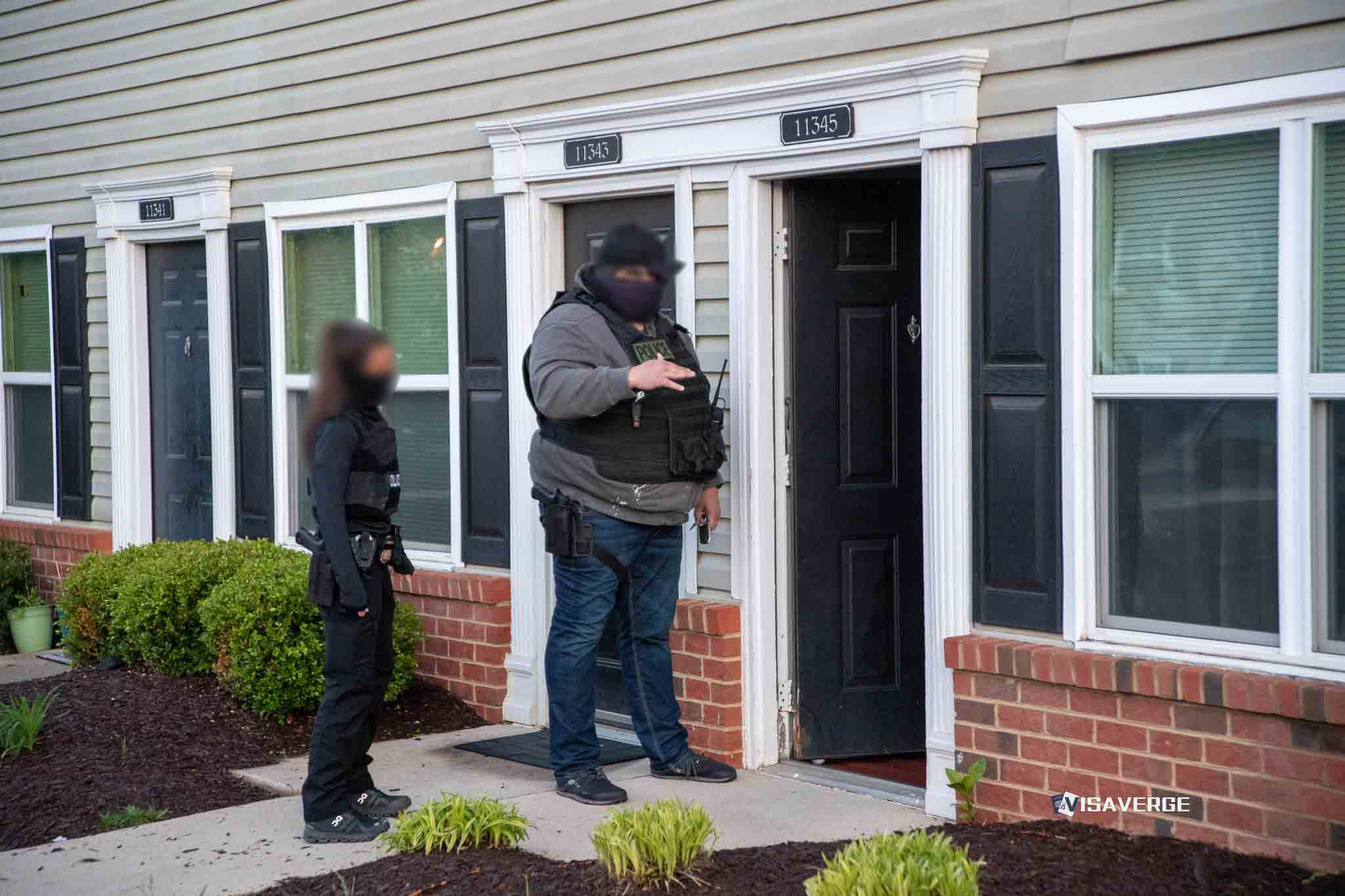
Vance’s public defense of the agent and his insistence that the administration will intensify enforcement have sharpened focus on tactics that critics describe as Door-to-Door operations.
The “door-to-door” description has circulated in coverage and commentary about the administration’s direction, even as Vance’s published remarks centered on blaming Good and defending the agent’s actions.
In Minneapolis, the intensity of the federal presence reported by KARE 11 has compounded concerns among residents and local officials about the risks of large-scale enforcement in dense neighborhoods.
Good’s death has become the central flashpoint, with protesters demanding ICE leave the city and officials trading accusations over what happened in the moments before the shooting.
Noem’s characterization of Good’s actions as an “act of terrorism” stands in direct contrast to Frey’s account after watching video, and to the interpretation of the circulating footage described by the Los Angeles Times.
The dispute has played out in blunt language, with Vance calling the backlash “gaslighting,” Frey using profanity to demand ICE leave, and elected officials in California describing the killing as murder and a “public execution.”
For protesters at the Minneapolis courthouse and at demonstrations in Los Angeles, the killing has also become a warning about the consequences of large, fast-moving enforcement actions carried out in public spaces.
Chants of “ICE out now!” in Minneapolis were echoed by signs in Los Angeles that read “ICE out of L.A.”
González’s warning that “They are coming for ALL of us” captured the fear that intensified operations will spill beyond immigration targets and into wider community confrontations.
Fouladi, pointing to cases in multiple states, said shootings connected to ICE enforcement show how raids can escalate.
“The tragic killings of people by ICE agents are yet another example of how mass immigration raids endanger our communities and erode our constitutional rights,” he said.
Vice President JD Vance defended a federal agent involved in the fatal shooting of Renee Nicole Good during a Minneapolis immigration operation. While the administration claims Good attempted to strike the agent with her car, local officials and video evidence suggest a reckless use of power. The incident has fueled massive protests and severe criticism from leaders in Minnesota and California regarding aggressive federal tactics.