January 3, 2026
- Updated deportation date to November 14, 2025 and specified Nogales, Mexico as destination
- Added exact detention length: nearly 11 months (confirmed 11-month/9–11 month timeline)
- Included parole date (January 21, 2025) and asylum denial in September 2025
- Expanded conviction details with October 2009 charges and 2008 incident context
- Added military service specifics, injuries (TBI, burns), lost N-400 citizenship packet in 2006
- Included removal logistics: deported from Florence, Arizona around 4:00 a.m., bused on November 11
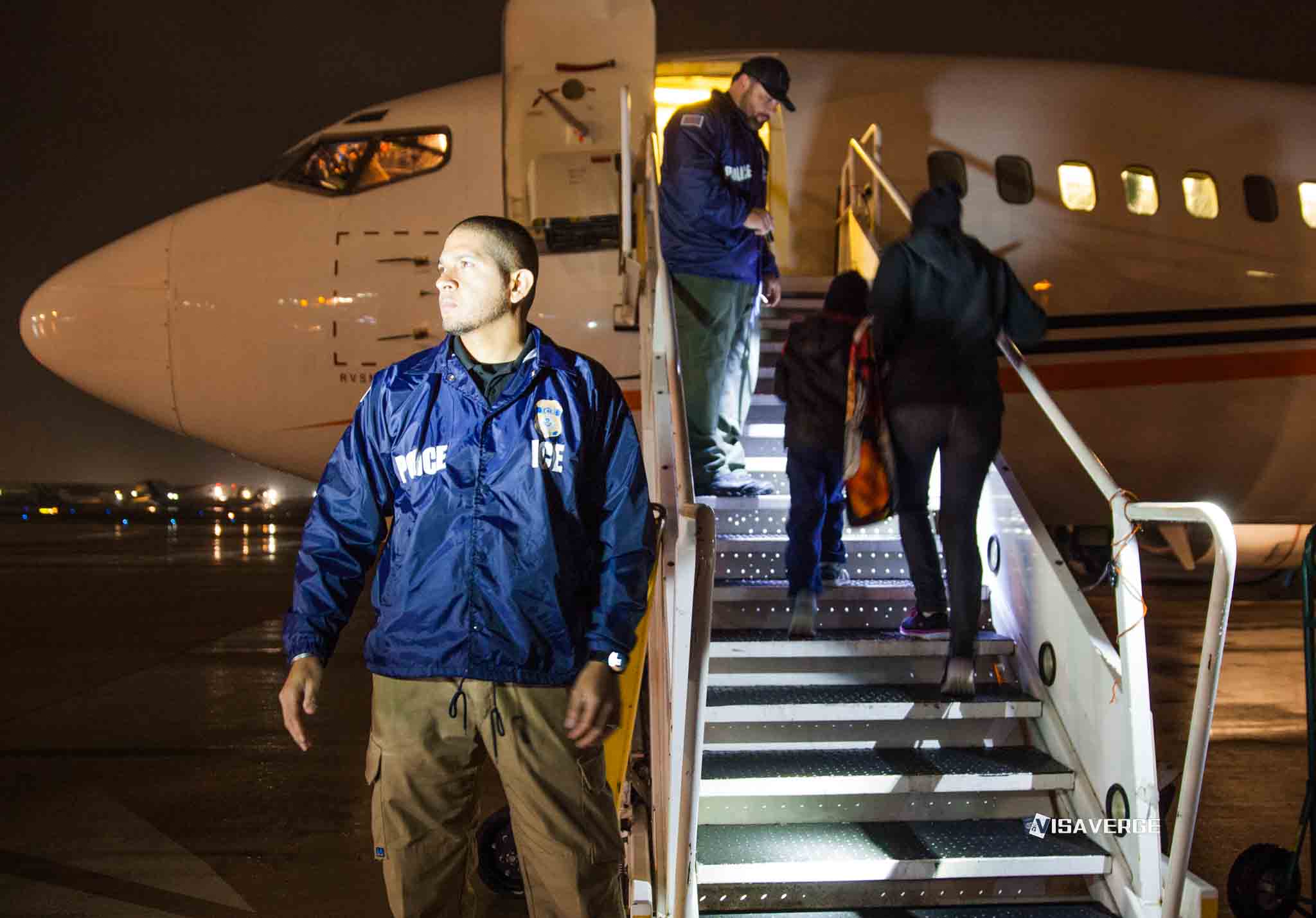
(NOGALES, MEXICO) — U.S. immigration authorities deported Iraq War veteran Jose Barco to Mexico on November 14, 2025, ending an 11-month detention case that drew protests and renewed scrutiny of how aggravated felony convictions can override military service.

Case overview and removal timeline
Barco, 40, a Purple Heart recipient who arrived in the United States as a child from Venezuela, was removed after a 2009 attempted murder conviction that immigration judges treated as an aggravated felony, sharply limiting his options for relief.
- ICE confirmed the removal to Nogales, Mexico, after earlier attempts to deport him to Venezuela failed.
- He had been transferred through multiple detention facilities in several states during the nearly 11 months in ICE custody.
- His wife, Tia Barco, texted during the deportation: “I have no idea where my husband is,” as communication collapsed.
- She later said, “This country chose punishment. now permanent banishment.”
Barco was deported from a detention facility in Florence, Arizona, at approximately 4:00 a.m., after nearly 11 months in ICE custody.
Criminal conviction and immigration consequence
- The deportation followed his January 21, 2025 parole from a 52-year Colorado prison sentence. ICE agents detained him immediately outside Canon City and began a string of transfers, according to court records and family statements.
- Court records traced the conviction to a 2008 Colorado Springs house party, where Barco fired into a crowd and injured a pregnant woman in the leg.
- He was convicted in October 2009 of:
- Two counts of attempted murder with extreme indifference
- Felony menacing with a real or simulated weapon
- He received a 52-year sentence.
Immigration consequences turned on Immigration and Nationality Act (INA) Section 237(a)(2)(A)(iii), under which attempted murder qualifies as an aggravated felony, rendering noncitizens deportable with limited defenses. The account said his asylum claim was denied in his September 2025 immigration court loss.
| India | China | ROW | |
|---|---|---|---|
| EB-1 | Apr 01, 2023 ▲31d | Apr 01, 2023 ▲31d | Current |
| EB-2 | Jul 15, 2014 ▲303d | Sep 01, 2021 | Current |
| EB-3 | Nov 15, 2013 | Jun 15, 2021 ▲45d | Jun 01, 2024 ▲244d |
| F-1 | May 01, 2017 ▲174d | May 01, 2017 ▲174d | May 01, 2017 ▲174d |
| F-2A | Feb 01, 2024 | Feb 01, 2024 | Feb 01, 2024 |
Military service, injuries, and citizenship attempts
Barco entered the United States legally in 1990 at age 4, grew up in southern Colorado, and enlisted in the Army at 17.
- He served as an infantryman with the 2nd Battalion, 12th Infantry at Fort Carson and completed two tours in Iraq’s Sunni Triangle.
- On November 11, 2004, Barco lifted a burning car bomb chassis off two pinned soldiers, sustaining burns, a traumatic brain injury (TBI) from the blast, and later a PTSD diagnosis.
- His former medic, Ryan “Doc” Krebbs, recounted Barco realizing he was on fire only after saving his comrades.
- He received the Purple Heart for wounds in action and was later medically discharged.
Citizenship attempts:
– Barco applied for citizenship in summer 2006 between tours, with commanding officer Lt. Col. Michael Hutchinson assisting, but the packet was lost by U.S. Citizenship and Immigration Services (USCIS), derailing naturalization.
– A second attempt after his tours faltered amid mental health struggles.
– The account referenced Form N-400 as part of the citizenship efforts during service.
Detention transfers, legal filings, and failed deportation to Venezuela
After his parole on January 21, 2025, the transfer from prison custody to immigration detention began immediately and continued for months, leaving his family trying to track him across the ICE system.
- Over nine months, he cycled through at least nine facilities across Colorado, Texas, Arizona, Louisiana, and more, including El Valle in Raymondville, Texas, and Florence, Arizona.
- The transfers disrupted family ties; his wife last visited him in 2017 and relied on tablet calls while he was moved repeatedly.
- An April 2025 deportation flight to Venezuela via Honduras failed after officials rejected his birth certificate as “forged,” leaving him stranded until he was returned to the United States.
- Legal filings grew to about 1,000 pages, including bond motions and expert reports on TBI and PTSD, all denied, culminating in a February 2025 final removal order.
Life and coping in detention
Barco coped in detention by cutting detainees’ hair and teaching English, but isolation increased and he later spoke only to his mother.
- The account said VA assessments were blocked in ICE facilities, and loud noises and confinement worsened his conditions.
- Supporters connected the shooting to unaddressed war injuries (TBI and PTSD), while the immigration system treated the 2009 attempted murder conviction as the controlling fact.
“I made a mistake. I shot into a crowd and hit a woman in the leg. I own that. I paid for that.”
— Barco, acknowledging the crime in interviews described in the account
Final movements, third-country removal to Mexico, and family status
The final movements were abrupt and tied to Veterans Day.
- On November 11, 2025, Barco was bused to Florence, Arizona.
- He was deported to Nogales, Mexico, early November 14.
- Mexico accepted him under INA provisions allowing third-country deportation if the destination consents, after U.S. officials tried to remove him to Venezuela.
- The account said he had no ties to Mexico and had not visited the country before.
Days later the family received a call: “He is currently in Mexico, and he is safe.” Even with that assurance, uncertainty lingered about his processing in Nogales — described as taking up to five days — and what might follow. Tia Barco preferred Mexico over Venezuela for better healthcare.
By early 2026, the account said there were no updates indicating his return, leaving his family in limbo after the deportation to Nogales.
Reactions, advocacy, and broader enforcement context
Barco’s case became a flashpoint because it combined a decorated record from the Iraq War with a serious criminal conviction and a prolonged detention period that family and supporters said worsened his mental health.
- Veterans’ groups protested Barco’s deportation.
- Vets Forward’s Ricardo Reyes called it a “national disgrace.”
- Volunteer strategist Anna Stout criticized the process as “frustrating,” citing the lack of DHS or ICE alerts and the Veterans Day timing.
- Platoon mates reacted with shock (one message captured: “WTF?”).
Broader enforcement picture described in the account:
– The deportation unfolded as President Trump, inaugurated in January 2025, pushed an agenda to ramp up deportations of criminal noncitizens.
– Over 14,180 removals via Nogales from January to September 2025 were recorded in the account.
– LULAC reported four veterans deported since January 20, 2025, and five detained.
The account said DHS attorneys argued for removal to Venezuela, Mexico, or Cuba.
Key legal and policy issues highlighted
- The case highlights how aggravated felony designations under the INA can make noncitizen service members vulnerable to removal, even when they have military service and service-related injuries.
- It underscores how lost or delayed naturalization paperwork (the lost Form N-400 packet) and mental health struggles can be decisive in a service member’s long-term immigration status.
- Advocacy around the case emphasized:
- The need for reciprocal protection for veterans with service-connected injuries.
- How paperwork, timing, and immigration law definitions can determine life-altering outcomes.
Important dates and facts (at-a-glance)
| Item | Detail |
|---|---|
| Deportation date | November 14, 2025 |
| Age | 40 |
| Military service | Infantry, 2nd Battalion, 12th Infantry, two Iraq tours |
| Injury/awards | Purple Heart, burns, TBI, PTSD |
| Criminal conviction | 2009 attempted murder (fired into a crowd; pregnant woman injured) |
| Prison sentence | 52 years |
| Parole | January 21, 2025 |
| Final removal order | February 2025 |
| Failed deportation flight | April 2025 (to Venezuela via Honduras) |
| Facilities cycled through | At least 9 across multiple states |
| Removals via Nogales (Jan–Sep 2025) | 14,180 (account figure) |
Final note from the account
Supporters and family described Barco’s service record as calling for reciprocal protections, while enforcement officials emphasized the public-safety implications of the conviction. The account left Barco’s family in limbo, with ongoing uncertainty about his long-term status after the removal to Nogales, Mexico.
Iraq War veteran Jose Barco was deported to Mexico following an 11-month detention period. A 2009 conviction for firing into a crowd, which injured a pregnant woman, was ruled an aggravated felony. Despite his military honors and service-connected injuries like PTSD and TBI, the legal system prioritized his criminal record over his service, especially after his earlier citizenship application was lost by USCIS.