- President Trump fired Kristi Noem as Homeland Security Secretary, appointing Senator Markwayne Mullin as her successor.
- The dismissal followed intense backlash over Operation Metro Surge and controversial comments regarding victims of federal actions.
- Advocates argue the leadership change won’t alter the administration’s aggressive mass deportation strategy and enforcement machinery.
(UNITED STATES) — President Donald Trump fired Kristi Noem as Homeland Security secretary on March 5, 2026, tapping Sen. Markwayne Mullin to replace her in a shake-up that immigrant advocates and some lawmakers say is unlikely to alter the administration’s deportation strategy.
Trump framed the move as a leadership change rather than an enforcement reset, praising Noem’s record and signaling that the White House intends to press ahead with the same hardline approach that has defined its second-term immigration push.
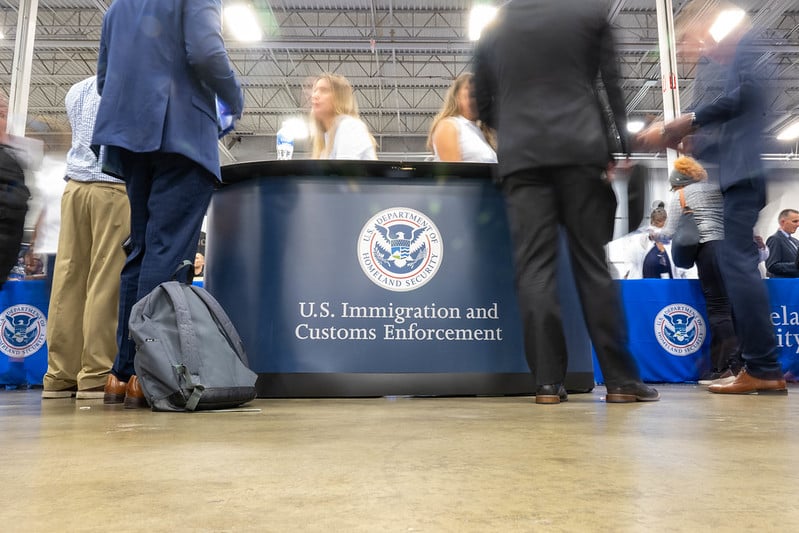
Immigrant rights groups and legal advocates, citing continued raids, detention, and city-focused deployments, are watching for signs that the next secretary changes staffing, operational directives, and public-facing tactics, not just the name at the top of the department.
Trump announced Noem’s departure via social media on March 5, 2026, writing: “Kristi Noem. has served us well, and has had numerous and spectacular results (especially on the Border!).”
Noem responded the same day with her own public statement: “We have made historic accomplishments at the Department of Homeland Security to make America safe again. I thank the President for this new opportunity.”
Trump said Noem will move into a newly created role as Special Envoy for the “Shield of the Americas,” a security initiative focused on the Western Hemisphere.
The president nominated Mullin, an Oklahoma Republican, to replace her, effective March 31, 2026, describing him as a “MAGA warrior” who will “work tirelessly to keep our border secure” and “stop migrant crime.”
Mullin’s nomination sets up a confirmation process that could leave day-to-day direction of Homeland Security in the hands of interim leadership, even as field operations continue at pace.
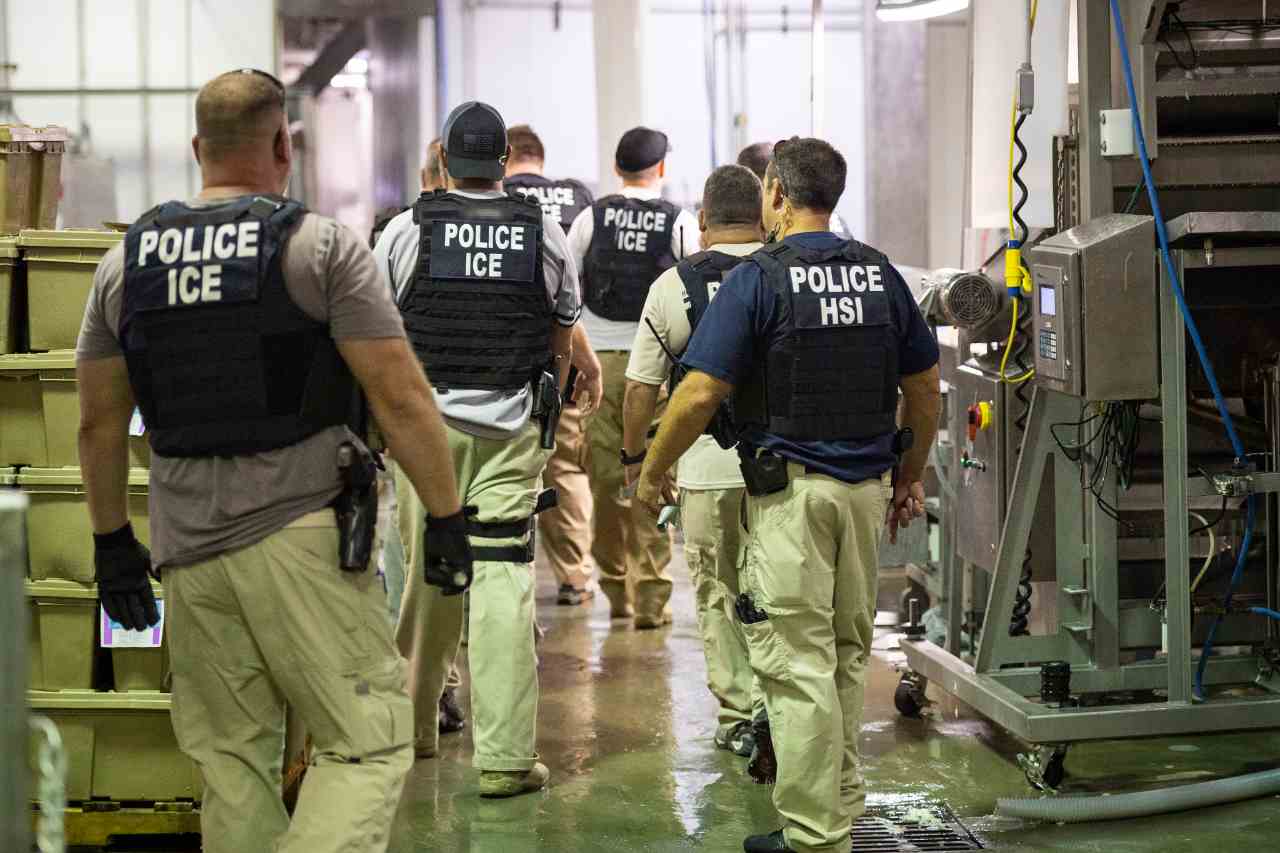
Noem’s removal followed weeks of political blowback tied to Operation Metro Surge, an aggressive federal immigration enforcement initiative that drew national attention for its visible presence in major cities and for the controversy that followed.
The operation escalated scrutiny after the fatal shootings of two U.S. citizens in Minneapolis in January 2026, according to official accounts and published analysis. The two people killed were Alex Pretti, an ICU nurse, and Renee Good, a mother of three.
A contentious two-day hearing before the House Judiciary Committee on March 4, 2026, intensified pressure, with lawmakers criticizing Noem after she labeled the victims “domestic terrorists” before investigations were complete.
A March 6 analysis by The Guardian described Noem’s ouster as part of a string of high-profile departures tied to Trump’s immigration agenda, while arguing that the enforcement machinery remains intact.
Border Patrol commander Greg Bovino, a public face of crackdowns in Chicago and Minneapolis, was relieved of his command in January 2026 and returned to a sector in California after backlash, the analysis said.
DHS spokesperson Tricia McLaughlin left her position in February, The Guardian reported, a personnel change that advocates say can alter the tone and timing of public messaging but does not automatically change enforcement capacity.
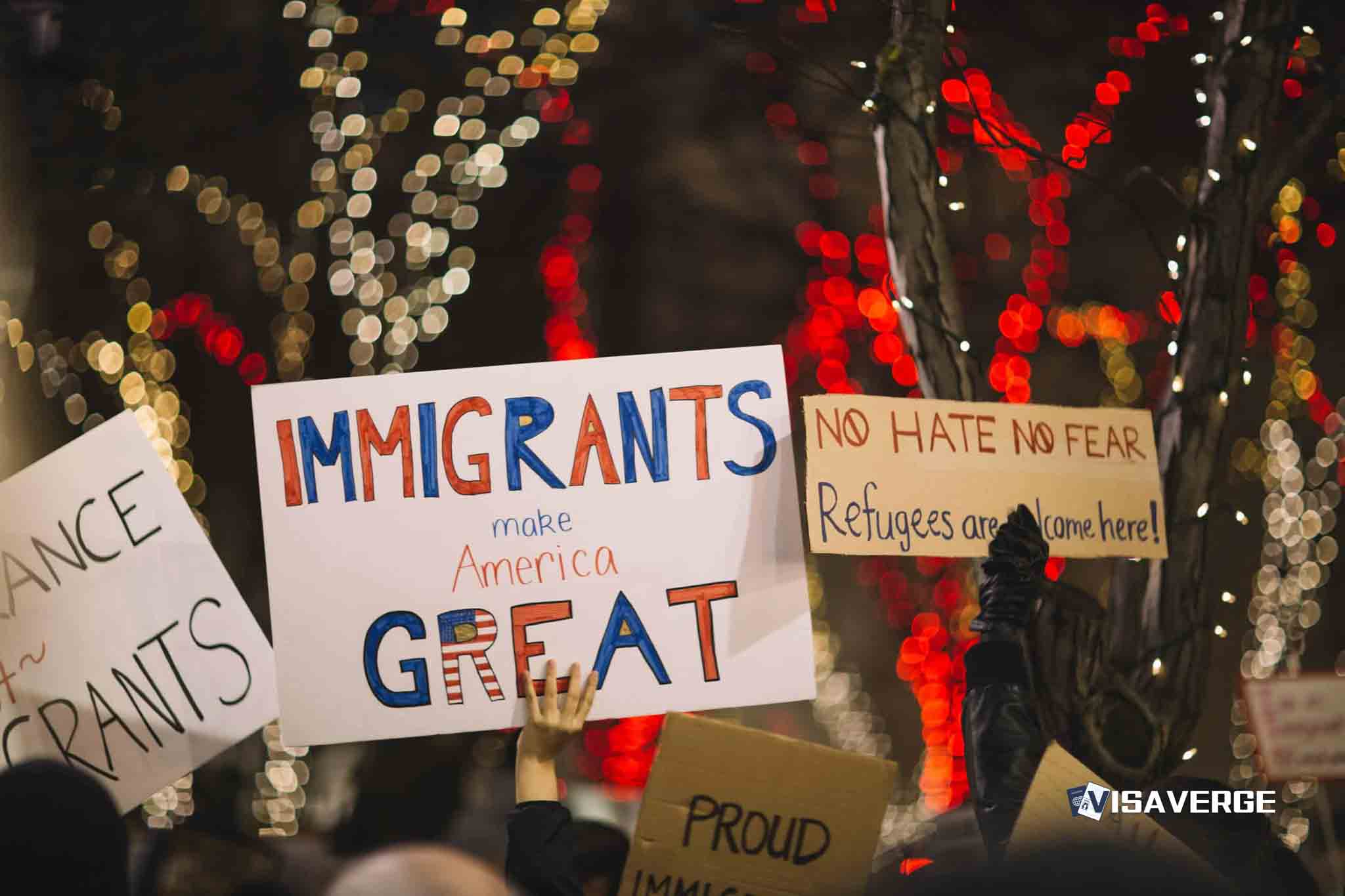
Erika Zurawski, co-founder of the Minnesota Immigrant Rights Action Committee, told The Guardian that public protests helped force Noem out after operations in Minneapolis and Saint Paul, while adding that violence and detentions continued after Noem’s removal.
Faisal Al-Juburi of Raíces, a legal services and advocacy group, argued that the leadership change should not distract from the administration’s underlying approach. “Mass deportation is still central to the Trump administration’s agenda. That has not changed. we have every reason to believe interior enforcement will continue to target people regardless of status,” Al-Juburi said, in comments dated March 6, 2026.
The Guardian also reported that hundreds of immigration agents remained in Minnesota after the administration announced a drawdown, while enforcement continued elsewhere in the country.
The same analysis said at least two immigrants recently died in ICE custody, adding to scrutiny of detention conditions and the pace of interior operations.
Advocates say those developments matter because Homeland Security’s reach extends beyond any single agency or official, shaping detention decisions, deportation logistics, surveillance, and operational guidelines across the federal enforcement architecture.
Under Noem, DHS deployed Border Patrol agents for interior enforcement far from the border, a tactic that drew sharp criticism from immigrant rights groups and some local officials who argued it blurred roles and widened the reach of federal enforcement.
The Guardian described “made-for-social-media” operations, including Operation Midway Blitz in Chicago, as part of a broader strategy that paired visibility with deterrence, turning enforcement actions into public messaging moments.
Such operations can affect how quickly agents move through neighborhoods, how frequently they conduct stops or arrests, and how local communities perceive federal presence, especially when deployments coincide with staged appearances and high-profile statements.
Congressional frustration also grew over what lawmakers described as Noem’s theatrical approach, including highly staged appearances linked to immigration raids, border operations, and detention facilities, according to the March 6 Guardian analysis.
Retiring Senator Thom Tillis of North Carolina, cited in that analysis, said enforcement itself was not necessarily the core problem, but that “the way you’re going about deporting them is wrong.”
Even as the leadership changed, the administration signaled that it intends to keep expanding enforcement tools and capacity, tying funding decisions and operations to an aggressive posture on raids, detention, and deportation.
Democrats, the analysis said, have tried to block or condition DHS funding unless reforms are imposed, including requiring immigration agents to wear identification and body cameras and limiting operations near schools, churches, polling places, childcare facilities, medical centers, and courts.
At the same time, the analysis said DHS is expected to expand detention capacity and use more surveillance technology, a mix that advocates argue increases enforcement reach while leaving accountability questions unresolved.
One point of contention has been funding for new enforcement equipment, which immigrant advocates describe as central to sustaining a high-tempo operational posture. The Guardian analysis referenced an equipment plan but the administration has not presented the leadership change as a retreat from that approach.
Budget uncertainty has also become part of the enforcement story. As of early March 2026, DHS operated under a partial budget shutdown for an extended period amid a congressional fight over enforcement tactics.
In such funding gaps, core operational functions often continue while other activities face constraints, including contracting, procurement timelines, travel, and overtime, which can influence where and how quickly the department conducts operations.
Budget disruptions can also create uneven enforcement patterns, with some regions experiencing intensified activity as teams rotate or redeploy, while other areas see delays tied to travel approvals, detention transport, or staffing limitations.
Homeland Security has also taken an assertive legal stance as state-level investigations in Minnesota examined federal actions tied to the Minneapolis deaths and Operation Metro Surge.
In an official statement dated March 4, 2026, DHS said: “Federal officials acting in the course of their duties are immune from liability under state law. What these States are trying to do is unlawful, and they know it.”
That position has sharpened a broader accountability debate over how investigations proceed when state officials scrutinize on-duty conduct by federal agents, and how the federal government responds when local or state leaders seek records or cooperation.
For immigrant rights groups, the leadership change fits a familiar pattern: personnel churn at the top, combined with continued operations in the field and a department that they say remains structurally insulated from oversight.
The Guardian analysis argued that Noem was not the core problem so much as the most visible symbol of a broader DHS approach built around mass deportation, public spectacle, and limited accountability, a view echoed by advocates who said replacing one hardline figure with another changes little.
Mullin’s combative public persona, noted in the analysis, has added to those concerns, with advocates arguing that the nomination signals continuity rather than recalibration.
In practical terms, advocates say the fastest indicators of change would be observable shifts in guidance, deployments, and cooperation patterns: whether city operations slow or intensify, whether Border Patrol resources continue moving deep into the interior, and whether detention posture changes in ways communities can see.
For migrants, visa holders, and mixed-status families, the immediate impact may be less about who holds the secretary’s title and more about how field offices interpret priorities, conduct arrests, and coordinate with local law enforcement.
A top-level leadership move does not automatically change day-to-day encounters, detention decisions, or the operational guidelines that determine where agents focus, how they conduct stops, and how quickly detainees move through facilities.
Homeland Security also oversees more than ICE and CBP, and its internal direction can shape how enforcement, surveillance, and interagency coordination operate across regions, even if public messaging shifts.
The administration’s posture has relied heavily on visibility, with messaging around raids, detention, and deportation amplified through social media and official statements, according to the Guardian analysis, which argued that Noem’s firing may change the messenger without changing the message.
Advocates say they will look for tangible changes rather than tone, including whether DHS modifies identification requirements for agents, adjusts operational activity near sensitive locations, or changes how it communicates about high-profile arrests and city deployments.
As Mullin’s nomination moves forward, the confirmation pathway and interim leadership decisions will shape near-term signals, including staffing assignments and whether the department continues to treat city-focused operations as a centerpiece of its public posture.
Ongoing investigations, congressional hearings, and budget negotiations will also remain pressure points, intersecting with questions raised by Operation Metro Surge and with the department’s insistence that its officers are protected from state-law liability.
Official DHS updates remain posted through its public channels, including DHS press releases, while immigration-related announcements across the federal system also appear through the USCIS newsroom.
For advocates who opposed Noem, the test now is whether enforcement changes in practice, not whether a new name sits atop Homeland Security.