- ICE is prosecuting drivers for following enforcement vehicles under federal assault and obstruction statutes.
- Over 655 individuals faced federal charges recently, more than double the previous year’s figures.
- Legal experts argue passive observation lacks the force required to meet criminal interference standards.
ICE has started arresting and citing people who trail its vehicles during immigration enforcement operations, treating the practice as potential obstruction and assault under Title 18, Section 111, a federal law often used in cases involving federal officers.
Federal prosecutors have increasingly relied on 18 U.S.C. § 111 to argue that drivers who follow ICE convoys “forcibly assault, resist, oppose, impede, intimidate, or interfere” with officers, a framing ICE and the Department of Homeland Security have cast as a public-safety issue.
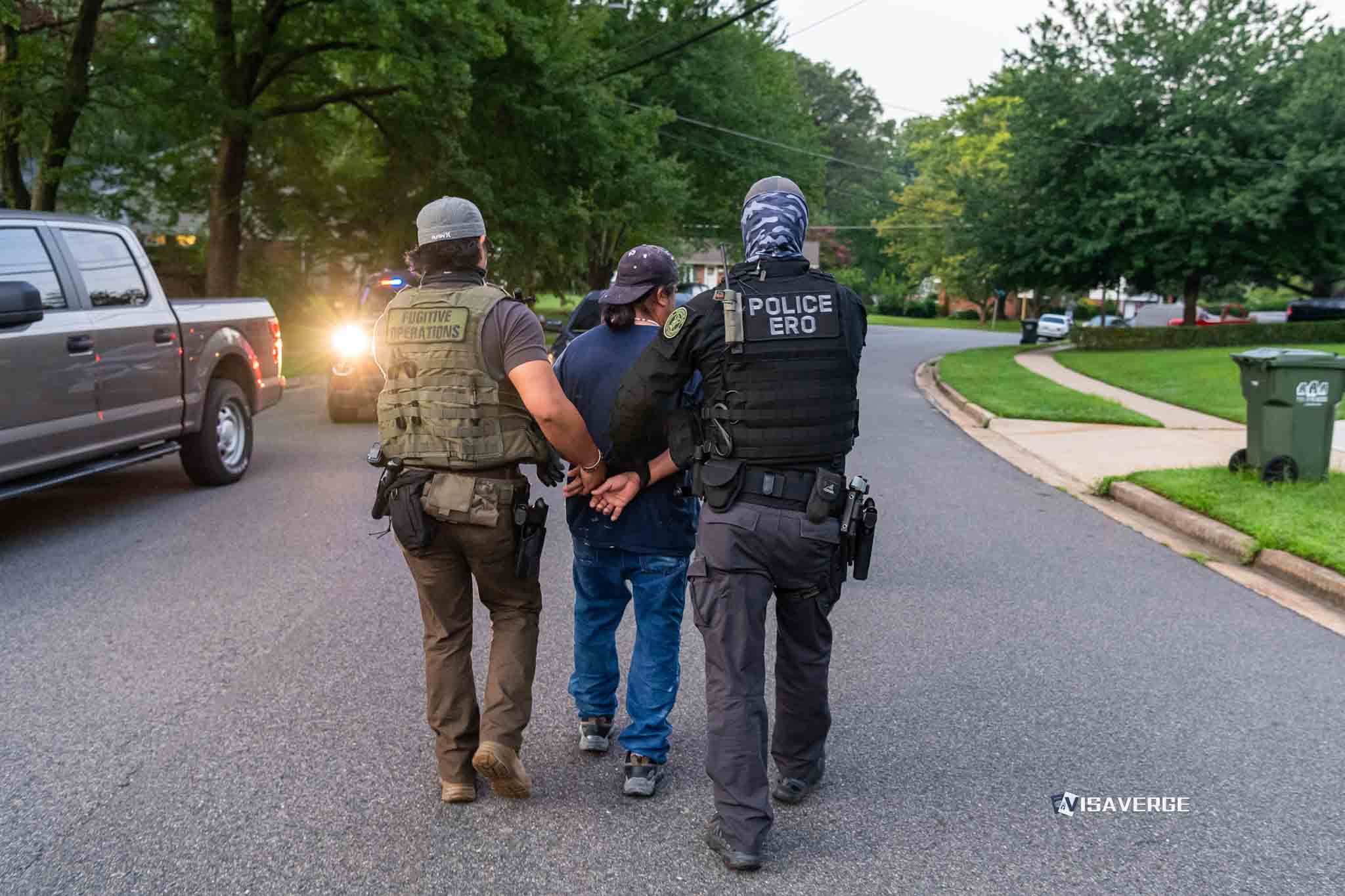
A Reuters review of federal court records found the Trump administration has prosecuted at least 655 people nationwide under that charge since last summer’s city-focused immigration crackdowns began, more than double the number from the same period in 2024-2025.
DHS has defended the approach as necessary to protect officers and the public during fast-moving operations, while critics and some defense arguments have questioned whether trailing a vehicle at a distance meets the statute’s “forcible” requirement.
Title 18, Section 111 makes it a crime to “forcibly assault, resist, oppose, impede, intimidate, or interfere” with federal officers as they perform their duties. Prosecutors have used it in encounters where they allege drivers ignored commands, followed closely, or drove in ways officers viewed as threatening.
The statute allows cases to be charged as a felony with up to 20 years in prison, or up to 8 years without a deadly weapon or injury, and it can also be charged as a misdemeanor.
Supporters of the crackdown have argued that the danger can arise even without physical contact, especially when ICE vehicles move through traffic, use unmarked cars, or conduct arrests in public. Critics have said the government is stretching an officer-assault law to cover what they view as passive observation tied to protest and monitoring activity.
ICE has also built cases by tracking repeat observers, collecting names, photos, license plates, locations and actions in an internal database to identify patterns, Reuters reported. Officials have referred several people per day in Minnesota alone to federal prosecutors, according to the same account.
The crackdown has unfolded alongside broader Trump-era ICE expansions, including masked agents, which have become a congressional flashpoint. Tensions have also sharpened in Minnesota after fatal shootings during operations, including the January killing of Renee Good, a U.S. citizen protester fatally shot by ICE officers in Minneapolis.
One of the most closely watched recent cases began on January 29, 2026, in suburban Minneapolis, when Becky Ringstrom, a 42-year-old mother of seven, followed ICE officers in her gray Kia SUV for about 45 minutes, maintaining multiple car lengths distance.
A Border Patrol agent warned her at a roundabout, “Last time I’m going to warn you.” Ringstrom continued driving, and as she headed home, at least a half-dozen masked agents in unmarked vehicles boxed her in, Reuters reported.
One agent knocked on her windshield with a metal object, according to the account. Bystander video verified by Reuters captured the arrest.
Authorities cited Ringstrom under 18 U.S.C. § 111 at the Bishop Henry Whipple Federal Building, and her name and photo were added to a government database, Reuters reported. A court date was listed as “TBD.”
“I know what I’m doing is not wrong,” Ringstrom told Reuters. She also said she feared she could be Renee Good.
Tricia McLaughlin, DHS spokesperson, said Ringstrom “stalked law enforcement and attempted to obstruct law enforcement from performing their sworn duties,” and said officers used “the minimum amount of force necessary.”
Other Minnesota-area encounters in late January and early February have added to the dispute over what counts as criminal interference versus observation, with videos showing guns drawn and DHS offering accounts focused on driving behavior and perceived threats.
Later on January 29, 2026, south of Minneapolis, ICE officers drew guns on a woman following them, according to dashcam footage verified by Reuters. DHS said she ignored commands, drove recklessly, ran stop signs, and nearly rammed their vehicle.
On February 3, 2026, ICE officers approached a following car with guns drawn, Reuters reported. DHS said the occupants made hand motions suggesting firearms after “stalking and obstructing.”
Another incident occurred on January 22, 2026, in a suburb north of St. Paul, where a video verified by Reuters showed an ICE officer leading a following woman back to her home. The officer told her husband, “You raise your voice, I erase your voice,” according to the video.
Reuters also reported that one ICE officer in that encounter admitted using license plates “to freak them out,” a detail that civil-liberties advocates have cited as evidence of intimidation.
Earlier in January in Minneapolis, Brandon Siguenza and Patty O’Keefe followed an ICE vehicle and said officers fired pepper spray, smashed their window, and detained them for 8 hours without charges, Reuters reported. McLaughlin said they ignored warnings to stop impeding.
DHS has publicly framed the issue in blunt terms, tying following behavior to the felony statute and warning against interference with enforcement actions. “Assaulting and obstructing law enforcement is a felony,” McLaughlin said.
McLaughlin also said ICE monitors threats but does not maintain a “domestic terrorists” database, according to the Reuters account.
From the White House, Abigail Jackson, White House spokeswoman, said people impeding law enforcement “will be held accountable to the fullest extent of the law,” while protecting First Amendment rights.
ICE also issued new guidance in late January instructing officers not to engage protesters, Reuters reported. Videos from Minnesota nonetheless showed agents approaching vehicles with weapons drawn, a tension that has fueled criticism and legal scrutiny.
Legal experts have challenged whether prosecutors can satisfy the statute’s requirement that conduct be “forcible” when the government’s core allegation involves following rather than physical contact.
Seth Stoughton, University of South Carolina School of Law policing professor, said following at a distance lacks “physical contact” or “forcible” action required by the law.
A mid-January federal judge in Minneapolis ruled that following ICE at an “appropriate distance” does not justify arrest, without specifying distance, Reuters reported. An appeals court later paused that order.
Deborah Fleischaker, former top ICE official, criticized arrests of peaceful followers and called the approach “inappropriate and unconstitutional.” “Observing ICE is not a crime,” Fleischaker said.