- Nationwide activists launched 1,000 protests during the “ICE Out For Good” action weekend.
- Demonstrators demand accountability for fatal shootings involving federal agents in Minneapolis and Portland.
- Public approval for ICE has dropped significantly to -14 following recent enforcement incidents.
MINNEAPOLIS — demonstrators rallied, marched and held vigils across the United States on Saturday as part of the “ICE Out For Good” weekend of action, with organizers describing a coordinated wave of more than 1,000 protests, vigils, and memorials tied to immigration enforcement concerns and two recent shootings involving federal agents.
Organizers linked the actions to the killing of Renee Nicole Good, 37, by an ICE agent in Minneapolis and a separate Border Patrol shooting in Portland, framing the weekend as a public call for accountability and oversight as investigations continue.
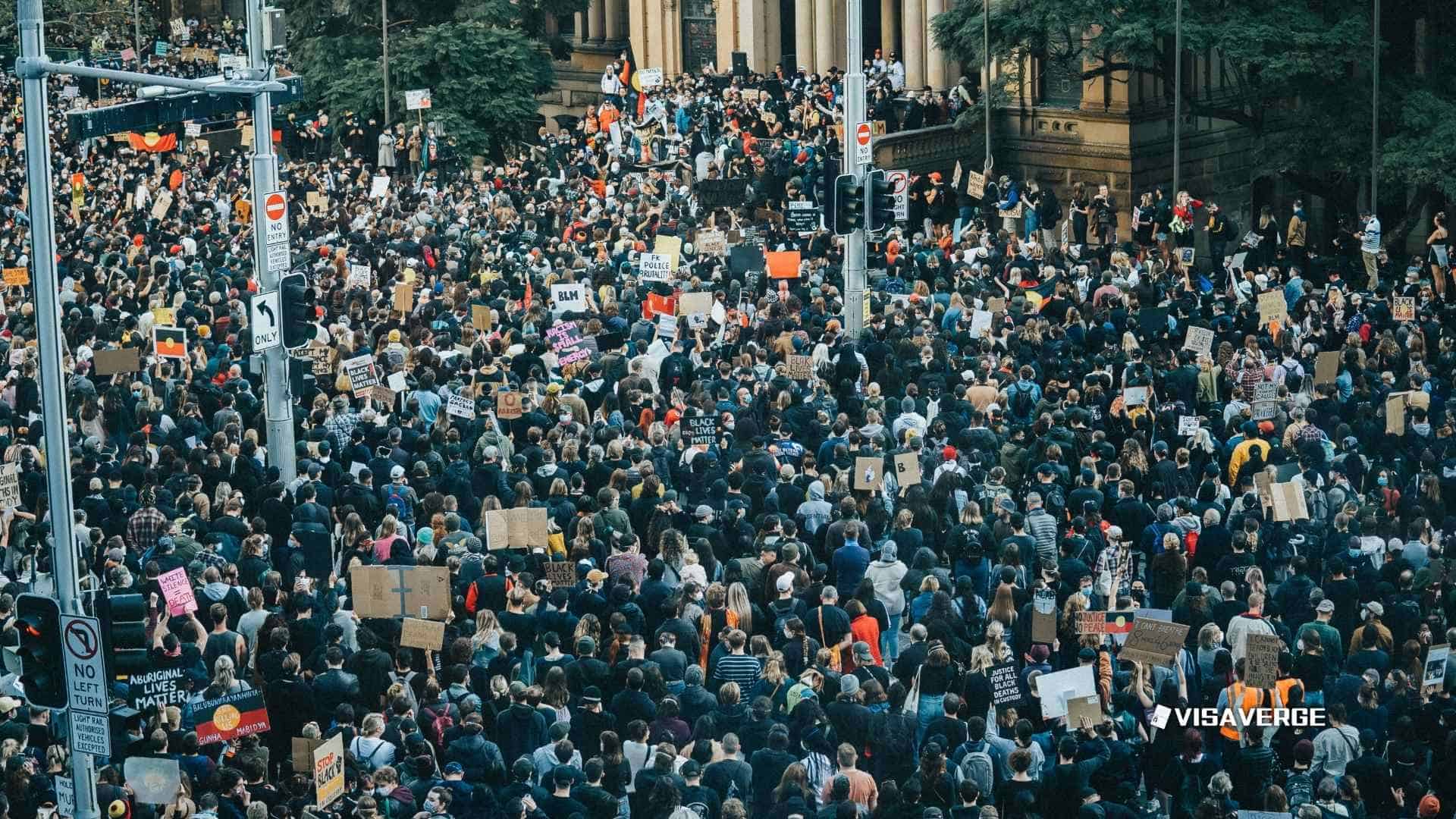
axios reported demonstrators “in the tens of thousands” in Minneapolis and other cities on Saturday, while TIME reported that tens of thousands marched in Minneapolis, with protests and vigils there for days.
The coalition behind ICE Out For Good described the actions as “nonviolent, lawful, and community-led” and “grounded in moral witness, public accountability, and collective care,” as it pressed for changes that would reduce ICE’s presence in communities.
Organizers said the weekend’s actions were propelled by anger over the two shootings and what they described as escalating tactics by immigration enforcement agencies under President Trump, with the protests aimed at sustaining pressure on elected officials and federal agencies.
The ICE Out For Good coalition was described as a broad national coalition that includes Indivisible, MoveOn Civic Action, the american civil liberties union, Voto Latino, United We Dream, 50501, the Disappeared in America Campaign of the Not Above the Law coalition, and partner organizations across the country.
Organizers said there are “over 1,000 events throughout the weekend” under the ICE Out For Good banner, an effort designed to be decentralized and locally led, with rallies and vigils promoted in major cities and small towns.
TIME said “more than 1,000 anti-ICE demonstrations” were planned nationwide, including Minneapolis, Portland, New York City, Boston, Washington, D.C., Texas, Kansas, New Mexico, Ohio, Florida, and many small towns.
Mother Jones reported protests in both blue cities like New York and Chicago and Republican strongholds like Lubbock, Texas, and Danville, Kentucky, as organizers sought to show opposition that cut across geography and local political identities.
Counting turnout in a weekend of dispersed actions can be difficult, with crowd estimates often split between organizer claims and media characterizations, particularly when events range from large marches to small vigils and memorial gatherings.
The Minneapolis protests were among the most closely watched, given the death of Good and the city’s role as the focal point for the weekend’s organizing, with both national outlets and local coverage describing large crowds and sustained public presence in recent days.
Mother Jones reported that ice agent jonathan ross shot and killed Renée Nicole Good in her vehicle in Minneapolis on Wednesday, an incident that organizers cited repeatedly as the immediate catalyst for the weekend.
TIME identified Good as a 37‑year‑old Minneapolis woman, a mother of three and a poet, and an active volunteer in neighborhood patrols that documented ICE activity, a profile that helped drive the coalition’s framing of her death as a pivotal moment.
TIME described video showing “an immigration agent shoot Good three times at point-blank range as she attempts to drive away after taking part in a protest,” with at least one shot fired into the side of the vehicle; she was shot in the head and later pronounced dead at the hospital.
Axios reported that the Trump administration has defended the agent’s actions as self‑defense, claiming Good tried to flee, a claim Minneapolis Mayor Jacob Frey has firmly disputed.
The weekend’s organizing also pointed to a second incident in Portland, where Axios reported that on Thursday, Border Patrol agents shot two individuals during what authorities called “a targeted vehicle stop,” with both victims hospitalized.
Mother Jones specified the victims in Portland were a man and a woman in a car, a detail organizers cited as they argued the shootings together demanded urgent scrutiny of federal enforcement practices.
Coalition messaging aimed to connect the incidents to broader concerns about how immigration enforcement is carried out, with organizers casting the weekend as a national mobilization around accountability demands rather than a single-city protest wave.
Among the coalition’s stated aims were calls to “Demand accountability, transparency, and an immediate investigation into the killing of Renee Nicole Good,” “Build public pressure on elected officials and federal agencies,” and “Call for ICE to leave our communities.”
“The murder of Renée Nicole Good has sparked outrage in all of us. Her death, and the horrific nature of it, was a turning point and a call to all of us to stand up against ICE’s inhumane and lawless operations that have already killed dozens before Renee.”
Leah Greenberg, co‑executive director of Indivisible, told Mother Jones the comment above.
“The shootings in Minneapolis and Portland weren’t the beginning of ICE’s cruelty, but they must be the end.”
Deirdre Schifeling, Chief Political and Advocacy Officer of the American Civil Liberties Union, made the remark above.
“For a full year, Trump’s masked agents have been abducting people off the streets, raiding schools, libraries, and churches. As ICE’s unnecessary, reckless, and escalatory deployment goes unchecked, the killing of civilians will only continue.”
Katie Bethell, executive director of MoveOn Civic Action, issued the statement above.
Organizers described “accountability and care” as a mix of public witness and pressure campaigns, including vigils and memorials, public demands for transparency, and calls for elected officials to pursue oversight of federal agencies.
In Minneapolis, where TIME reported tens of thousands marched on Saturday, the gatherings formed part of an ongoing stretch of protests and vigils that had continued for days after Good’s death.
Jacob Frey said the “vast majority” of protests were peaceful, TIME reported, and the mayor has been a vocal advocate of ICE leaving Minneapolis, aligning city leadership with one of the coalition’s central demands even as federal agencies maintained their operations.
Mother Jones described Minneapolis protests where federal agents at the Whipple Building used chemical irritants on protesters, an account that organizers pointed to as evidence of heavy-handed responses during public demonstrations.
The same report noted video of a Border Patrol agent in Minneapolis telling women in cars: “Don’t make a bad decision today,” a clip organizers circulated as they portrayed a pattern of intimidation around protests and enforcement activity.
Coverage referenced by the ACLU included ABC7 and other outlets reporting local “ICE Out For Good” rallies, including in Florida and Virginia, indicating similar local coverage was occurring in Bay Area outlets as the weekend spread across regions.
In the Bay Area, crowds joined the national actions under the same banner, according to reporting that described large gatherings alongside those in other cities, reflecting the coalition’s emphasis on coordinated timing and shared messaging across local groups.
Organizers and allied groups have argued the weekend was designed to keep attention on enforcement practices beyond a single incident, particularly when deaths and use-of-force episodes become flashpoints that can fade without sustained public pressure.
Political reactions surfaced during the weekend as well, including in Texas, where TIME reported that Texas Rep. Greg Casar told protesters in Austin: “We cannot wait here in despair. We cannot do nothing. We cannot fall into hopelessness.”
“We cannot wait here in despair. We cannot do nothing. We cannot fall into hopelessness.”
Casar also called for firing DHS Secretary Kristi Noem, saying “Kristi Noem endangers us all by creating a culture of impunity at the federal level,” TIME reported.
Voto Latino’s statement framed the mobilization as a response to the federal government’s approach to immigration enforcement, saying: “Under Donald Trump’s leadership and Kristi Noem’s direction of the Department of Homeland Security, ICE has become more aggressive, more reckless, and more deadly — with 2025 marking its deadliest year in two decades.”
Public opinion data cited by TIME suggested shifting views on ICE and the protests, with a YouGov poll conducted the day of Good’s killing showing 52% somewhat or strongly disapprove of ICE’s performance and 39% approve.
The same poll found 44% of adults approve of the recent ICE protests, TIME reported, as organizers sought to translate street mobilizations into broader political pressure.
TIME reported that ICE’s net approval fell from +16 in February (start of Trump’s mass deportation operation) to –14 in November, a trend organizers used to argue that public scrutiny of enforcement has intensified.
Advocacy groups backing the weekend said they expect continued demonstrations and public demands for investigations and oversight, framing Saturday’s marches and vigils as one moment in a longer campaign aimed at changing how immigration enforcement operates in Minneapolis and across the country.
The ‘ICE Out For Good’ movement organized over 1,000 nationwide events following the fatal shooting of Renée Nicole Good in Minneapolis. Supported by major civil rights groups, the protests aim to pressure the Trump administration for transparency and reduced ICE presence. Public sentiment has shifted, with ICE’s approval rating falling from +16 to -14 since February as tensions rise over federal enforcement tactics.