(MINNEAPOLIS) — A fatal shooting during an immigration enforcement operation is drawing renewed attention to a basic but often misunderstood legal point: ICE officers and other federal agents do not have blanket immunity from state homicide prosecutions, even when acting under color of federal authority, and any attempt to shift the criminal case into federal court typically requires a credible federal defense.
That framing matters beyond criminal law. When a use-of-force incident occurs during an arrest or worksite operation, it can spill into parallel immigration proceedings. It can also shape public records, credibility findings, and suppression litigation in Immigration Court. The Minneapolis shooting involving ICE agent Jonathan Ross and 37-year-old Renee Nicole Good illustrates how quickly those parallel tracks can form, and what practitioners may watch next.
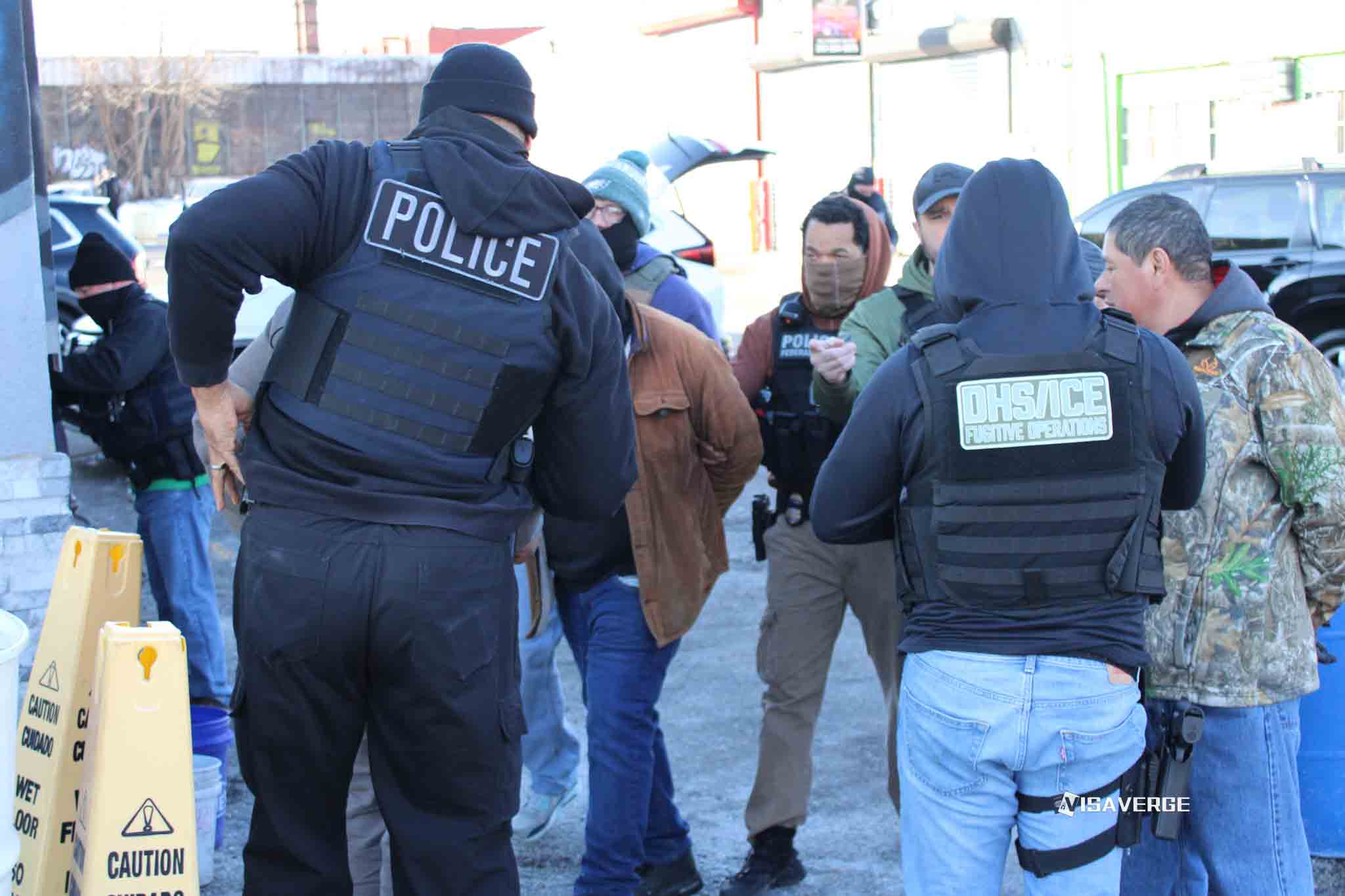
What happened and why it matters now
Local and state officials say an ICE-led operation in south Minneapolis ended with Ross firing three rounds through a vehicle window. Renee Nicole Good was struck in the head and later pronounced dead at Hennepin County Medical Center.
Eyewitness accounts and video reportedly show Good seated in a red Honda Pilot that was partially blocking a roadway. Agents approached, yelled commands, and tried the driver’s door. As Good began backing up, Ross fired.
The Department of Homeland Security (DHS) has asserted self-defense, alleging Good “weaponized her vehicle” and attempted to run over officers. Local officials have publicly disputed that account, and video reportedly shows the vehicle passing by as the shooter avoids it.
Minnesota’s Bureau of Criminal Apprehension (BCA) is investigating. The Governor has promised an expeditious inquiry, and Minneapolis leadership has demanded accountability.
The immediate practical impact is straightforward: if investigators conclude the shooting was not legally justified, state criminal charges, including murder or manslaughter, are legally possible. Federal employment does not automatically block prosecution.
The legal holding in plain terms: no universal immunity, and removal is not automatic
Federal officers sometimes argue that the Supremacy Clause shields them from state prosecution when they act within the scope of federal duties. They may also try to remove a state criminal case to federal court under the federal-officer removal statute, 28 U.S.C. § 1442.
Key points:
- Those protections are not absolute.
- To remove a case, a defendant generally must show:
- They were acting under color of federal office; and
- They raise a “colorable” federal defense.
Courts then decide whether the case belongs in federal court and whether any immunity applies. Outcomes are fact-driven, especially in use-of-force cases.
Historically, state prosecutions have proceeded against federal officers where facts did not support a lawful, necessary use of force. The Ruby Ridge prosecution attempt is often cited to support the proposition that state charges can move forward when conduct exceeds lawful federal authority.
Why immigration precedent still matters: suppression and regulatory violations
Even though a homicide investigation is not an immigration benefit adjudication, immigration cases frequently follow enforcement actions. When enforcement conduct is challenged, Immigration Judges apply a distinct body of law on excluding evidence.
Two Board of Immigration Appeals (BIA) decisions come up repeatedly:
| BIA decision | Holding / relevance |
|---|---|
| Matter of Barcenas, 19 I&N Dec. 609 (BIA 1988) | Allocates burdens for motions to suppress evidence in removal proceedings and requires specific, detailed allegations to establish a prima facie case. |
| Matter of Garcia-Flores, 17 I&N Dec. 325 (BIA 1980) | Holds that certain regulatory violations may warrant relief when the rule protects a fundamental right or when prejudice is shown. |
These cases do not automatically convert a criminal shooting into an immigration “defense.” But they shape how Immigration Court may treat evidence that arose from the same operation. If a respondent can show egregious misconduct or prejudicial regulatory violations, suppression arguments may be viable in some jurisdictions.
Warning (parallel proceedings): Statements made to investigators, internal affairs, or the media can affect both criminal exposure and immigration cases. People who witnessed the event should seek counsel before giving formal statements.
Key factual questions investigators typically analyze
Public reporting highlights sharp disputes. Those disputes usually map onto legal elements for self-defense and the reasonableness of deadly force. Investigators commonly focus on:
- Officer positioning and movement. Was any officer in the vehicle’s path, and for how long?
- Vehicle speed and trajectory. Did the vehicle move toward officers or away from them?
- Commands and opportunity to comply. Were commands clear, and was there time to follow them?
- Less-lethal alternatives. Were they feasible given time and distance?
- Video timing and angles. Do recordings corroborate the officer’s narrative?
Those facts influence potential state charges. They also influence whether a federal defense is “colorable” for removal purposes under 28 U.S.C. § 1442.
Practical impact on immigration enforcement operations and removal cases
High-profile uses of force can produce several downstream effects in immigration law:
1) Arrest-and-detention litigation may intensify
- If the operation involved administrative warrants or entry into private areas, litigants may scrutinize compliance with Fourth Amendment limits and DHS regulations.
- In removal proceedings, suppression is difficult but not impossible. The threshold is higher than in criminal court and often depends on circuit law.
2) Credibility disputes may expand beyond the respondent
- Immigration Judges assess credibility under INA § 240(c)(4).
- If official narratives are publicly contradicted by video, respondents may argue that government accounts deserve less weight.
- Judges still assess each witness and document independently.
3) Civil rights and tort claims can run alongside immigration cases
- Families sometimes pursue constitutional claims (historically framed under Bivens theories, though the Supreme Court has narrowed such claims) or Federal Tort Claims Act litigation.
- Those cases can generate discovery and records that later surface in immigration court, subject to protective orders.
Warning (records and body-worn video): Public records requests, subpoenas, and protective orders can limit what counsel can obtain or use. Coordinate strategy across forums to avoid conflicts.
Circuit variation and friction points
Two areas vary by jurisdiction:
- Suppression standards in removal proceedings. The Supreme Court limited automatic exclusion in immigration court in INS v. Lopez-Mendoza, 468 U.S. 1032 (1984), but left room for egregious violations. Circuits differ on what qualifies as “egregious” and how strong the showing must be.
- Removal-to-federal-court disputes. Federal courts generally allow removal when a plausible federal defense exists. But they do not accept removal based on conclusory assertions. Use-of-force fact patterns can produce hard fights over whether the officer acted within lawful authority.
Because Minneapolis sits in the Eighth Circuit, practitioners should pay close attention to Eighth Circuit precedent on federal-officer removal and the state-law self-defense standards Minnesota applies.
What to watch next in the Ross/Good investigation
Several procedural milestones may come quickly:
- Whether state prosecutors convene a grand jury or file a criminal complaint.
- Whether Ross asserts a federal defense and seeks removal to federal court.
- Whether DHS releases more video, reports, or findings from administrative review.
- Whether the BCA investigation produces a public report.
| Potential event | Why it matters |
|---|---|
| Grand jury / charging decision | Determines whether state criminal prosecution proceeds |
| Removal petition (28 U.S.C. § 1442) | Could shift venue and change legal defenses |
| DHS administrative reports | May affect internal accountability and produce discoverable records |
| BCA public report | Shapes public narrative and prosecutorial decisions |
Deadline watch (criminal process): Charging decisions and removal petitions can move fast. Families and witnesses should track court dates and preservation letters. An attorney can help protect rights and evidence.
Practical takeaways for immigrants, families, and counsel
- Do not assume federal officers are immune from state criminal law. Immunity arguments are limited and fact-dependent.
- Expect parallel tracks. Criminal investigations, internal DHS reviews, and immigration proceedings may proceed on different timelines.
- Preserve evidence early. Video, dash footage, surveillance, and witness contact information can disappear quickly.
- For respondents in removal proceedings, evaluate suppression carefully. Under Matter of Barcenas, 19 I&N Dec. 609 (BIA 1988), allegations must be specific and supported; broad claims rarely succeed.
- Assess regulatory violations and prejudice. Matter of Garcia-Flores, 17 I&N Dec. 325 (BIA 1980) remains a key framework when DHS rules were not followed.
Given the stakes, anyone directly affected by the Minneapolis incident—whether a family member, witness, or a person arrested in the same operation—should consult qualified counsel. Coordination between criminal defense, civil counsel, and immigration counsel is often essential.
Official government resources (general information):
– EOIR Immigration Court information: https://www.justice.gov/eoir
– ICE overview and contact information
– DHS Office for Civil Rights and Civil Liberties (CRCL)
⚖️ Legal Disclaimer: This article provides general information about immigration law and is not legal advice. Consult a qualified immigration attorney for advice about your specific situation.
Resources:
– https://www.aila.org/find-a-lawyer
– Immigration Advocates Network
This article explores the legal boundaries of federal immunity following a fatal shooting by an ICE agent in Minneapolis. It clarifies that federal officers can face state criminal charges if their actions are not legally justified. The piece also examines how such incidents impact immigration proceedings, specifically regarding evidence suppression under BIA precedents like Matter of Barcenas and Matter of Garcia-Flores, while highlighting the importance of parallel legal strategies.