(NEW YORK CITY, NEW YORK) — U.S. Department of Homeland Security immigration officers arrested Columbia University student Elmina “Ellie” Aghayeva inside her on-campus residence on Thursday, February 26, 2026, and released her hours later after New York City Mayor Zohran Mamdani intervened with President Donald Trump.
Aghayeva, a senior from Azerbaijan majoring in neuroscience and political science, left custody and later posted on social media: “I just got out a little while ago I am safe and okay. I am in complete shock over what happened.”
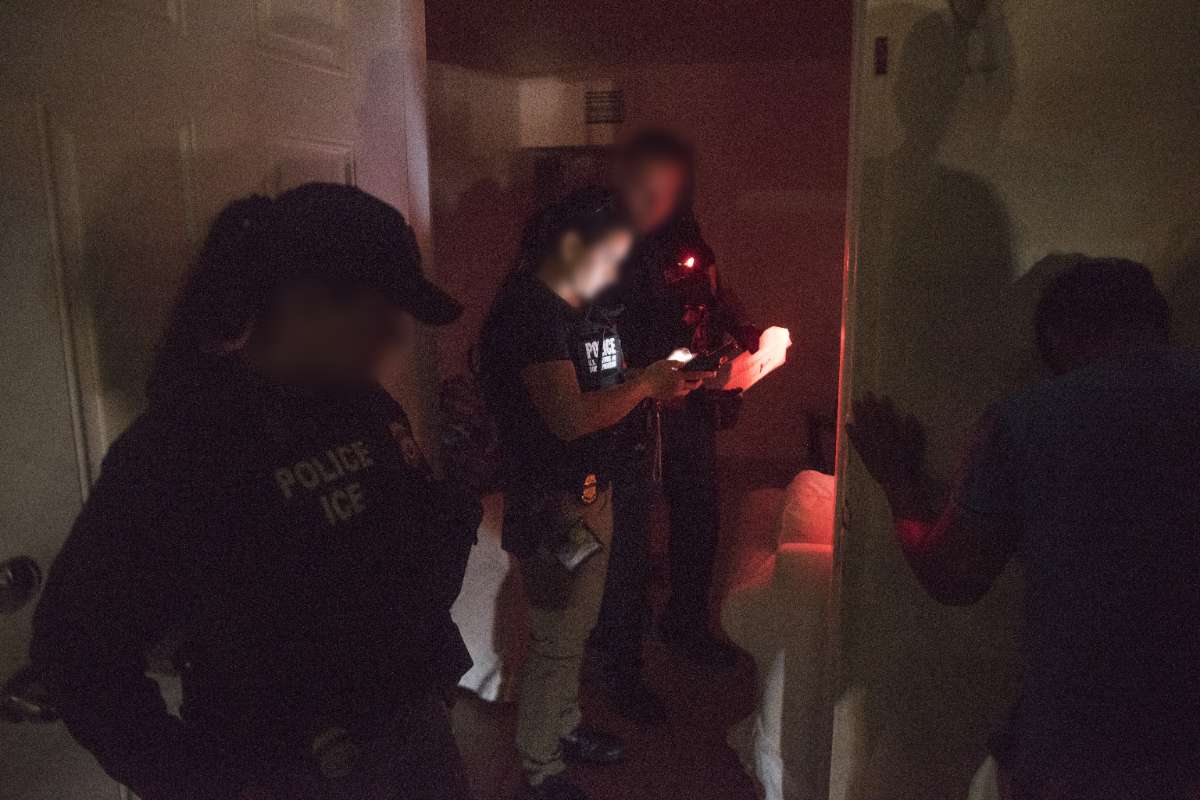
Federal authorities placed Aghayeva into removal proceedings, a DHS spokesperson said, but she will remain free while her case awaits an upcoming hearing in immigration court.
Columbia officials described the arrest as an alarming escalation of immigration enforcement in non-public campus housing, and the episode quickly set off protests, legal filings and competing accounts about how agents entered the building.
Acting Columbia President Claire Shipman reported that agents entered around 6:30 a.m. after misrepresenting themselves as searching for a missing person, raising questions for the university about whether officers obtained access without a judicial warrant.
DHS offered a different account. The department said agents verbally identified themselves and displayed badges, and that a building manager and a roommate granted entry.
DHS also stated that Aghayeva’s student visa was terminated in 2016 for failing to attend classes. Columbia did not immediately confirm details about her academic status.
The dispute over entry matters because on-campus housing typically involves non-public areas where access can turn on consent and authority. A judicial warrant generally involves court authorization, while consent depends on who has legal control over the space and whether that consent was valid.
Columbia officials allege agents “misled campus security by claiming they were searching for a missing child,” which the university argues helped officers gain access without an “obvious judicial warrant” in a residential setting. DHS, in response, explicitly denied the agents posed as NYPD.
Aghayeva’s detention lasted only a short time before her release, which the account ties to high-level political outreach. Shortly after she was taken into custody, Mamdani raised concerns with Trump, who reportedly agreed to the student’s immediate release.
Aghayeva returned to her campus housing without media comment, the account said.
Her attorney, Carl Hurvich, filed a federal habeas petition on Thursday alleging unlawful detention without a warrant and seeking a temporary restraining order to prevent her transfer outside New York.
A habeas petition is a court filing that challenges the legality of a person’s detention. In immigration cases, attorneys often use it to ask a federal judge to review whether custody and transfer decisions comply with the law.
A temporary restraining order, often called a TRO, is an emergency request that typically seeks short-term limits on government action while a court considers next steps. In this case, Hurvich sought to block any transfer outside New York.
Despite her release, removal proceedings mean the government has started a formal case in immigration court seeking to remove her from the United States. Those proceedings set the venue where an immigration judge considers allegations about status and removability.
DHS said Aghayeva has “no pending appeals or applications.” The department said she will remain free until her case is adjudicated.
New York Governor Kathy Hochul criticized the detention as a civil rights violation, alleging agents lacked proper legal authorization for the arrest.
Columbia said it felt relief at Aghayeva’s release and planned to provide further details. The university also advised students and staff to verify law enforcement credentials and contact campus public safety before allowing access to non-public areas without a judicial warrant.
Students staged demonstrations after the arrest and release. Hundreds attended peacefully, the account said, reflecting anxiety among foreign nationals on campus about enforcement actions and potential deportation.
The Aghayeva case follows other Columbia-related immigration enforcement episodes described as high-profile. Last year, ICE detained Columbia graduate student and pro-Palestinian activist Mahmoud Khalil, a lawful permanent resident, leading to months of detention before a federal judge ruled his confinement unconstitutional.
Another student activist, Mohsen Mahdawi, was previously detained by immigration authorities during a citizenship interview but later ordered released by a federal judge.
Those cases, as described, intensified debate about how immigration enforcement intersects with student rights, free speech and daily campus life, particularly when critics view enforcement actions as politically motivated. The Aghayeva episode added a new focus on enforcement in university housing and what institutions can do in the moment when officers seek entry.
For international students, the case also highlights how enforcement can arise from older status disputes. DHS framed its action around a status history it said began years earlier, asserting that Aghayeva’s student visa was terminated in 2016 for failing to attend classes.
In immigration enforcement, agencies can rely on records and alleged compliance problems that date back years, and disputes over what a record shows often end up in court filings and immigration hearings. Removal proceedings and court review provide the formal process for deciding whether a person is removable and what relief, if any, applies.
Columbia’s account put special emphasis on the setting: an on-campus residence. Universities often treat residential buildings and certain academic areas as non-public spaces, and disputes can arise over whether building staff, residents, or administrators had authority to consent to entry.
DHS, for its part, said the building manager and a roommate granted entry after agents identified themselves, while the university alleged agents misrepresented their purpose. The accounts differ on the threshold question of how access was obtained and what, if anything, officers presented beyond badges.
The rapid sequence — entry, arrest, transport, and then release — left the student community focused on the presence of federal immigration enforcement on campus. The episode also prompted renewed questions about what campus staff should do when officers appear at a residence and request access.
Columbia’s guidance urged verification of credentials and contacting public safety before granting access to non-public areas without a judicial warrant. The university also planned informational webinars for faculty and students on immigration policy and legal rights.
Aghayeva’s immigration case now moves on two tracks: the federal court filing seeking immediate limits related to detention and transfer, and the immigration court process where the government’s removal case proceeds. The DHS spokesperson said she will remain free pending her upcoming immigration court hearing.
Aghayeva’s own public account remained limited to her brief social media statement after release. “I just got out a little while ago I am safe and okay. I am in complete shock over what happened,” she wrote.
As Columbia and DHS continue to describe the encounter differently, the immediate outcome is clear: Aghayeva is out of custody, back in campus housing, and facing removal proceedings that will play out in immigration court.
Homeland Security Detains Columbia Student Elmina Aghayeva, Then Releases Her
DHS agents arrested Columbia student Elmina Aghayeva in her dorm, sparking a dispute over whether they used deception to enter without a warrant. Following intervention by Mayor Zohran Mamdani and President Trump, Aghayeva was released. She now awaits a hearing in immigration court while her attorney challenges the legality of the detention. The case has intensified campus anxieties regarding student rights and federal enforcement tactics.