(LISBON, PORTUGAL) — Portugal stationed soldiers from the National Republican Guard (GNR) at Lisbon’s Humberto Delgado Airport starting Tuesday, December 30, 2025, after an unannounced European Commission inspection flagged what it called “serious deficiencies” in border security.
Why GNR were deployed
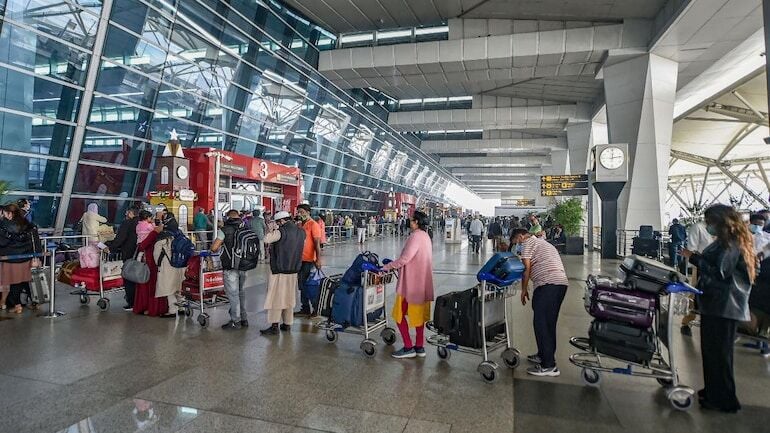
The deployment followed reports of long queues of up to seven hours and problems in first- and second-line checks, including unnotified simplifications that led to absent exit controls. The European Commission inspection, carried out from December 15–17, 2025, warned of risks to the integrity of the Schengen area and demanded immediate corrective action, including mobilising resources.
Who was sent and how they were prepared
Portugal’s government approved sending 24 GNR members to reinforce border checks in the arrivals area. The deployment details:
- Teams worked flexible shifts in groups of 10 plus one supervisor focused on document checks.
- GNR soldiers were already trained in border control and received an additional two days of administrative training from:
- Public Security Police (PSP)
- National Civil Aviation Authority
- Airport operator ANA
The soldiers were described as supplementing PSP staff rather than replacing them.
Immediate operational changes (effective Dec 30, 2025)
A central operational change took effect immediately:
- Three-month suspension of the European Entry/Exit System (EES) for non-EU and non-Schengen arrivals at Lisbon airport.
- Officers reverted to manual passport stamping as an interim measure.
- EES had launched on October 12, 2025; biometric-related delays were among the factors blamed for slow processing.
Other simultaneous measures:
- Electronic and physical border control equipment capacity increased by 30%.
- 80 PSP officers had already been added over Christmas and New Year to handle peak flows.
- Plans to train another 60 PSP officers as reinforcements.
Immediate results and follow-up
- Reports cited that there were no queues in the days after the GNR deployment.
- A follow-up European Commission evaluation was scheduled for early 2026 to assess whether corrective measures addressed the inspection’s concerns.
Scale and pressure on Lisbon airport
Lisbon’s airport is a major international gateway and handles over 30 million passengers annually. That volume magnifies disruptions tied to non-Schengen flights and border processing needs, especially during holiday peaks when arrivals concentrate at specific hours.
Infrastructure and institutional disputes
ANA (airport operator) highlighted capacity constraints at the border control area:
- 16 arrivals counters
- 14 departures counters
- Additional e-gates that have experienced instability
ANA blamed PSP shortages and unstable e-gates for delays. PSP, in turn, argued infrastructure and staffing were inadequate. This disagreement underscores a broader operational challenge: border control requires coordination among multiple agencies and systems, and passenger flow can be disrupted quickly when staffing levels and technology fail to match demand.
Political and institutional reactions
- Portugal’s Internal Affairs Minister told Parliament that EES “went very badly” because of planning failures, staff shortages, and space limitations.
- The same account said airport expansion work will not finish until 2028.
- Tiago Silva, identified as the GNR officers’ union leader, criticised the move as pitting forces against each other, while noting GNR also faces personnel shortages despite expertise from Frontex and sea border operations.
“It went very badly” — Internal Affairs Minister, on the EES rollout
Wider context: EES rollout and European implications
The inspection findings and Lisbon’s rapid response came amid broader European challenges linked to EES implementation. Similar EES delays were reported at other EU airports after the October rollout, highlighting the pressure on border agencies to integrate biometric processes while managing high passenger volumes.
Tourism groups warned of economic and reputational damage from prolonged queues and poor passenger experience, since Lisbon is often the first stop for many visitors. Airlines and airport operations were also affected because lengthy passport processing can ripple into arrival schedules, connections, and terminal crowding.
Main concerns cited by the European Commission
The Commission’s intervention focused on both border security and operational readiness, citing:
- Poor quality of first- and second-line controls
- Reported absence of exit controls tied to unnotified simplifications
- Risks to the management of the external Schengen border
Corrective steps taken
The corrective measures combined personnel and process changes:
- Personnel reinforcements
– 24 GNR soldiers for arrivals document checks
– 80 PSP officers already deployed over the holidays
– Training planned for 60 more PSP officers
- Process and technical adjustments
– Temporary suspension (3 months) of EES at Lisbon for non-EU/non-Schengen arrivals
– Reversion to manual passport stamping
– +30% capacity in electronic and physical border control equipment
Key takeaways
- The three-month pause of EES was presented as a temporary, practical fix — not a permanent retreat from biometric systems.
- Manual stamping marked a return to the previous method used before October 12, 2025.
- With over 30 million passengers annually, Lisbon’s airport has little margin for error; the European Commission’s early-2026 evaluation will test if the December measures resolved the mid-December problems, including the reported up to seven-hour queues.
The response combined urgent staffing moves, equipment capacity increases, training initiatives, and a temporary systems rollback as Lisbon sought to demonstrate rapid improvement to the European Commission and to stabilise passenger processing at a critical travel hub.
In response to a scathing European Commission audit, Portugal deployed GNR soldiers to Lisbon Airport on December 30, 2025. The inspection identified major security gaps and operational failures, including seven-hour wait times. Consequently, the government paused the biometric EES system for 90 days, returning to manual passport stamping. This emergency measure aims to restore border integrity and passenger flow while long-term infrastructure issues are addressed.