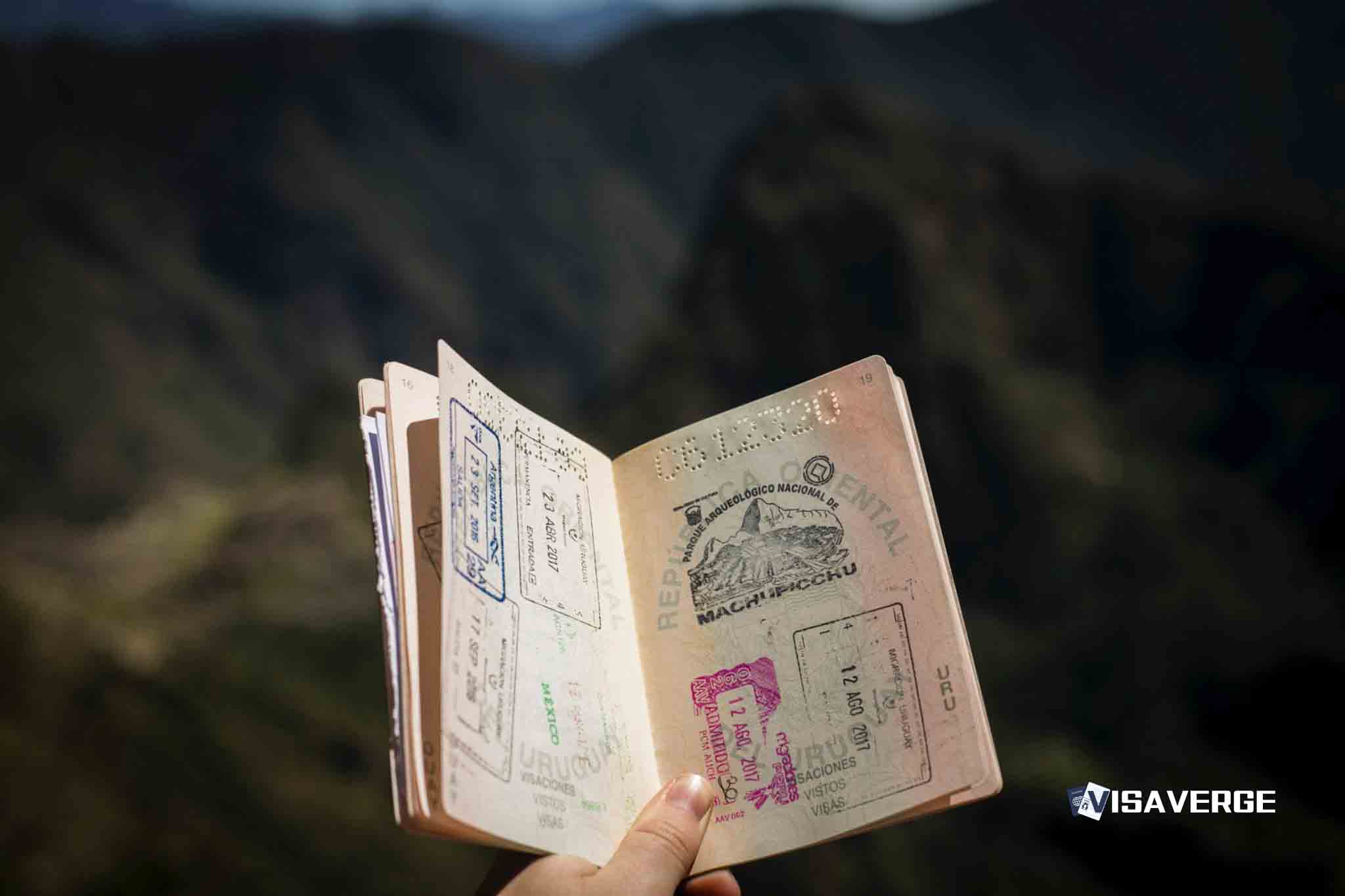
- Germany launched the digital Entry/Exit System (EES) on October 12, 2025, to replace manual passport stamps.
- Berlin Brandenburg Airport began its rollout on December 2, 2025, using self-service biometric kiosks for travelers.
- The system requires fingerprints and facial images from non-EU nationals, storing data for up to three years.
(GERMANY) — Germany implemented the European Union’s Entry/Exit System on October 12, 2025, replacing passport stamps with digital records and biometric checks for many non-EU travelers at the country’s external Schengen borders.
Berlin Brandenburg Airport began its rollout on December 2, 2025, bringing the new registration process to one of Germany’s busiest international gateways as the bloc moved toward a wider shift in how it tracks arrivals and departures.

The Entry/Exit System, or EES, digitally records when covered travelers enter and leave Schengen countries. Instead of a border officer stamping a passport, the system stores biometric data, including facial images and fingerprints, and ties that information to the traveler’s movements across the external border.
Germany joined the system from the first day of the EU rollout. Across the bloc, full implementation began on October 12, 2025 and completion was targeted by April 2026.
The change affects non-EU nationals who do not hold residence permits or long-stay visas from Schengen countries. At airports and other external Schengen borders, those travelers now face a process built around digital identity checks rather than the older manual stamping system.
Exemptions remain in place for EU citizens and citizens of Schengen-associated countries, including Iceland, Norway, Switzerland and Liechtenstein. Their non-EU family members with residence cards also remain outside the new requirement, as do holders of Schengen residence permits or national long-stay visas.
Those exempt groups continue through standard passport checks. The new system instead concentrates on short-stay non-EU travelers entering the Schengen area through its external frontiers.
At Berlin Brandenburg Airport, first-time entrants covered by the system have had to complete a full registration since the airport rollout began on December 2, 2025. The process starts at self-service kiosks, where travelers scan their passports before moving to the biometric stage.
They then provide fingerprints and a facial image. Glasses and piercings are allowed if the face remains visible.
After that, travelers proceed to a border officer for verification. The officer checks the registration and confirms the traveler’s identity before the person can enter.
The first registration is the most involved. On later trips, the Entry/Exit System records entries and exits automatically if the traveler’s biometric data remains valid in the system.
That stored biometric data stays in the system for 3 years. In overstay cases, the retention period extends to 5 years.
The EU designed the Entry/Exit System to do more than replace a stamp with a screen. It is intended to enhance security, detect overstays, prevent identity fraud, and support efforts against terrorism and organized crime across the Schengen area.
Tracking arrivals and departures in a shared digital system also gives border authorities a direct record of whether a traveler has remained within the allowed period of stay. Once registered, travelers can check their remaining stay days through the system.
Not every traveler can complete the process through automated kiosks. Manual desk registration is required for travelers without biometric passports, for children under 12, and for people with disabilities.
Those exceptions leave the central legal requirement unchanged. Travelers who refuse to provide biometric data are denied entry.
That rule places biometric data at the heart of the new border regime. For covered travelers, fingerprints and a facial image are no longer an optional supplement to a passport check; they are part of the condition for crossing the external border.
The shift is especially visible at airports such as Berlin Brandenburg Airport, where self-service kiosks now stand at the front end of the border process for first-time entrants. The system turns the initial inspection into a sequence of document scanning, image capture, fingerprint collection and officer verification.
Germany’s participation also ties into a wider EU framework for digital border management. The Entry/Exit System works alongside ETIAS, the pre-travel authorization system for visa-exempt nationals such as travelers from Canada, Japan and the United Kingdom.
Under that structure, ETIAS and EES serve different functions but operate in the same broader border architecture. One screens visa-exempt travel before departure, while the other records border crossings and stay calculations after a traveler reaches the Schengen frontier.
Questions about data handling sit close to the center of the policy. The system stores information solely for border control purposes under the EU’s General Data Protection Regulation, or GDPR, and the data is not for commercial use.
Access is limited to authorized EU authorities. That restriction is part of the legal framework the bloc attached to the collection of facial images, fingerprints and travel records at the border.
In practice, the new process changes what many non-EU nationals experience on arrival in Germany. A passport alone no longer closes the loop for covered travelers; the system pairs the travel document with biometric data and a digital entry record that remains active for later trips.
That carries a practical effect for frequent visitors. After the first registration, later crossings can move through automatic recording if the biometric record remains valid, reducing the need to repeat the full enrollment each time.
At the same time, the system creates a more durable record than a passport stamp ever did. A stamp could show a date and place of entry, but the Entry/Exit System links those movements to an electronic file that authorities can use to monitor time spent in the Schengen area.
Berlin Brandenburg Airport’s rollout in December 2025 put that system into the hands of travelers arriving in the German capital region. By then, Germany had already spent weeks operating under the EU-wide framework that took effect in October 2025.
The timing matters operationally because airports are among the busiest external Schengen borders and often the first place travelers encounter rule changes. At Berlin Brandenburg Airport, kiosk-based passport scans and biometric capture turned a bloc-wide policy into a visible airport procedure.
Germany’s approach did not create a separate national system outside the EU model. It joined the common rollout from day one, applying the same underlying rules on registration, exemptions, retention periods, access controls and denial of entry for refusal to provide biometrics.
That leaves the shape of the border check markedly different from the one many travelers knew before October 12, 2025. For a large group of non-EU nationals, a Schengen entry into Germany now begins with the Entry/Exit System, a passport scan, biometric data collection and a digital record that follows each crossing long after the stamp disappears.