- A federal judge blocked California’s mask ban targeting ICE agents, citing discriminatory treatment compared to state police.
- The ruling relies on the Supremacy Clause, arguing that state laws cannot unlawfully single out federal officers.
- California lawmakers plan immediate new legislation to include state police, potentially resolving the constitutional conflict.
U.S. District Judge Christina Snyder on Monday blocked California from enforcing a mask ban against ICE agents, ruling the state’s “No Secret Police Act” unlawfully singles out federal officers by exempting state police.
Snyder issued a preliminary injunction on Monday, February 9, 2026, in a lawsuit the Trump administration filed in November 2025, and she stayed enforcement of the mask ban until February 19, 2026, unless further stayed by the 9th Circuit Court of Appeals.
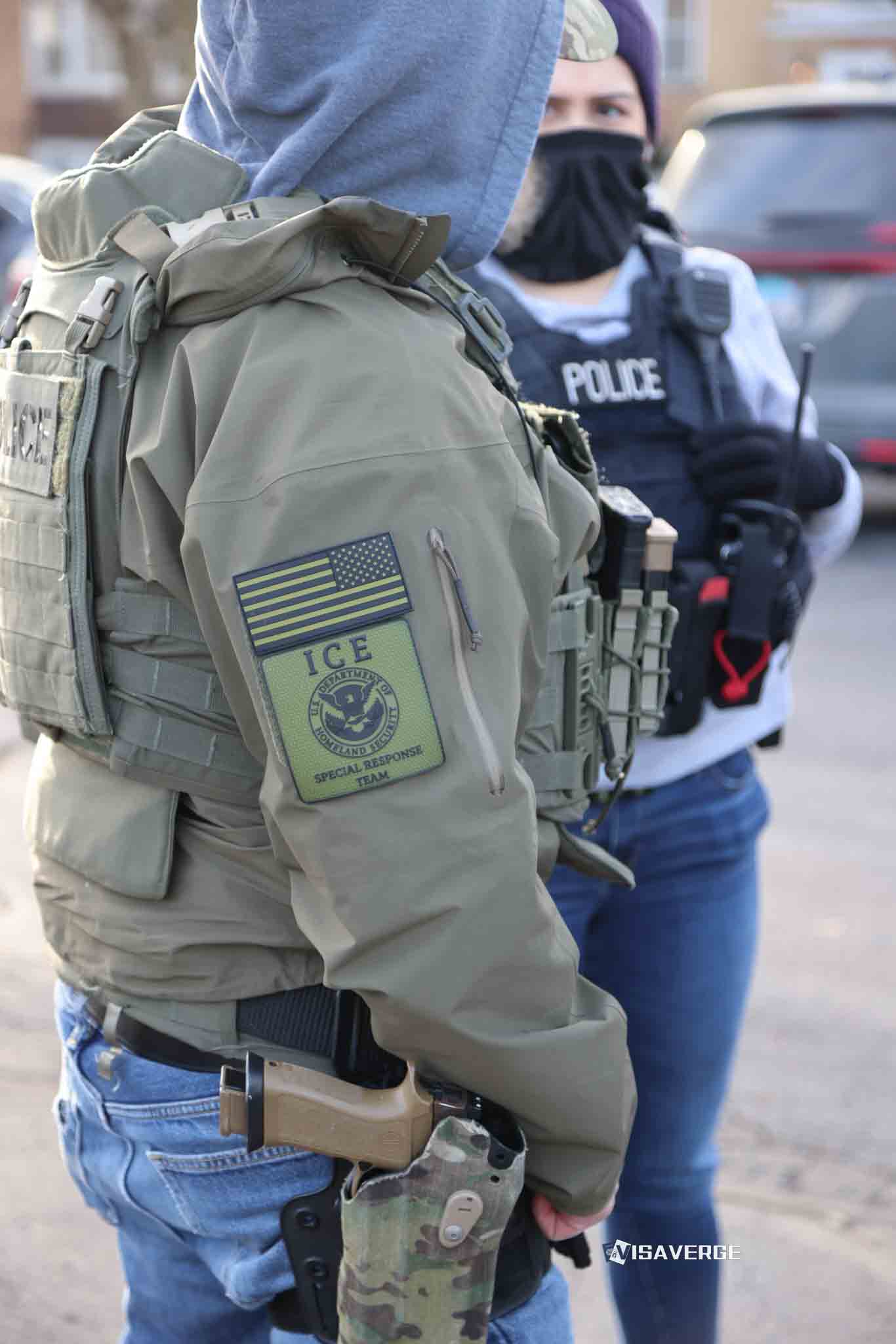
The order leaves in place, for now, Snyder’s conclusion that California cannot apply the face-covering prohibition to federal immigration officers while allowing state police to avoid the restriction.
At the same time, Snyder upheld a separate California law aimed at law enforcement transparency, the “No Vigilantes Act,” which requires on-duty officers to display visible identification, including an agency name and an officer name or badge number, with exceptions.
Enforcement of the identification law will also pause until February 19, 2026, after California Attorney General Rob Bonta’s office agreed during the litigation not to enforce it while the court considered the challenge.
The legal fight grew out of political and public tensions that followed 2025 ICE raids in Los Angeles, which helped spur California lawmakers to pass measures intended to limit masked law enforcement activity and require clearer identification during operations.
Snyder, a Clinton appointee who sits in the Central District of California in Los Angeles, grounded her ruling on the Supremacy Clause, writing that the mask ban discriminates against the federal government and violates U.S. Const. art. VI, cl. 2.
California’s No Secret Police Act prohibits facial coverings for law enforcement during the performance of duties, while carving out exceptions for SWAT and undercover activities.
Governor Gavin Newsom signed the law in September 2025, and it took effect January 1, 2026, though the provisions remained on hold while the lawsuit proceeded.
Snyder concluded the measure would cross a constitutional line when applied in a way that treats federal officers differently from state counterparts, because the exemption for state police leaves federal agents facing restrictions that similarly situated state officers do not.
In her order, Snyder also addressed the purpose behind the California law, writing that the Acts promote “transparency which is essential for accountability,” while questioning the need for face coverings in ordinary law enforcement work.
She added that federal officers “can perform their federal functions without wearing masks,” language that the federal government cited as support for requiring operational flexibility while preserving the ability to do the job.
The Trump administration’s lawsuit challenged the mask ban’s application to federal agents, including ICE agents, while the case also focused on whether California could enforce identification requirements against officers carrying out duties in the state.
Snyder’s ruling left open the possibility that a broader, even-handed mask restriction could survive, noting the law “could be constitutional if applied to all officers,” a point tied directly to her finding that the current framework exempts state police.
The decision sets up a near-term deadline because Snyder’s order keeps the mask ban’s enforcement on hold only until February 19, 2026, unless the 9th Circuit Court of Appeals takes action to extend the stay.
On the federal side, Justice Department lawyer Tiberius Davis argued the state law created operational risks, citing Department of Homeland Security reports of increased assaults and threats against officers after 2025.
Davis also pointed to a Los Angeles incident in which three women allegedly doxxed an ICE agent through a livestream and Instagram, a scenario the federal government used to argue that exposing officers’ identities can lead to harassment and danger.
Snyder’s order described the competing interests in stark terms, recognizing transparency goals while rejecting the state’s uneven application of the mask ban as inconsistent with the constitutional structure governing conflicts between state rules and federal functions.
California’s response after the ruling was limited, with Bonta’s office offering no immediate comment post-ruling after previously agreeing not to enforce the identification law during the proceedings.
In Sacramento, state Sen. Scott Wiener said he plans immediate new legislation to include state police in the mask ban, a step that could address the exemption Snyder cited when she concluded the law discriminates against federal officers.
The ruling arrives as states across the country consider how to respond to immigration enforcement tactics in their communities, and Snyder’s order may influence similar state measures nationally.
For California, the immediate practical effect is that the No Secret Police Act cannot be enforced against federal immigration officers while the injunction remains in place, even as the separate identification law remains upheld but paused through February 19, 2026.
For federal immigration enforcement in Los Angeles and beyond, the case centers on whether California law can regulate the appearance of ICE agents during operations when state police do not face the same requirement, a constitutional question Snyder answered by invoking the Supremacy Clause and a basic demand for equal treatment between sovereigns.