- The EU will replace physical Schengen visa stickers with encrypted 2D digital barcodes by 2028.
- A single online visa application platform will centralize data, document uploads, and fee payments for travelers.
- Biometric checks remain mandatory for first-time applicants, while repeat travelers can apply fully remotely.
(EUROPEAN UNION) — The European Union plans to replace traditional Schengen visa stickers with cryptographically signed 2D digital barcodes by 2028, moving visa applications and border checks onto a fully digital system built around a single EU Online Visa application platform.
The change, set out in the European Commission’s inaugural Visa Strategy released on February 14, 2026, would shift applicants away from the current paper-based model and toward an online process for submitting data, uploading documents, paying fees and tracking case status.
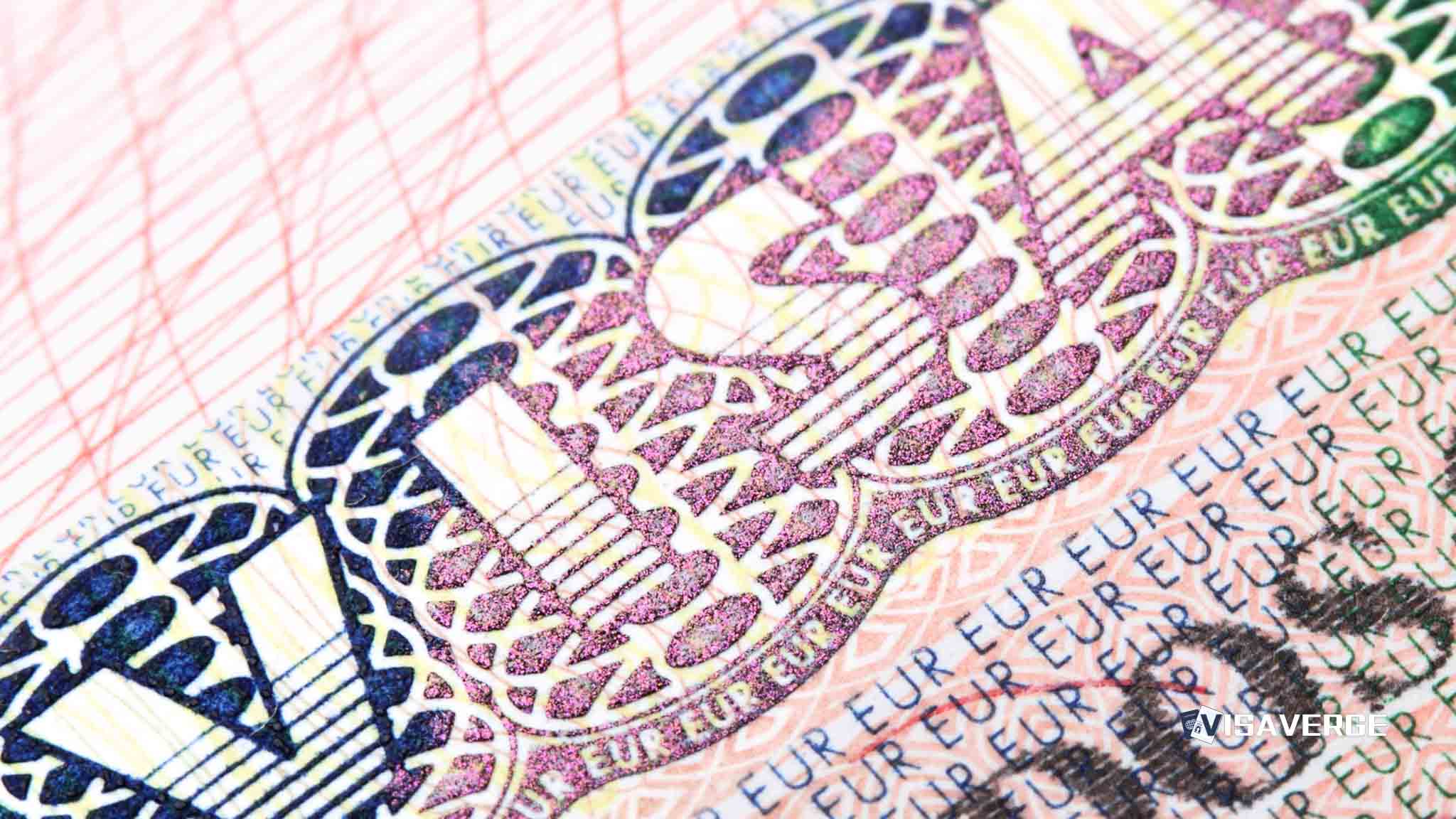
Under the plan, travelers would no longer rely on physical Schengen visa stickers placed in passports. Instead, border authorities would verify an encrypted barcode linked to a centralized EU database containing personal, biometric and visa details.
The Commission framed the overhaul as a way to tighten security and cut exposure to falsification, theft and fraud while making procedures simpler for both applicants and authorities. Development of the platform continues from 2026, with full operation scheduled by 2028.
That timetable puts the visa overhaul alongside a wider recasting of the EU’s border management systems. The digital visa framework is due to integrate with the Entry/Exit System, or EES, which starts biometric checks in October 2025, and with ETIAS, the pre-travel authorization scheme for visa-exempt nationals due by end-2026.
Together, those systems point to a border model that relies less on manual inspection and more on digital records, fingerprints and face scans. In the visa system, the barcode will be printable if needed, meaning travelers will not need a smartphone to present it.
Applicants would use the new platform regardless of which Schengen country they plan to visit. That would create a single digital channel for lodging applications across the zone, replacing a fragmented process that has long depended on consulates, stickers and passport handling.
Even so, the digital shift will not remove all in-person requirements. First-time applicants, people renewing biometrics every five years, and those traveling on new travel documents will still have to appear at a consulate for fingerprints and facial scans.
Repeat visitors with valid biometrics, by contrast, will be able to complete the process remotely. That distinction sits at the center of the new model: an online system for most of the paperwork, backed by periodic physical identity checks.
At the border, the EU plans to let officers retrieve visa information by scanning the encrypted 2D digital barcodes. The scan would open immediate access to the traveler’s stored record in a centralized database, including identity details, biometric data and visa information.
That process would eliminate physical visa stickers and passport stamps in the cases covered by the new system. It would also place visa verification inside the same digital environment as other planned entry controls.
France has already tested the concept in a real-world setting. During the 2024 Paris Olympics, it piloted the system and issued 70,000 digital visas to athletes, journalists and delegations.
That trial stands as the clearest validation cited for the technology before its wider EU rollout. By using the digital format during a major international event with high volumes of foreign arrivals, the pilot provided a practical test of how a barcode-based visa could work in live conditions.
The launch partners for the wider rollout include France, Germany, Spain, and Italy. Their early involvement places some of the bloc’s busiest travel and visa destinations at the front of the transition.
Italy is aligning its own visa and border infrastructure with the broader EU schedule. It is pairing a Portale Visti cloud migration with the EES rollout at Fiumicino and Malpensa airports by October 2025.
Those steps suggest that the visa change is not being treated as a stand-alone technology swap. It is being built in parallel with airport systems, biometric checks and centralized data access that will shape how non-EU travelers are processed on arrival and departure.
The scope of the digital visa system is broad. It will cover short-stay visas, including stays of up to 90/180 days, as well as long-stay visas.
Stay limits will be enforced electronically. That means compliance monitoring will move away from physical passport markings and toward digital records that can be checked directly in EU systems.
For travelers, the practical effect will begin well before a border crossing. Once the platform launches in 2028, applicants will be able to submit their information online, upload supporting documents, pay fees and follow the progress of their cases through the single EU Online Visa application platform.
The platform is meant to work across the Schengen area rather than country by country. Even with that common front end, travelers will still need to apply through the embassy of their main destination, or through the first entry country if time spent across countries is equal.
That rule preserves a familiar element of the current visa framework while moving the application mechanics online. It also signals that responsibility for examining applications will remain tied to the traveler’s itinerary, even as the interface becomes centralized.
The move away from Schengen visa stickers marks one of the clearest signs yet that the EU wants to digitize the full path from application to admission. In the current model, the sticker in the passport has served as the visible proof of authorization.
Under the future model, that proof becomes an encrypted digital record that can be printed but is verified electronically. The barcode, rather than the sticker, becomes the traveler’s visa token.
The planned coexistence period after 2028 reflects the scale of the transition. Digital and traditional visas will run side by side for several years as countries adapt.
That phased approach gives member states time to align consular procedures, border equipment and data systems. It also reduces the risk of a hard break between old and new formats across an area that spans many national administrations.
By sequencing development from 2026, biometric entry checks from October 2025, ETIAS by end-2026, and full visa platform operation by 2028, the EU is effectively building a layered digital border architecture. Each system serves a different function, but all depend on electronic identity and travel data.
EES will replace stamps with fingerprints and face scans. ETIAS will require visa-exempt nationals to secure a €7 pre-travel authorization. The digital visa platform will handle applicants who need permission to enter and stay, whether for short visits or longer periods.
The Commission’s strategy points to efficiency as well as security. A centralized application route could reduce repeated paperwork, standardize parts of the process and make it easier for authorities to retrieve information already held in digital form.
For applicants who already have valid biometrics on file, the ability to complete the process remotely could remove the need for another consulate visit. For first-time applicants and those whose data must be refreshed, the in-person stage remains.
That balance reflects the EU’s effort to digitize without abandoning identity verification. The system becomes more remote for returning travelers, but biometric enrollment still anchors the process.
The barcode format itself also addresses a practical concern for travelers. Because it is printable, access to the visa will not depend on carrying a phone, maintaining battery power or securing mobile connectivity at the border.
For border authorities, the attraction lies in immediate access to a centralized record. That allows officers to verify not just a travel authorization, but the underlying personal and biometric information connected to it.
The pilot during the 2024 Paris Olympics offered a preview of that model at scale. Issuing 70,000 digital visas to athletes, journalists and delegations gave authorities a controlled but high-profile test before a bloc-wide launch.
Now the EU is preparing to extend that approach across the Schengen area. By 2028, if the current schedule holds, travelers needing visas for Europe will begin moving from passport stickers to encrypted 2D digital barcodes, from national application channels to a single EU Online Visa application platform, and from paper proof to electronic verification at the border.