(KYRGYZSTAN) The European Commission and the EU Air Safety Committee have formally acknowledged “significant progress” by Kyrgyzstan on aviation safety in 2025, a step Kyrgyz officials say could bring the country closer to ending a long-running EU ban on its airlines. Kyrgyz outlet AKIpress reported that the Commission sent a letter to Kyrgyz authorities, and the State Civil Aviation Agency later publicised the communication. Open.kg and Akchabar also reported the EU’s positive letter, describing it as the first such message from Brussels in 19 years.
Why the letter matters
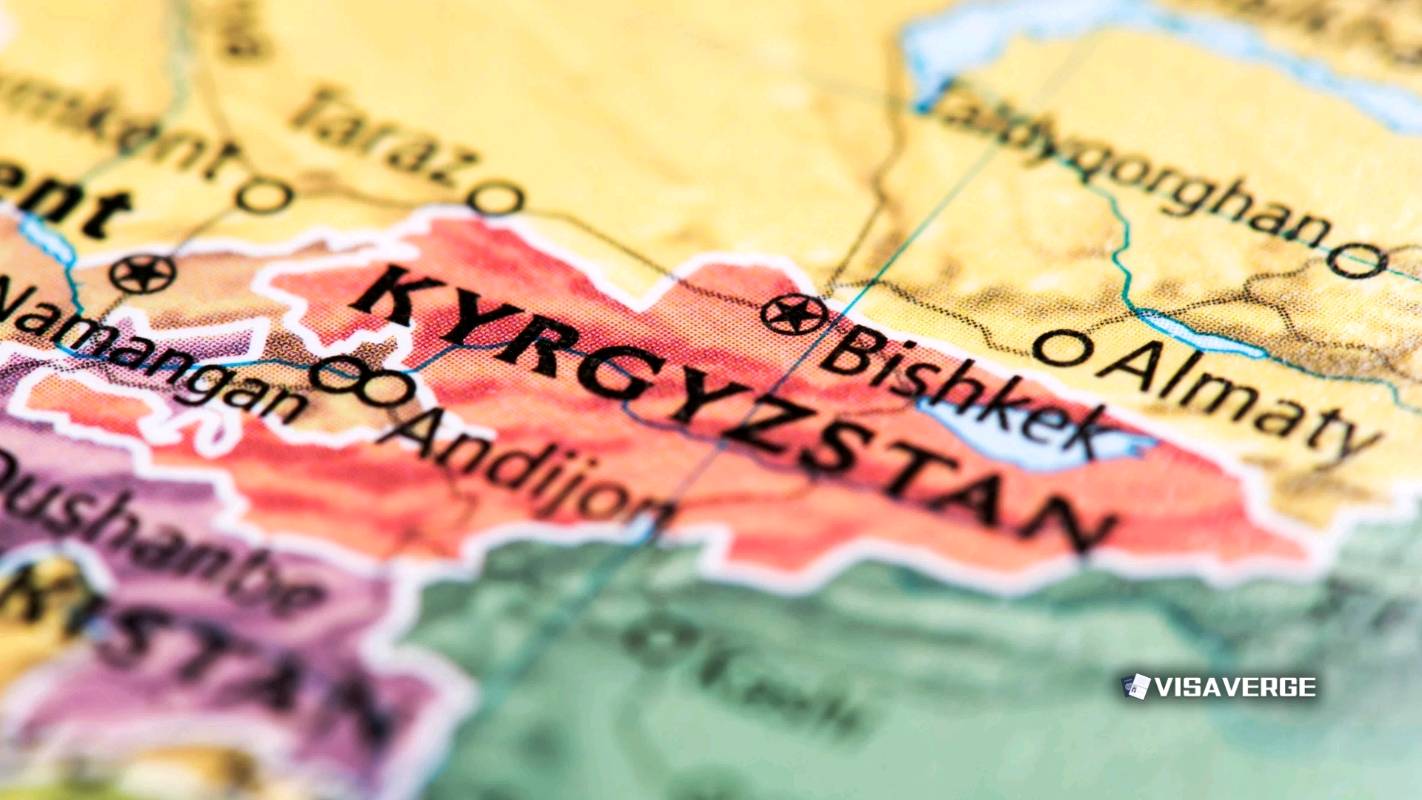
For a country with a large diaspora and growing ambitions to connect Bishkek and Osh more directly to European cities, the letter matters well beyond technical compliance. Kyrgyz carriers have been on the EU Air Safety List since 2006, after European authorities judged that national oversight did not meet international standards.
That list, sometimes called a blacklist, blocks affected airlines from operating commercial flights into the European Union. The restriction has shaped travel choices for Kyrgyz citizens and European visitors, often forcing routes through third countries and adding cost and time.
Concrete improvements cited by the EU
Reports said EU officials pointed to concrete changes rather than promises. Among the improvements cited were:
- Legislative reforms
- Stronger institutional capacity at the State Civil Aviation Agency
- A larger number of safety inspectors
- Updated aviation rules to align with International Civil Aviation Organization (ICAO) standards
- Corrective action plans after audits and inspections
Kyrgyz authorities have presented these steps as proof that the country’s regulator can now monitor airlines and enforce compliance, not just write rules on paper.
Safety outcomes and domestic reports
The State Civil Aviation Agency’s 2025 safety analysis—referenced in Kyrgyz reporting—described better outcomes in the air. Government statements and the agency report cited:
- Reductions in serious incidents
- No civil aviation accidents in the first half of 2025 for Kyrgyz-registered aircraft within national airspace
Officials link these results to new safety management practices and more routine surveillance, including follow-up work after inspections. President Sadyr Japarov has publicly backed the effort, and civil aviation officials frame the EU feedback as validation of years of work.
“The EU feedback is being framed as validation of years of work,” according to Kyrgyz reporting.
What remains to be done — the EU process and timeline
Even with the upbeat tone, Kyrgyzstan is not off the EU Air Safety List yet. The next steps are tightly defined by Brussels.
Removal requires the European Commission—advised by the EU Air Safety Committee—to conclude that:
- The country’s oversight system meets international norms, and
- Airline compliance meets the standards used by European regulators
Kyrgyz reporting says the process has reached a final stage, with a final European audit scheduled for December 2025 after meetings and audits with EU experts during 2023–2025. Until a formal update is adopted, airlines remain restricted.
How delisting is typically formalised
In practice, delisting is usually implemented through a Commission Implementing Regulation that revises the Air Safety List, specifying which carriers are banned or allowed.
The EU’s public information page explains the process: European Commission: EU Air Safety List.
For Kyrgyz airlines, the difference between a supportive letter and an amended regulation is the difference between hope and a legally binding change that airport slot planners, insurers, and code-share partners can rely on.
Human impact: mobility, travel and diaspora
The aviation safety story reaches into mobility decisions that resemble immigration choices, especially for:
- Kyrgyz students and workers who travel frequently
- Families split between Kyrgyzstan and the EU
When direct flights are not available, people often route through Istanbul, Dubai, or other hubs, creating tighter connections and higher risk of missed onward flights. A Bishkek-based student returning to an EU university may buy a ticket, but the journey can involve extra borders, more layovers, and greater uncertainty when schedules shift.
Kyrgyz sources did not name travellers affected by the ban, but the travel burden is widely felt.
Analysts’ perspective: caution and persistence
Analysts stress the Commission’s signal should be read as an incentive to keep investing in oversight, not as a guarantee of delisting.
According to analysis by VisaVerge.com, aviation compliance reviews often focus on whether reforms are lasting, including:
- Staffing levels
- Inspector training
- Enforcement powers
- How a regulator responds when airlines fall short
Kyrgyz officials have highlighted the larger inspector corps and rule updates, but the final audit will likely test day-to-day practice:
- How incidents are reported
- How maintenance records are checked
- Whether corrective plans are closed on time
For now, the EU’s positive letter stands as a rare vote of confidence while Kyrgyzstan awaits December 2025’s assessment and the Commission decision that would reopen Europe’s skies to its carriers.
Practical consequences if delisted (or not)
Delisting, if it happens after the December 2025 audit, would not change visa rules for Kyrgyz travellers on its own, but it could change how people move:
- Lower ticket costs and more direct schedules
- Fewer missed connections and less risk of multi-day delays
- Easier travel for EU residents from Kyrgyzstan, seasonal workers, families, business travellers, and students
Conversely, if restrictions remain, tickets may stay more expensive and travel more circuitous.
EU officials have made aviation safety the test, not politics—the letter frames progress in technical terms that can be checked.
How reforms were implemented
Kyrgyz regulators say reforms were built through:
- Repeated contact with EU specialists during 2023–2025
- Domestic changes aimed to match ICAO expectations
- Increasing the number of inspectors and strengthening oversight capacity
Open.kg and Akchabar reported the Commission noted the larger inspector corps and stronger oversight—critical in a small market where one resignation can thin an entire unit.
The State Civil Aviation Agency treats the EU message as proof the system is now being judged on evidence: audit files, runway checks, and documented follow-ups—not on reputation dating back to 2006. Still, officials know a single weak inspection result can delay removal for months. Until Brussels issues the legal act, Kyrgyz airlines remain grounded from EU routes today.
In 2025 the European Commission signalled significant progress by Kyrgyzstan in aviation safety, noting legislative reforms, more inspectors, institutional strengthening and ICAO-aligned rules. Domestic reports show fewer serious incidents and no civil aviation accidents in early 2025. A final European audit scheduled for December 2025 will determine removal from the EU Air Safety List, which requires a formal Commission regulation before airlines can resume EU routes.