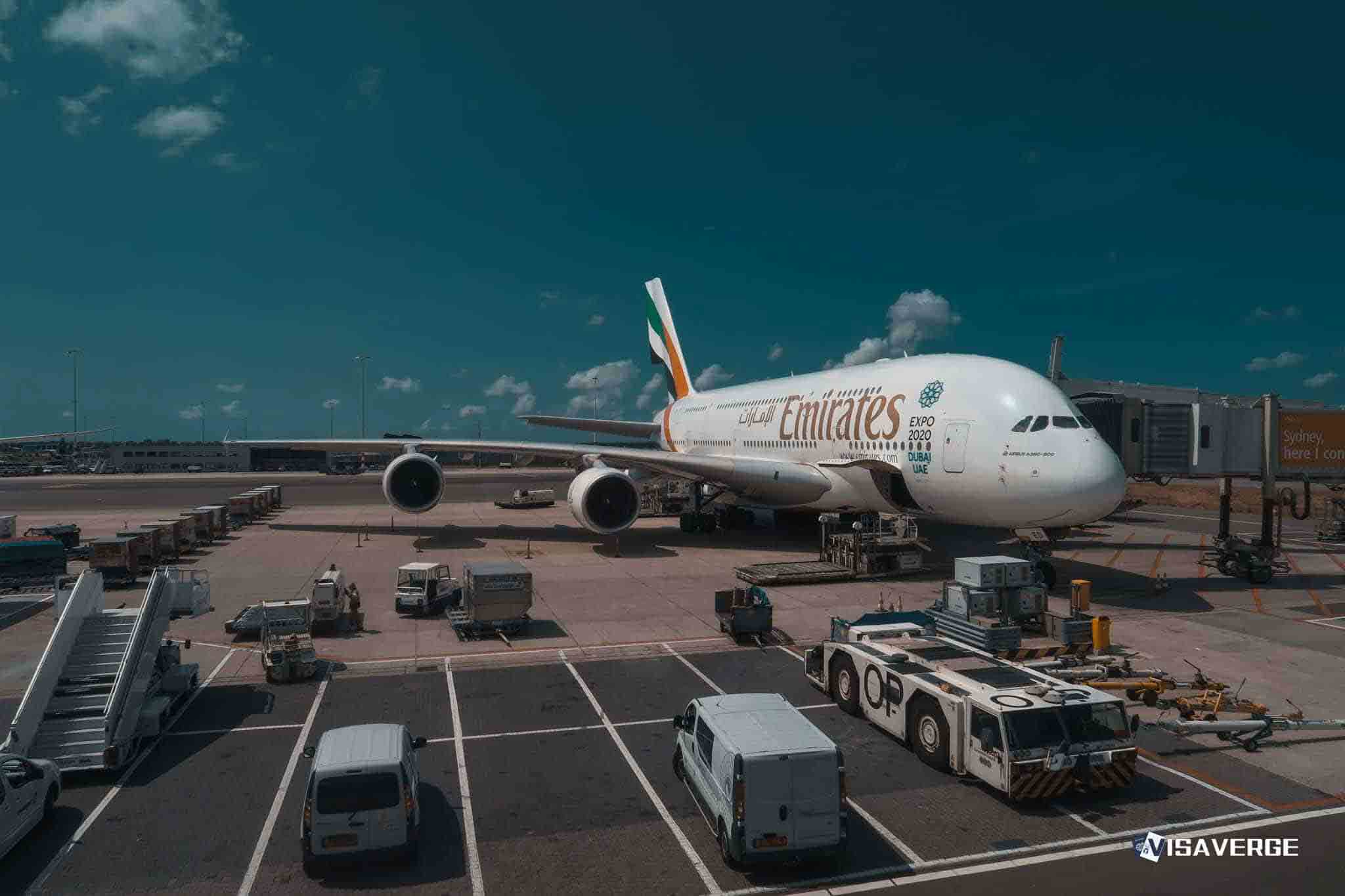
- Emirates has restored 60% of its network following significant airspace disruptions in the Middle East region.
- The airline currently operates 106 daily return flights to 83 destinations as of March 7, 2026.
- Full capacity restoration remains subject to airspace availability and various operational approvals across global routes.
(DUBAI) — Emirates operated 106 daily return flights to 83 destinations as of March 7, 2026, restoring roughly 60% of its network after airspace disruptions tied to the US-Israel-Iran conflict.
The Dubai-based carrier said it expected to resume 100% capacity in the coming days, but kept that outlook conditional on routes reopening and operational approvals, describing schedules as “subject to airspace availability”.
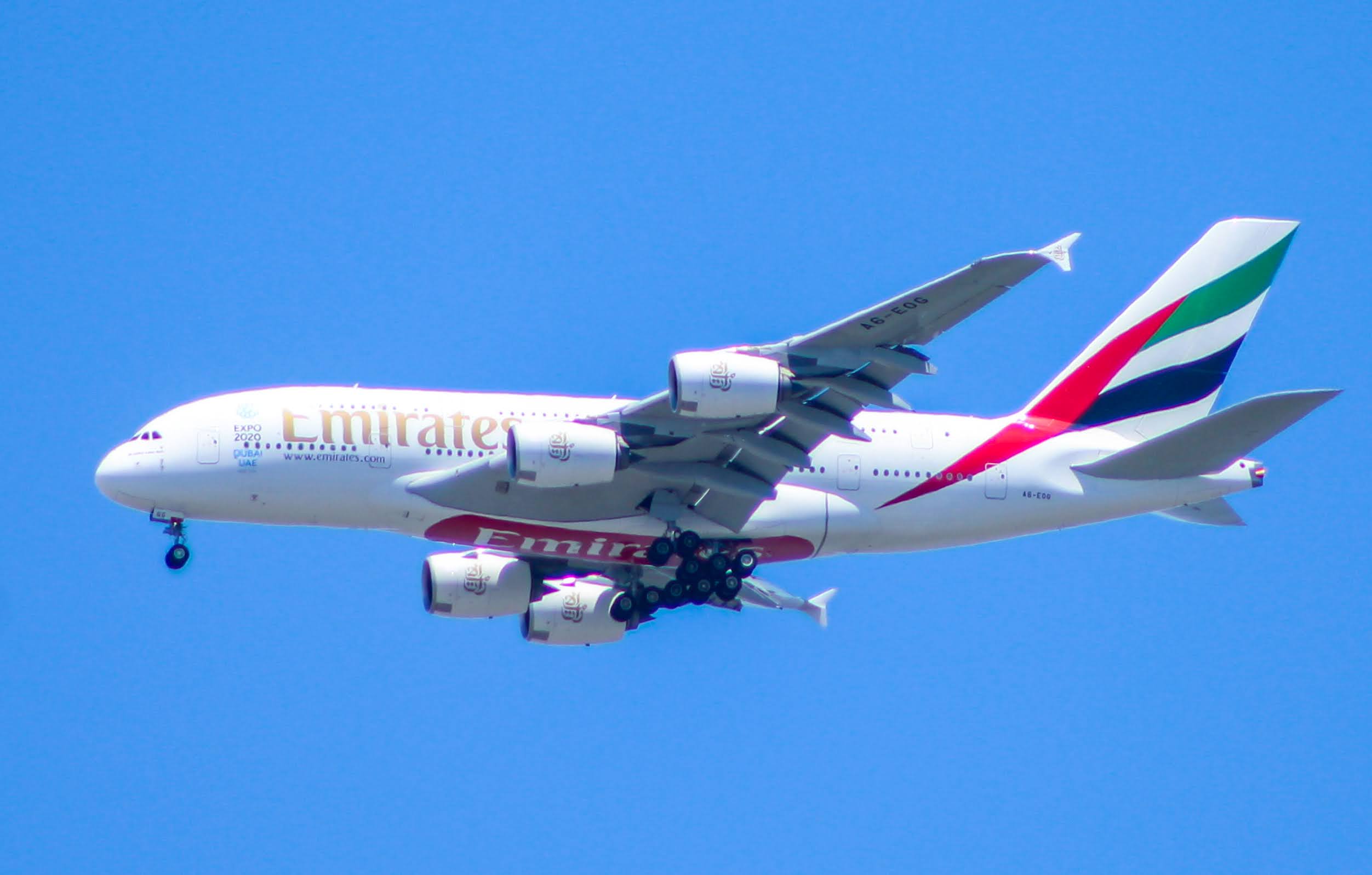
The current footprint leaves the airline running a reduced global operation when compared with its full network size, even as it pushes to rebuild connectivity through Dubai and re-accommodate disrupted itineraries.
Airspace availability has become the central constraint for airlines routing through the region, forcing carriers to weigh closures, reroutings, and knock-on effects across their networks. Those pressures can ripple quickly through schedules, because longer routings can consume aircraft time and tighten crew duty limits.
Emirates has treated several large markets as anchors during the disruption, with service spread across multiple airports and cities rather than concentrated on a single gateway. The airline has leaned on frequency in those corridors to rebuild its timetable and absorb passengers displaced from cancelled or delayed flights.
In the United Kingdom, Emirates operated 11 daily flights across five airports, while India accounted for 22 daily flights to nine destinations. The airline also operated flights to seven destinations in the United States, keeping a transatlantic presence as it rebuilt the wider network.
A geographic snapshot of the restored network shows where capacity concentrates and where it thins, reflecting which corridors remain practical under current overflight constraints and which ones still face limitations.
Emirates’ focus on the UK, India and the United States also reflects the way the carrier uses Dubai as a connecting hub, bringing together passengers moving between Europe, Asia and the Americas. By preserving multiple daily frequencies in these markets, the airline can offer more options to reroute customers onto later departures when earlier services fill up.
The carrier pointed to an operational milestone on Thursday, March 5, when it carried around 30,000 passengers out of Dubai while working through backlogs. That throughput, in the middle of an irregular operations period, signaled that parts of the schedule had stabilized enough for the airline to prioritize clearing stranded demand.
Emirates’ current schedule is likely to remain fluid while airspace restrictions and reopening decisions shift, because availability can change faster than airlines can rebuild published timetables. Even when routes reopen, the airline still has to sequence aircraft, crews, and airport slots back into a workable plan.
Before the disruption, Emirates described a broad footprint that can make “full network” comparisons difficult if different definitions get used. In one baseline, Emirates’ complete network spans 152 destinations across 351 routes under normal operations, while its full network also gets referenced as 140 destinations in network snapshots.
Such totals can differ for routine reasons in aviation scheduling, including whether the count reflects a specific timetable, seasonal operation, or a marketed destination set. Emirates’ public schedule examples still illustrate how widely the airline normally spreads capacity across regions that include Australia, Europe, Asia, the Americas and the Middle East.
Recent A380 and other schedule examples included Australian cities such as Brisbane, Melbourne, Perth and Sydney, and European points such as Vienna, Prague, Copenhagen, Cairo, Rome, Barcelona, Madrid and Zurich. In Asia, examples included Shanghai, Osaka, Tokyo, Kuala Lumpur, Seoul and Bangkok, while other cited destinations included Toronto, Sao Paulo and Amman.
Emirates also had previously planned network changes for 2026, including a Dubai-Helsinki daily nonstop launch and increased Tokyo Narita frequencies. Those plans were framed before the latest airspace disruption, and their timing can still hinge on operational conditions.
Airspace constraints have also made it harder to provide a neat list of what is “back” and what remains paused. Emirates has not provided a complete public list of the 83 active destinations versus the 57 paused ones in this snapshot, leaving travelers to rely on live schedule checks and booking status.
Operationally, certain corridors face higher exposure when overflight restrictions force detours that add time and complexity to a flight, or when closures disrupt the sequence of aircraft rotations across multiple cities. Longer routings can also tighten crewing options and create cascading delays that make it harder to protect onward connections through Dubai.
Other airlines have adjusted services in the region, reflecting the same pressures on airspace and routing. Lufthansa Group suspended flights to Dubai/Abu Dhabi (until March 10), Dammam (until March 10), Amman/Erbil (until March 15), Tel Aviv (until March 22), Beirut (until March 28), and Tehran (until April 30).
Air Arabia, meanwhile, ran limited March 6-7 flights targeting Austria, Egypt, Ethiopia, Greece, India, Italy, Pakistan, Saudi Arabia, and Turkey, underscoring the broader operational constraints airlines have faced as the disruption unfolded.
For passengers, Emirates directed travelers to check its website for “confirmed bookings only” as it works through disrupted travel. The airline also signaled a prioritization approach during irregular operations, with earlier bookings placed first for re-accommodation when seats are scarce and schedules shift at short notice.
The carrier discouraged unconfirmed travel during the period of volatility, because sudden adjustments can reduce the ability to protect connections or move customers quickly when a flight cancels or reroutes. Emirates said it monitors developments and adjusts accordingly, tying each step in its restoration to what airspace and operating conditions allow.
The latest operating snapshot lands after what Emirates described as six days of closures, a disruption that tightened regional routing options and reduced the airline’s ability to run its usual breadth of services. As of March 7, 2026, the airline’s restored schedule stood at 106 daily flights serving 83 destinations, and its next steps remained “subject to airspace availability” and operational clearances.