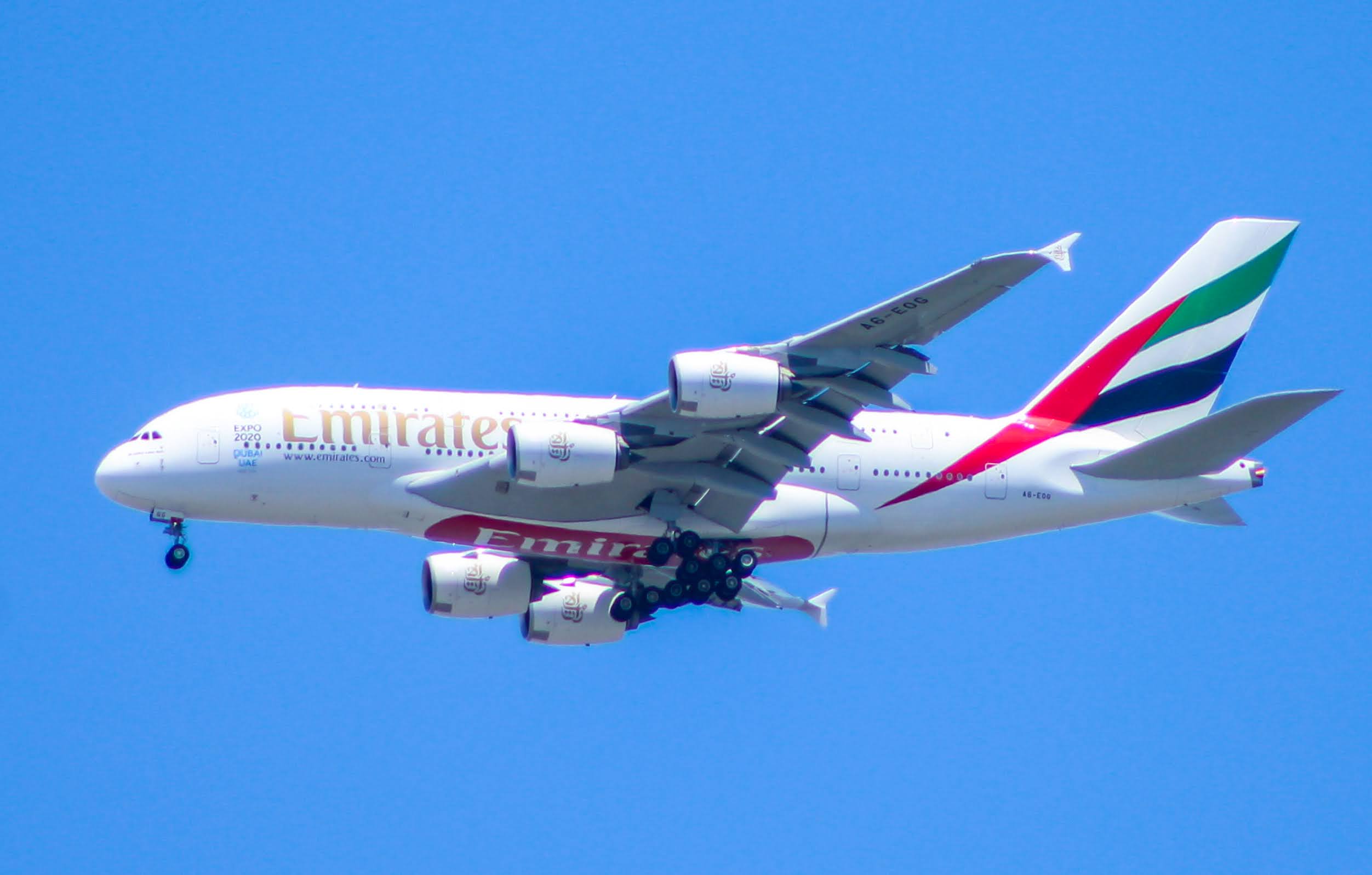
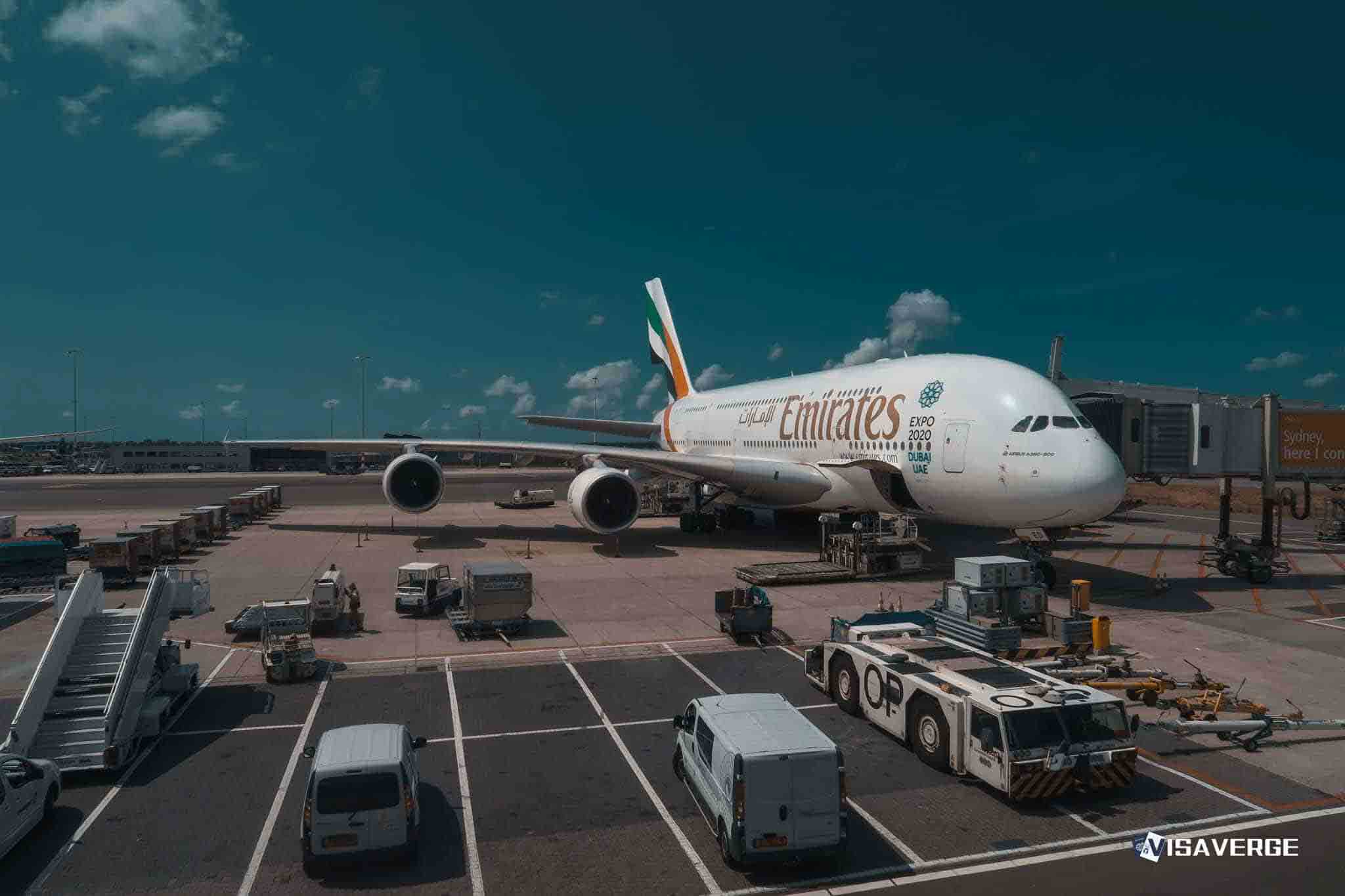
- Emirates continues to operate a reduced schedule due to Middle East airspace closures from the Iran-US conflict.
- Unconfirmed reports of 11 daily UK flights across five airports conflict with the airline’s official disruption warnings.
- Passengers are advised not to visit airports unless specifically contacted by the airline regarding their flight status.
(UK) — Emirates faced fresh questions from passengers on Saturday after a claim circulated that the airline was running 11 Daily Flights across Five Airports in the UK on March 7, 2026, even as the carrier warned that its operations remained disrupted.
Travelers paid close attention because Emirates acknowledged it is operating fewer flights “until further notice” and told customers not to go to the airport unless the airline contacts them, advice that can affect how people time their journeys and rebooking decisions.
The circulating claim described “11 daily flights across five UK airports today — Heathrow, Gatwick, Manchester, Birmingham, Edinburgh.” That kind of statement can matter for passengers trying to judge whether schedules have stabilised or whether delays and cancellations remain likely.
Airlines and airports can use “daily flights” in different ways, including the number of scheduled departures, the number of flights actually operating, counts measured per direction, or rolling 24-hour tallies that shift with late retimings and operational changes.
Emirates, however, said it is “operating a reduced number of flights until further notice” because of airspace closures in the Middle East caused by the Iran-US conflict.
In its passenger guidance, the airline said “our full flight schedule has not yet resumed,” and it advised that passengers should not proceed to the airport unless they have been contacted by Emirates.
Such advisories can have immediate consequences for UK-bound and UK-departing travellers: a flight may remain listed on a timetable while still being subject to cancellation or retiming, and customers can face longer routings if aircraft must avoid constrained airspace.
Operational disruption can also ripple beyond a single flight, because an aircraft delayed on one route can affect later departures on another, adding uncertainty for passengers connecting onwards or attempting to rebook when multiple flights change at once.
A recent snapshot from earlier in the week showed limited Dubai–UK services operating as of March 4, 2026, but that picture did not, on its own, validate the March 7 claim of 11 flights spread across five airports.
On March 4, Emirates had specific Dubai-to-UK services scheduled to land at Birmingham, Heathrow, Gatwick and Edinburgh, a set of airports that indicated some resumed movement while still reflecting constraints.
The flight numbers seen in that March 4 snapshot were EK39 to Birmingham, EK1 to London Heathrow, EK3 to London Heathrow, EK23 to Edinburgh and EK69 to London Gatwick.
Those flight numbers served as examples of limited operations on that day, rather than proof of a full schedule across the UK network, because flight counts can change from day to day during disruptions.
Real-time verification remains necessary for March 7 because rolling cancellations, aircraft rotations and changing airspace rules can alter what operates, sometimes at short notice, and scheduled times can move as airlines adjust to constraints.
During periods like this, a count can also vary depending on whether it includes only operated flights, includes flights that later cancel, or treats diversions and repositioning flights as part of the “daily” total.
Emirates’ broader UK airport footprint further complicates quick conclusions drawn from a single claim, because the airline’s network list does not necessarily match what operates on any given day when airspace restrictions remain in place.
Emirates operates flights to eight UK destinations: London Gatwick, London Heathrow, London Stansted, Manchester, Birmingham, Newcastle, Glasgow and Edinburgh.
A network list can indicate where an airline normally flies, but it does not confirm the frequency actually operating during a disruption, when carriers can temporarily suspend routes, consolidate services, or adjust aircraft deployment in response to operational limits.
Aircraft availability and airport constraints can also influence how many flights operate to a given destination, even when an airline continues serving the airport in some form.
Against that backdrop, the precise figures in the circulating claim — “11” and “five” — were not confirmed by the information available on March 7, 2026, alongside the airline’s own notice that reduced operations remained in effect.
Counts can also differ depending on where the day starts and ends, because time zone cutoffs can move a late-night departure into a different calendar day for UK-based tracking, even though passengers experience it as a single disrupted journey.
Another source of confusion can come from how flights are categorised, such as whether a tally includes only flights operated by Emirates or also reflects codeshare listings, which can appear in schedules while the operating carrier and actual aircraft movement follow separate operational decisions.
Even without a definitive confirmation of the 11 Daily Flights figure, Emirates’ warning that “our full flight schedule has not yet resumed” signalled ongoing disruption that passengers must account for before setting out for the airport.
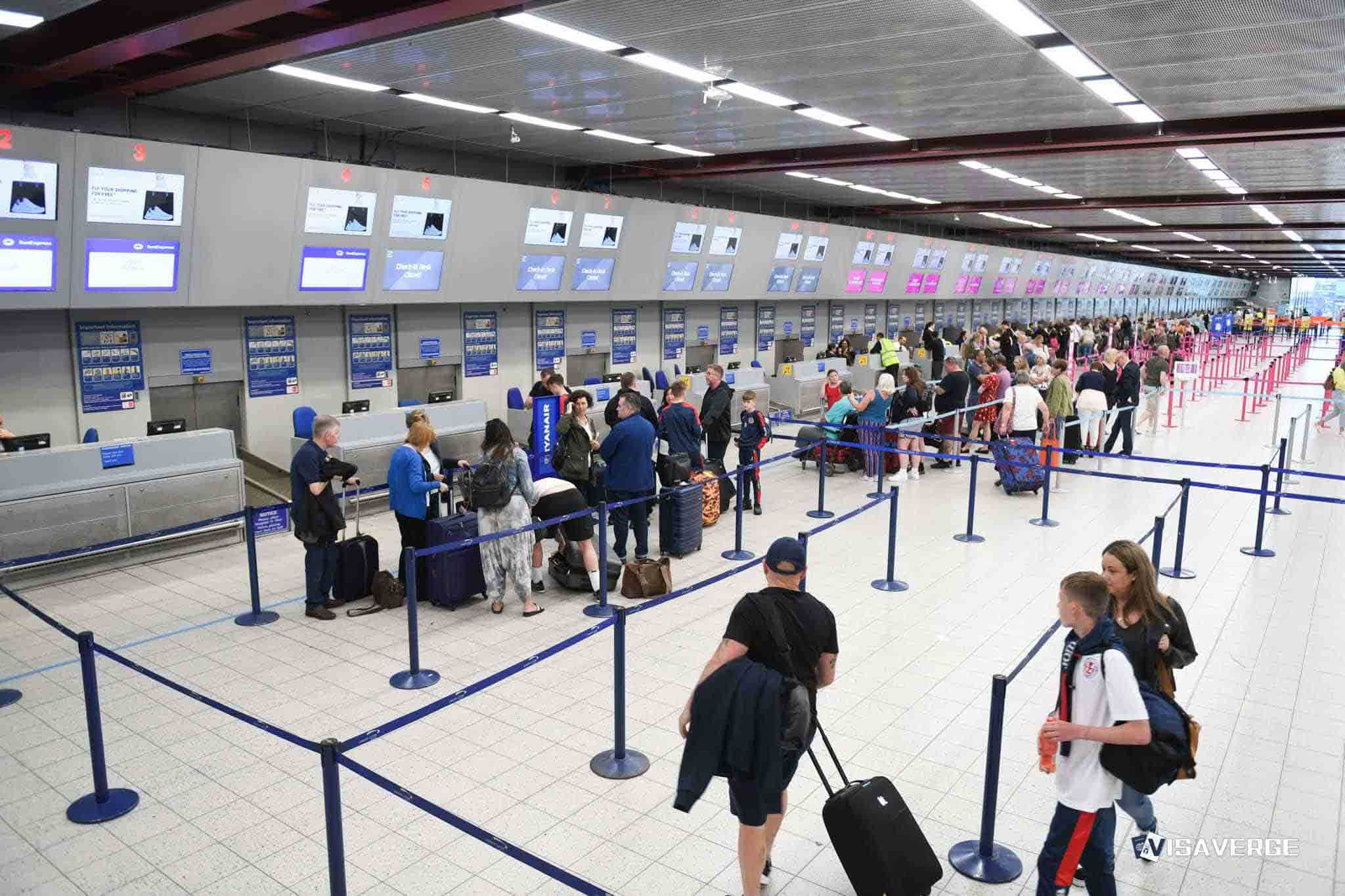
For travellers, the practical difference between a normal schedule and a reduced schedule can show up in crowded rebooking queues, longer waits for alternative seats, and revised departure times that compress the window for getting to the airport if a flight is reinstated or retimed.
Passengers with tight connections can also feel the impact when a disruption shifts arrival times into narrower or missed connection windows, forcing changes to onward travel plans.
The March 4 snapshot of flights arriving at Birmingham, Heathrow, Gatwick and Edinburgh showed activity at four UK airports, but it did not show that a fifth airport, such as Manchester, was operating Emirates arrivals that day.
Emirates’ UK network includes Manchester among its eight destinations, and the circulating March 7 claim included Manchester among the five airports, but the limited operational picture described for March 4 did not establish that a Manchester service operated on March 7.
With airspace closures tied to the Iran-US conflict, changes can also cascade through crew scheduling and aircraft rotations, affecting which UK stations see service on a given day even when the broader network remains listed.
In the UK, travellers often plan around predictable patterns — for example, expecting multiple daily departures from a hub airport — but disruption can compress those patterns into fewer, more changeable options.
That uncertainty can affect how passengers interpret statements about flights “running” versus flights “scheduled,” because a flight can appear on a schedule while the airline continues to update whether it will depart and when.
Emirates’ own guidance not to go to the airport unless contacted underscored that the airline expected some customers to experience changes and sought to manage crowds and confusion at terminals.
The airline recommended that passengers check its official flight status page and its latest flight schedules for current flight information, signalling that travellers should rely on live updates rather than claims circulating without operational confirmation.
As airspace conditions evolve, further rolling updates can follow, and passengers can see changes that vary by route and by day, rather than a single, uniform restoration of services.
For UK passengers deciding whether to travel to Heathrow, Gatwick, Manchester, Birmingham or Edinburgh on Saturday, the key issue remained the same: whether their specific flight was operating as planned, rather than whether a general count of flights sounded plausible.
Emirates’ warning that it is operating fewer flights “until further notice” left travellers facing a moving situation in which a flight’s status can change close to departure.
The airline’s broader UK network across eight destinations can also give a misleading sense of certainty if travellers assume that “served” airports automatically imply a stable daily frequency during disruption.
As a result, passengers monitoring developments on March 7 often had to focus on flight-by-flight status, watching for cancellations, retimings, or updated instructions from the airline before heading to the airport.
Emirates pointed passengers to its official flight status and schedules as the authoritative real-time source, while the wider environment driving the disruption — geopolitical and airspace advisories — can change quickly and trigger additional adjustments.