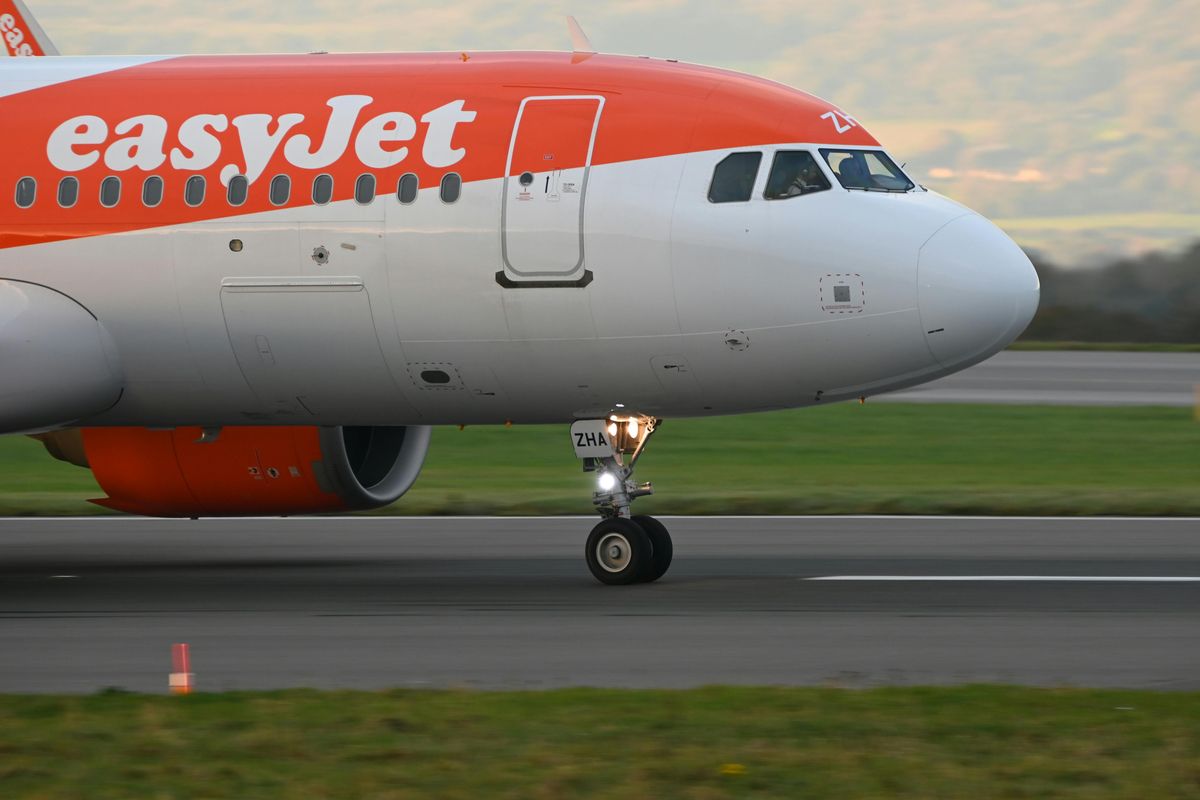
(CYPRUS) — easyJet suspended all flights between the United Kingdom and Cyprus through Thursday after Cyprus ordered the evacuation of Paphos International Airport following drone attacks linked to a security scare near the British military base at RAF Akrotiri.
The suspension covered three routes: Larnaca International Airport to London Gatwick, and Paphos International Airport to London Gatwick and Manchester. Other easyJet destinations, such as Berlin, remained unaffected.
The move left passengers with UK-Cyprus trips facing cancellations rather than a network-wide grounding, as the airline’s disruption focused on specific airport pairs tied to the incident and the subsequent evacuation orders.
Cyprus took the step after what officials described as an escalating security situation around the sovereign base area, with authorities moving to reduce risk around aviation operations near Paphos and RAF Akrotiri.
Cypriot President Nikos Christodoulides said an Iranian Shahed drone struck RAF Akrotiri, causing minor material damage. Cypriot authorities also reported that two additional drones heading toward the Akrotiri base were intercepted.
Cyprus ordered the evacuation of Paphos International Airport and the surrounding area around RAF Akrotiri after the National Guard warned of approaching drones, tying the aviation disruption directly to the emergency response.
An AFP correspondent described the scene around the base at midday as civilians and military activity intensified. The correspondent reported seeing approximately 70 vehicles, mostly with civilian number plates, leaving the Akrotiri area around noon local time, with three fighter jets taking off simultaneously.
The evacuation order immediately disrupted normal ground handling and aircraft movements at Paphos International Airport, as airlines and airport operators dealt with the consequences for aircraft already on the ground, arriving flights, and scheduled departures.
Airport authorities suspended all services to and from Middle Eastern destinations due to security concerns, widening the impact beyond the UK-Cyprus travel market and raising the risk of knock-on delays as aircraft and crews rotated through the eastern Mediterranean.
The cancellations mounted on March 1, when 48 flights were cancelled on March 1 alone—36 at Larnaca Airport and 12 at Paphos Airport. The figures reflected how Larnaca, the island’s larger commercial hub, absorbed most of the immediate cancellation load even as Paphos faced the evacuation response.
The disruption also spread to other carriers. British Airways cancelled five flights to Cyprus, including three arrivals and two departures, compounding passenger disruption for travellers trying to reach or leave the island as airport operations tightened.
Airlines typically take conservative scheduling decisions in fast-moving security conditions, especially when an airport faces evacuation measures or heightened threat assessments that can affect everything from aircraft turnarounds to crew duty limits. Carriers may hold aircraft at departure points, adjust rotations to keep crews within legal working hours, and plan for diversions if a destination’s status changes at short notice.
The security incident occurred against a political backdrop that Cyprus officials linked to broader regional developments involving the British bases on the island.
Prime Minister Keir Starmer announced on Sunday that the United Kingdom would permit its military facilities to be used by the United States for “specific and limited defensive purposes” in its conflict with Iran, a statement made hours before the reported attack on the base.
The base at RAF Akrotiri sits within the network of British sovereign base areas on Cyprus, and its role in regional operations has long been politically sensitive for Cypriot authorities as well as for communities near the installations.
Following the drone strike and the interceptions, Cyprus’ evacuation decision around Paphos and RAF Akrotiri signalled a heightened risk posture, with authorities treating aviation and nearby civilian activity as exposed to potential follow-on threats.
The reported interception of two additional drones heading toward RAF Akrotiri also shaped the operational environment for flights, as intercept activity and warnings can rapidly narrow the options for aircraft routing and safe ground operations.
The wider air traffic effects were not confined to the passengers whose itineraries ran directly between UK airports and Cyprus. With services to and from Middle Eastern destinations suspended by airport authorities, aircraft scheduling and regional connectivity faced further disruption, increasing the chance of cascading delays for passengers with onward connections.
The scene described by the AFP correspondent underscored the intensity of the response at the base perimeter, with civilian vehicles departing and fighter jets taking off as authorities acted on drone warnings.
Greece responded by dispatching two frigates and two F-16 Fighting Falcon aircraft to support Cyprus, adding a regional military layer to the crisis response as the aviation disruption played out.
Such deployments can indicate deterrence, readiness and surveillance efforts in the area, particularly when governments assess that risks may extend beyond a single incident or when authorities seek to bolster monitoring capabilities over key approaches.
The Cypriot government subsequently sought “explicit guarantees” from Britain that the bases would only be used for humanitarian purposes, linking the immediate security event to domestic and regional concerns about how the sovereign bases might be used.
Those requests for assurances added another dimension to the aviation disruption, since airline risk assessments and operational planning often incorporate both the immediate security situation at airports and the broader political signals around military activity that could influence threat perceptions.
The easyJet suspension, British Airways cancellations and the airport’s suspension of Middle East services illustrated how quickly a security incident near RAF Akrotiri could push commercial aviation into contingency mode, with Paphos International Airport at the center of the immediate evacuation response.
For passengers, the operational reality on the ground translated into scrapped departures, missed arrivals and uncertain onward travel plans, as carriers and airport authorities adjusted to a changing security environment and the knock-on effects across flight schedules.
The disruption also placed renewed focus on how airlines distinguish between route-specific decisions and wider network operations. Even as easyJet halted its UK-Cyprus flying for a limited period, the airline continued other services, signalling that the response aimed at the affected city pairs rather than an across-the-board suspension.
The broader picture for travelers depended on how quickly authorities restored normal operating conditions at Paphos International Airport and how long heightened security measures would affect flight scheduling at both Paphos and Larnaca.
With Cyprus and regional partners responding to the drone activity and its aftermath, near-term aviation normalization hinged on operational updates from the airports and schedule changes issued by airlines serving the island.
Starmer’s statement that Britain would allow US use of UK military facilities for “specific and limited defensive purposes,” alongside Cyprus’ request for “explicit guarantees” about humanitarian-only use, framed the political context that airlines and passengers would watch as the island’s air links sought a path back to routine operations.