(DETROIT, MICHIGAN, USA) Delta Air Lines’ hub-and-spoke system came under heavy strain in early December 2025 after a computer problem at Detroit Metro Airport (DTW) triggered an FAA ground stop for Delta flights, with the fallout colliding days later with New York-area gridlock at JFK and LaGuardia and a wider squeeze on air traffic control tied to a U.S. government shutdown. The string of disruptions brought missed connections, long terminal lines, and cascading delays that reached far beyond the airports where they started, and Delta has projected a $200 million Q4 2025 profit loss from the combined shocks.
The DTW computer failure and immediate impact (Dec 5, 2025)
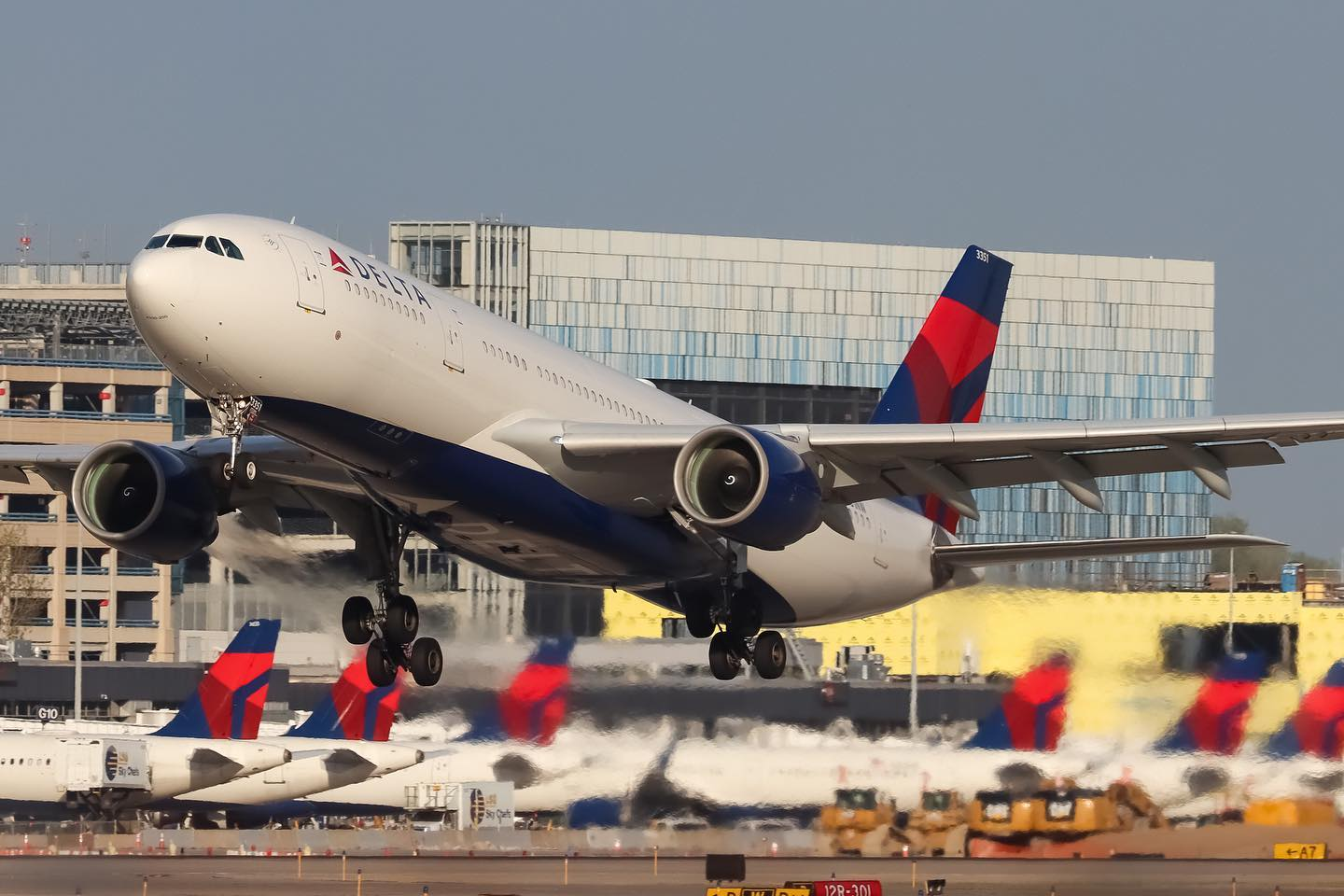
The first jolt hit before dawn on December 5, 2025, when a computer issue led the FAA to halt all Delta departures at DTW at about 5:00 a.m. ET, a stop that affected Delta’s McNamara Terminal operations while other airlines continued to move passengers.
By around 9:00 a.m., the full stop shifted to a ground delay program, with average delays of 2 hours 40 minutes. The early tally showed:
- 24 flights canceled
- 44 flights delayed
Delta’s partial system recovery by mid-morning brought some kiosks and bag-check functions back online. Witnesses described passenger applause — relief that a day of uncertainty was beginning to move into damage control.
Why a DTW failure ripples across the network
In a hub system like Delta’s, a breakdown at DTW does not stay in Detroit. Flights that feed the hub — including connections from smaller Michigan markets such as Lansing — can miss their bank of onward departures. That forces aircraft and crews into the wrong places, producing afternoon and evening knock-on delays.
For travelers on tight schedules, the practical problem is often not the initial delay but the subsequent chain:
- Missed original connection.
- Rebooked connection with limited options.
- Late-night arrival and possible missed next-morning departure.
Delta issued a travel exception for tickets impacted by the DTW disruption, covering customers traveling to, from, or through DTW with tickets dated through December 5. The policy waived change fees for travel on December 5–6 for affected itineraries — helpful for families and workers who can’t absorb sudden costs — but waivers do not create gate space, de-icing capacity, hotel rooms, or replacement crews. On high-volume days, the ability to rebook often becomes the bottleneck, and connecting passengers feel the squeeze first.
Immigration and legal implications
Immigration lawyers and advocates emphasize that airline chaos can become a legal or status problem when travel is tied to deadlines. Examples include:
Winter disruption and hub outages can cascade into missed connections. Act fast on rebooking, but expect capacity limits; waivers don’t guarantee gate space or hotel rooms during peak periods.
- A student who must return by class start dates
- A worker with a strict reporting date
- A new arrival scheduled to meet a sponsor or complete onboarding
Even when legal status remains secure, the experience is stressful. The safest practises are to:
- Keep records of disruptions and communications
- Check official arrival/admission details when you land
Create a disruption file: save flight numbers, times, and airline waivers, and track changes. On arrival, check CBP I-94 records to confirm entry status and avoid immigration hiccups after delays.
U.S. Customs and Border Protection’s I-94 site is the government portal where many travelers can view their entry record: CBP I-94.
New York-area gridlock: LGA, JFK, EWR
As the DTW outage rippled through the system, Delta’s New York operation encountered separate choke points.
At LaGuardia (LGA), an FAA ground stop — driven by air traffic control safety concerns, winter weather, and staffing strain — produced in the initial hours:
- Over 1,000 Delta delays
- 200+ cancellations
At JFK, the tight runway flow and limited gate space turned problems into gridlock that stranded passengers on aircraft and in crowded concourses. One emblematic episode:
- Delta flight DL405 took 3 hours to taxi 1 mile after landing at JFK, leaving passengers stuck on board.
Congestion spread regionally, with reports of backups at Newark (EWR) and other airports, underscoring that airspace and operations are shared across carriers and airports.
Additional New York pressures (mid-December)
By December 15, ongoing construction at JFK Terminal 4 added another layer of departure delays, compounding daily fragility at one of the world’s busiest international gateways. For immigrants and visa holders, JFK is often a first U.S. point of entry — where missed connections can mean:
- Missed domestic flights
- Missed airport pickups
- Overnight stays scrambling for hotels while safeguarding travel documents
Winter weather and waivers
Winter weather kept pressure on operations. Delta warned that East Coast conditions through December 14 could affect travel to, from, or through:
- JFK, LGA, EWR
- BDL, BOS, BWI, DCA, HPN, IAD, PHL, PVD
Weather waivers can reduce penalties but cannot change the operational realities of winter: fewer usable runways, increased spacing between aircraft, longer ground times, and crew duty-time limits.
Air traffic control strain amid a U.S. government shutdown
Threaded through the December disruption was a broader constraint: air traffic control staffing stressed by a U.S. government shutdown, which left controllers working without pay and prompted FAA flight reductions.
Key impacts cited:
- FAA reduced flights by 10% at 40 high-volume airports, including Delta hubs ATL, DTW, JFK, LGA
- Reductions phased in from 4% (early November) to 10% by Tuesday
- Nationwide shortfall of 400 controllers reported
- 39 facilities reported limits over one weekend
These limits overlapped peak holiday travel and forced Delta cuts at Atlanta (ATL) while raising the risk of what was described in reporting as a “meltdown.”
From an immigration perspective, shutdown-linked constraints hit hardest those with least flexibility: workers with fixed job dates, families traveling for single-day reunions, visitors who cannot afford open-ended stays. They also place frontline airline staff in the difficult position of explaining a federal staffing problem to passengers who only see a gate screen.
Delta’s response and longer-term steps
Delta responded with:
- Waivers and rebooking options
- Full refunds for flights cut due to the shutdown
- Pointers to improved customer service support during the peak period
Public reaction — amplified via social media — included complaints about long lines, missed connections, and late or insufficient information. Analysis by VisaVerge.com noted how quickly a local systems failure can spill into a nationwide network, especially when weather risk and airspace limits coincide.
Delta has said it is investing in AI analytics and contingency planning after the disruptions, indicating the airline views these events as warnings about how tightly optimized its network has become.
Key takeaways and outlook (as of Dec 15 advisories)
- As of December 15, there were no active nationwide outages, but Delta continued warning that winter weather and Northeast constraints could still affect operations.
- The DTW outage and JFK taxi delay illustrate a broader lesson: in a hub system built for efficiency, a single disruption can escalate into a long day — and sometimes a long week — for travelers with little schedule flexibility.
- For affected travelers (including many immigrants and international visitors), practical steps include:
- Keep documentation of disruptions
- Use airline waivers and rebooking options promptly
- Check official immigration arrival records at CBP I-94
The unfolding events show how fragile a tightly optimized hub network can be when hardware malfunctions, weather, and federal staffing constraints coincide — and underscore why slack, contingency planning, and clear communications matter for both airlines and passengers.
A computer failure at Detroit Metro on Dec. 5 prompted an FAA ground stop and ground delay program, producing cancellations and long delays that propagated across Delta’s hub network. New York airports suffered separate gridlock driven by weather, construction, and air-traffic limits tied to a U.S. government shutdown. Delta projected a $200 million Q4 loss, issued waivers and refunds, and plans investments in AI analytics and contingency planning to reduce future fragility.