The Trump administration announced on January 5, 2026, an agreement with Dominica to accept foreign asylum seekers who had been seeking refuge in the United States as President Trump expands “safe third country” style deals and deportation protocols.
Prime Minister Roosevelt Skerrit confirmed the arrangement the same day, calling it “one of the primary areas of collaboration” after the United States imposed partial visa restrictions on Dominican citizens.
Key elements of the Dominica agreement
- The U.S. plan would send non‑national foreigners seeking asylum to Dominica.
- The number of people expected to be transferred has not been disclosed.
- The deal was described as part of a broader expansion of “safe third country” style agreements and deportation protocols targeting nations in the Caribbean, Latin America, and Africa.
- A specific joint press release from DHS on the Dominica deal was described as pending, even as parallel policy changes were rolled out through travel restrictions and USCIS adjudication rules.
“In our discussions with the State Department, there have been careful deliberations of the need to avoid receiving violent individuals or individuals who will compromise the security of Dominica,” Skerrit said in his January 5, 2026 statement.
Regional parallel: Antigua and Barbuda
- Antigua and Barbuda announced on January 5, 2026 a similar non‑binding memorandum of understanding with the U.S. Government.
- Local officials said the country would “not be accepting anyone with a criminal record.”
Broader U.S. policy package (timeline and components)
- Presidential Proclamation 10998 (issued December 16, 2025) — expanded entry restrictions for additional countries; effective January 1, 2026.
- On January 1, 2026, the administration expanded travel restrictions from 19 to 39 countries. Dominica and Antigua and Barbuda were the only Caribbean nations added to that list.
- USCIS Policy Memorandum PM-602-0194 (released January 1, 2026) — titled “DHS Pauses USCIS Applications for Additional High‑Risk Countries.”
- Implemented an immediate “hold and review” for applications from an expanded list of countries that now includes Dominica and Antigua and Barbuda.
- Paused all pending benefit applications — including visas, green cards, and citizenship — for individuals from the listed “high‑risk” countries.
- Mandated a “full re‑review” of all immigration benefits approved on or after January 20, 2021, for individuals from those nations.
Table — Major policy actions (Dec 16, 2025 — Jan 5, 2026)
| Date | Action | Effect |
|---|---|---|
| Dec 16, 2025 | Presidential Proclamation 10998 issued | Expanded entry restrictions (effective Jan 1, 2026) |
| Jan 1, 2026 | Travel restrictions expanded (19 → 39 countries) | Dominica and Antigua and Barbuda added |
| Jan 1, 2026 | USCIS PM-602-0194 released | “Hold and review” of benefits; full re‑review since Jan 20, 2021 |
| Jan 5, 2026 | Agreements announced with Dominica and Antigua and Barbuda | MOUs / arrangements to accept asylum seekers (details limited) |
How the arrangement was secured
- The deal with Dominica was reached after the U.S. applied diplomatic pressure via visa restrictions, according to the details provided with the announcement.
- Skerrit linked the asylum‑seeker arrangement to a broader set of contacts with U.S. officials after those restrictions were imposed on Dominican citizens.
Domestic reactions in Dominica
- The agreements have drawn scrutiny in Dominica, which has a population of only 72,000.
- Concerns center on capacity to house and provide resources for arriving asylum seekers.
- Opposition leader Thomson Fontaine criticized what he described as missing details about how the plan would work on the ground:
“The prime minister still has not told the Dominican public what exactly he has agreed to. where will they be housed, how will they be taken care of?” Fontaine said.
- Skerrit sought to emphasize screening and security, using language aimed at easing concerns about receiving asylum seekers sent from the United States:
“In our discussions with the State Department, there have been careful deliberations of the need to avoid receiving violent individuals or individuals who will compromise the security of Dominica,” he said.
- Antigua and Barbuda used sharper terms, saying it would “not be accepting anyone with a criminal record.”
Impact on asylum seekers and enforcement aims
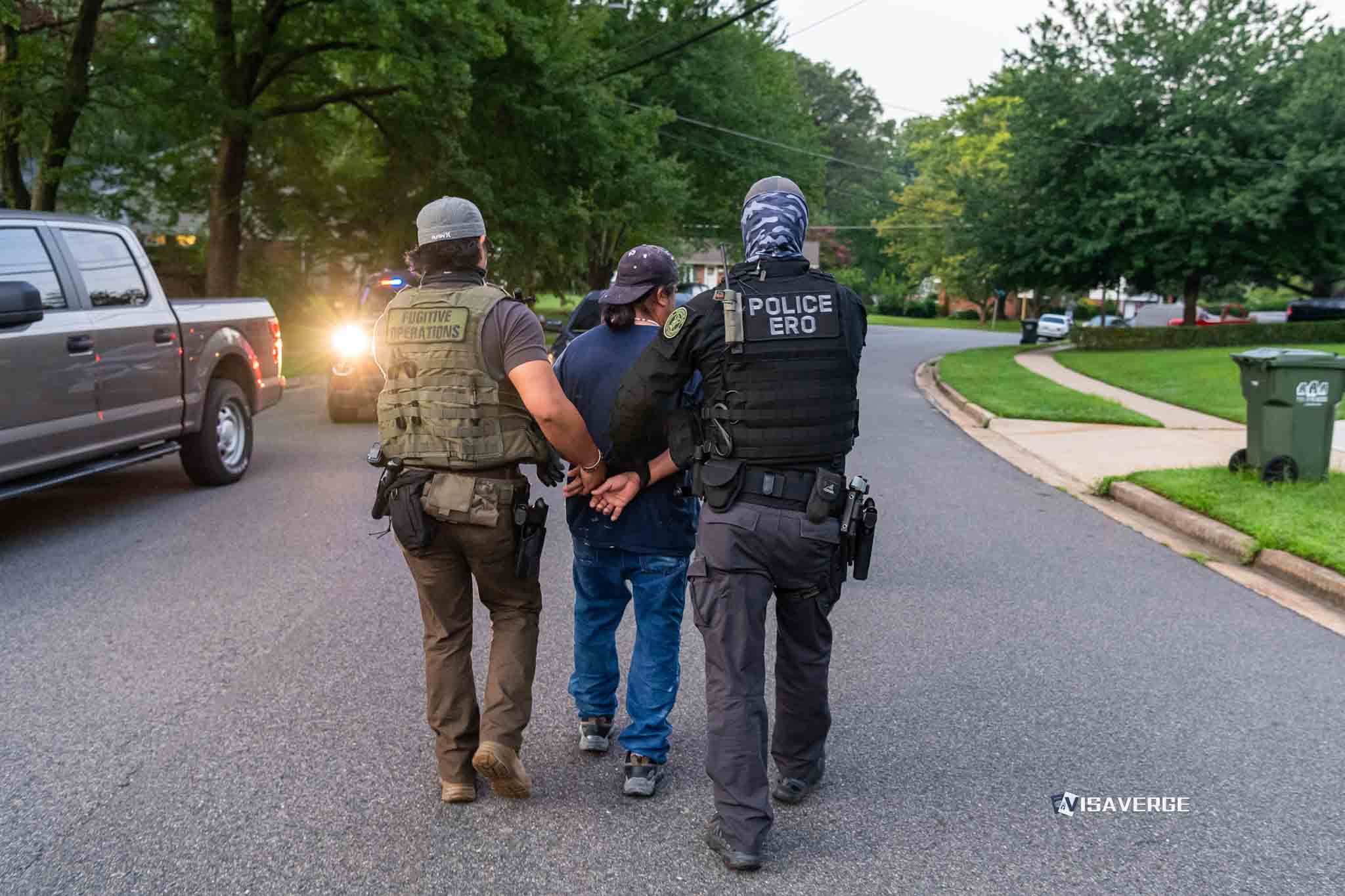
- For asylum seekers, the policy shift means they may be removed from the United States within a week of arrest and sent to a third country they may have never visited, potentially losing their chance to argue their case in a U.S. court.
- The broader strategy has been described as a workaround for deporting nationals from “uncooperative” countries like Venezuela, Cuba, and China, by sending those individuals to third countries such as Dominica.
- Supporters portray the approach as a way to reduce pressure on the U.S. detention system, which the administration has linked to a wider enforcement push.
- The January 1, 2026 USCIS memo embedded that enforcement turn inside routine immigration adjudications, extending the impact beyond those placed into removal and touching pending applications for visas, green cards, and citizenship for people from the countries placed under the “hold and review.”
Legal and practical reach of the USCIS measures
- Because the policy includes a “full re‑review” of benefits approved on or after January 20, 2021, the reach could extend to immigrants whose applications were already granted — depending on how USCIS applies the requirement in practice.
- The travel restrictions and the USCIS adjudicative pause made Dominica and Antigua and Barbuda outliers in the Caribbean, since they were the only Caribbean nations added when restrictions expanded from 19 to 39 countries.
Context and administration framing
- The approach has been framed as part of the administration’s stated ambition to carry out “the largest deportation operation in American history.”
- Similar deportation and asylum deals have been reportedly signed or pursued with Belize, Paraguay, El Salvador, Panama, and Guatemala.
- The regional deals sit alongside a set of policy instruments deployed in quick succession since mid‑December, beginning with Presidential Proclamation 10998 on December 16, 2025, and culminating in the January 5, 2026 announcements from Dominica and Antigua and Barbuda.
The administration’s multi‑agency posture couples overseas transfers of asylum seekers with tighter screening of immigration benefits for nationals of the countries the administration has designated as higher risk.
Government reporting and sources
- U.S. officials have pointed to broader enforcement benchmarks, including a DHS Year‑End Report dated Dec 19, 2025, titled “Under President Trump and Secretary Noem, DHS Has Historic Year,” published at DHS, though the details of that report were not tied directly to the Dominica agreement in the announcement material.
Summary of outstanding questions and concerns
- Numbers and logistics: How many asylum seekers would be transferred, where they would be housed, and who would provide ongoing support remain unspecified.
- Screening standards: How security screening and exclusion of individuals with criminal records will be implemented in practice.
- Capacity: Whether a small country with a population of 72,000 can absorb and support arrivals without external assistance.
- Legal consequences for asylum seekers: Potential loss of access to U.S. courts and rapid removal timelines (possibly within a week of arrest).
- Scope of USCIS re‑reviews: How far the “full re‑review” will reach into previously approved immigration benefits.
The agreement adds Dominica to a growing set of destinations where the administration is seeking to relocate asylum seekers under “safe third country” style arrangements, reshaping where — and whether — asylum seekers can pursue protection claims.
The Trump administration has secured agreements with Dominica and Antigua and Barbuda to host asylum seekers removed from the U.S. This initiative is part of an aggressive deportation strategy and includes strict ‘hold and review’ protocols for immigration benefits. While the U.S. frames this as a way to reduce detention pressure, local leaders in the Caribbean face internal scrutiny over their capacity to house and secure these individuals.