- An RFE is not a green card denial but a request for missing or updated evidence.
- The 75-country pause targets immigrant visa processing at U.S. consulates abroad, causing delays.
- Applicants must respond within the typical 87-day deadline to avoid case abandonment and denial.
(UNITED STATES) — Getting a Request for Evidence (RFE) after filing for a green card can feel alarming, but an RFE is not a denial, and many cases are approved after a strong response.
The timing matters now because the 75 countries visa processing ban is reshaping expectations across both consular processing and Adjustment of Status (AOS). The Department of State pause focuses on immigrant visa processing at U.S. consulates abroad, while U.S. Citizenship and Immigration Services may increase review and issue more RFEs for certain applicants filing inside the United States.
What the 75-country visa processing ban covers (and what it does not)
The policy is best described as a pause in immigrant visa processing at consulates abroad, not a single “entry ban” label. It affects the pipeline that runs through the National Visa Center (NVC), then a consular interview, and finally visa issuance in a passport.
This matters most for people pursuing permanent residence through consular processing, including family-based, employment-based, diversity, and other immigrant categories. If you are waiting for an interview or a visa print, you may see scheduling delays, interview cancellations, or issuance holds.
The pause is described as focused on immigrant visas (the green card pathway). Most nonimmigrant visas (visitor, student, and many work visas) are described as largely outside the pause. Even so, applicants may still face tighter questioning and longer administrative processing.
If you are trying to identify whether you are affected, public discussions often mention countries such as Russia, Iran, Somalia, Afghanistan, Egypt, Haiti, Nigeria, Thailand, and Yemen. Lists can change. Use official notices when available, and consider broader context about countries of concern.
Official statements and timelines: who controls what
A practical way to read this news is to separate State Department authority from USCIS authority.
- The State Department controls consular processing abroad. It manages NVC coordination, interviews, and visa issuance at posts.
- USCIS controls most benefit adjudications inside the United States, including Form I-485, Application to Register Permanent Residence or Adjust Status.
An “effective date” signals when operations can change, but implementation often varies by post or office. You may see gradual effects, including slower interview scheduling, more document requests, and additional internal review.
Government posts on social media can signal intent. The binding instructions usually appear in formal guidance and operating procedures. Many applicants first learn about case movement through a USCIS notice explanation or an updated appointment notice.
Impact on Adjustment of Status (AOS) inside the United States
If you are already in the United States and eligible to file AOS, the State Department pause does not directly stop your Form I-485. Your case is adjudicated by USCIS. However, parallel vetting policies can still increase delays and RFEs.
USCIS may apply heightened screening for applicants linked to covered countries. This can show up as longer background checks, supervisory review, added interview questions, or requests for updated financial evidence.
You will also see more attention to “public charge” concepts. In plain terms, officers may look closely at whether an applicant is likely to rely on certain public benefits in the future. The exact test depends on your category and current rules. Many applicants find it helpful to review how public charge concerns can affect evidence requests.
Some cases may be reopened or set for re-interview within a defined retrospective review window described in agency guidance. For you, the practical impact is simple: keep your file “interview-ready” and your financial evidence current.
Key dates and policy details: map your pathway first
Start by identifying which track you are on:
- Consular processing abroad: You deal with NVC and a U.S. consulate. The pause can halt or slow immigrant visa issuance.
- AOS inside the U.S.: You deal with USCIS, receipts, biometrics, and possibly a field office interview.
Nonimmigrant visas are described as largely unaffected, but travelers can still face added scrutiny. This includes questions about intent, ties abroad, and admissibility. A pending Form I-485 can also affect travel and status decisions.
If you filed AOS, read carefully about nonimmigrant status impacts.
If your case is in motion, use checkpoints. Are you at NVC document review, interview scheduling, or administrative processing? Or do you have a USCIS receipt and are awaiting biometrics or an interview?
For broader context on policy shifts and case flow, see I-485 processing changes.
Sections covering Official statements and timelines and related implementation details will have interactive tools added. Expect the tool to show formal timelines and post-by-post changes.
RFE guidance for AOS applicants affected by increased screening
An RFE is a request for missing or updated evidence. It is common in AOS cases during periods of tighter review.
Typical deadline: Most RFEs give 87 days to respond. Your notice controls. Count days exactly as stated on the letter.
⏱️ RFE Deadline: Most applicants get 87 days to respond. Missing the deadline usually leads to a denial for abandonment.
Common RFE triggers in Form I-485 cases right now
These are frequent problem areas during heightened vetting:
- Missing or outdated civil documents (birth certificate, divorce decrees, translations).
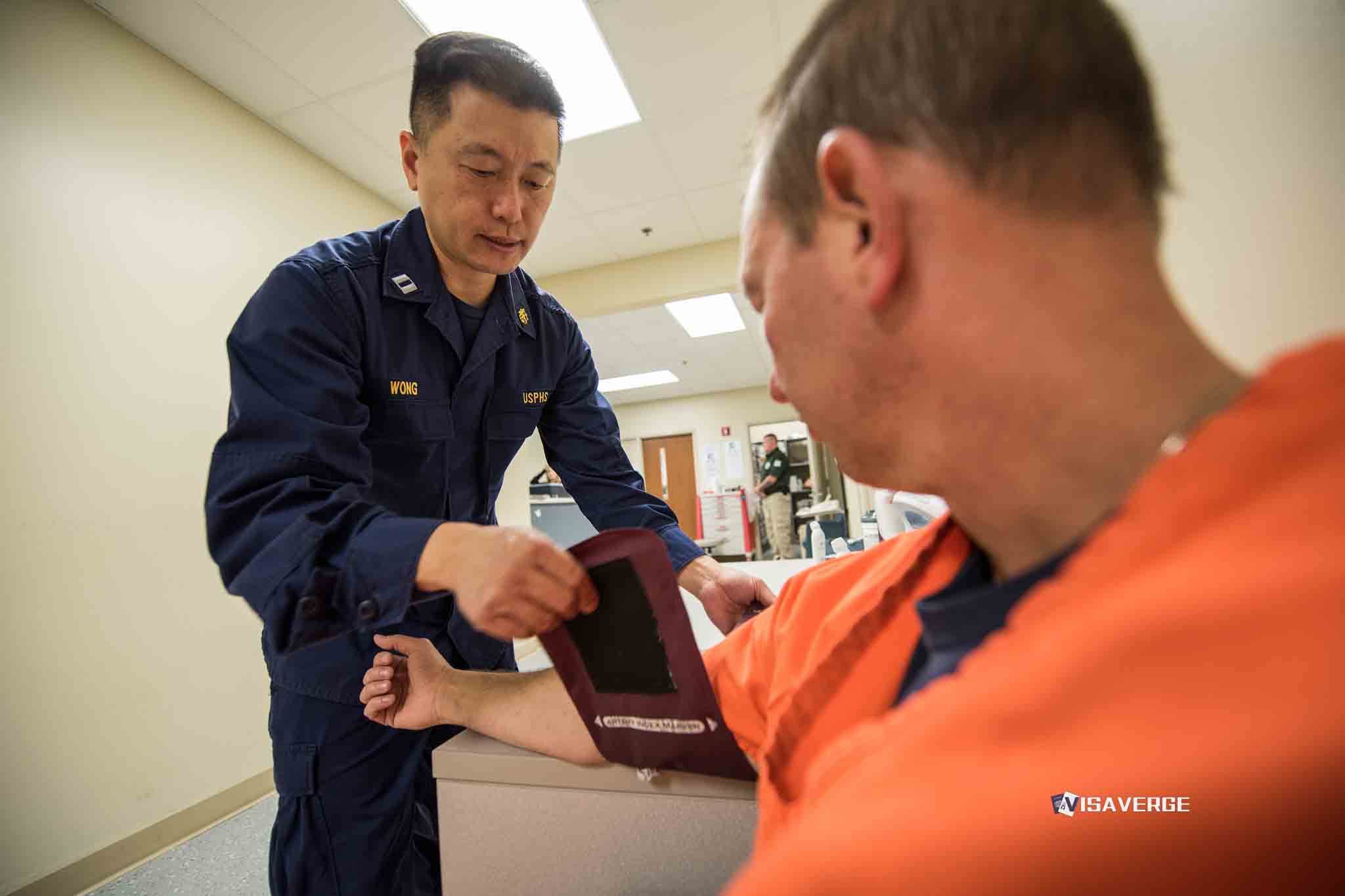
- Incomplete medical exam requirements for Form I-693 issues.
- Questions about maintenance of status or admissibility.
- Financial sponsorship issues in family cases, including Form I-864, Affidavit of Support.
- Employment history or eligibility gaps in employment-based filings.
- Identity or security-related questions that require clarifying documents.
⚠️ Common Mistake: Sending partial evidence or ignoring one bullet in the RFE. USCIS can deny if the response is incomplete.
Best practices: how to respond to an RFE
Use a tight, documented package. Do not send originals unless the notice asks.
- Read the RFE line-by-line. Make a checklist of every item requested.
- Respond in one packet. Avoid multiple mailings unless instructed.
- Use the RFE cover sheet on top. This helps routing in the mailroom.
- Write a short cover letter. List each request and your exhibit number.
- Tab and label exhibits. Use “Exhibit A, B, C” with clear titles.
- Translate properly. Include the translator certification for non-English records.
- Make copies of everything. Keep the full packet and proof of delivery.
✅ Pro Tip: If the RFE asks for “updated” evidence, send recent pay stubs, a current employment letter, and current bank statements.
What to include in your RFE response packet
Use the notice as your master list. These are common components:
| Item | Required | Notes |
|---|---|---|
| RFE notice copy | Yes | Place on top of the packet |
| Cover letter | Strongly recommended | Map each request to each exhibit |
| Civil documents | If requested | Include translations and certifications |
| Financial evidence | If requested | Recent, consistent, and well-labeled |
| Proof of lawful entry/status | If requested | I-94, visas, approval notices |
| Delivery proof | Yes (keep for records) | Use trackable mail or courier |
💡 Reminder: Use the RFE notice as the master checklist and label exhibits clearly to match each requested item.
Fees and processing time context for AOS cases
As of January 2026, USCIS fees depend on category and filing method. Always confirm the amount at uscis.gov/fees before mailing. Wrong fees often cause rejection.
Processing times are estimates and vary by form category, service center, and field office. Check egov.uscis.gov/processing-times/. Delays are common after RFEs, interviews, or extended background checks.
| Form | Purpose | Fee (verify at uscis.gov/fees) | Typical Processing (est., as of January 2026) |
|---|---|---|---|
| I-485 | AOS green card | Varies by category | Often many months; varies by field office |
| I-765 | Employment Authorization | Varies | Often several months |
| I-131 | Travel Document (Advance Parole) | Varies | Often several months |
💰 Current Fee: Verify fees at uscis.gov/fees. Incorrect fees can trigger a rejection, not an RFE.
Consequences of missing the RFE deadline
If USCIS does not receive your response by the deadline, it may deny the application. Motions to reopen can be difficult and costly. Treat the deadline as fixed.
When attorney review is worth it
Get legal review for RFEs that involve inadmissibility, public charge-related concerns, fraud or misrepresentation issues, criminal history, prior removal, or complex status questions. This is also smart when the RFE asks for evidence you cannot obtain quickly.
For ongoing developments around the consular pause itself, track reporting on the 75-country pause and confirm details against official agency communications.
Next steps
- Identify your pathway. Confirm whether you are in consular processing or AOS.
- If you received an RFE, calendar the deadline and build a single, labeled response packet.
- Check your case status at my.uscis.gov and keep delivery proof after mailing.
- Verify current fees at uscis.gov/fees and current processing times at egov.uscis.gov/processing-times/.
- Save screenshots of policy announcements and your status page when updates occur.
📋 Official Resources: Download forms at uscis.gov/forms. Check processing times at egov.uscis.gov/processing-times. Fees and processing times are subject to change—always verify current information at uscis.gov.