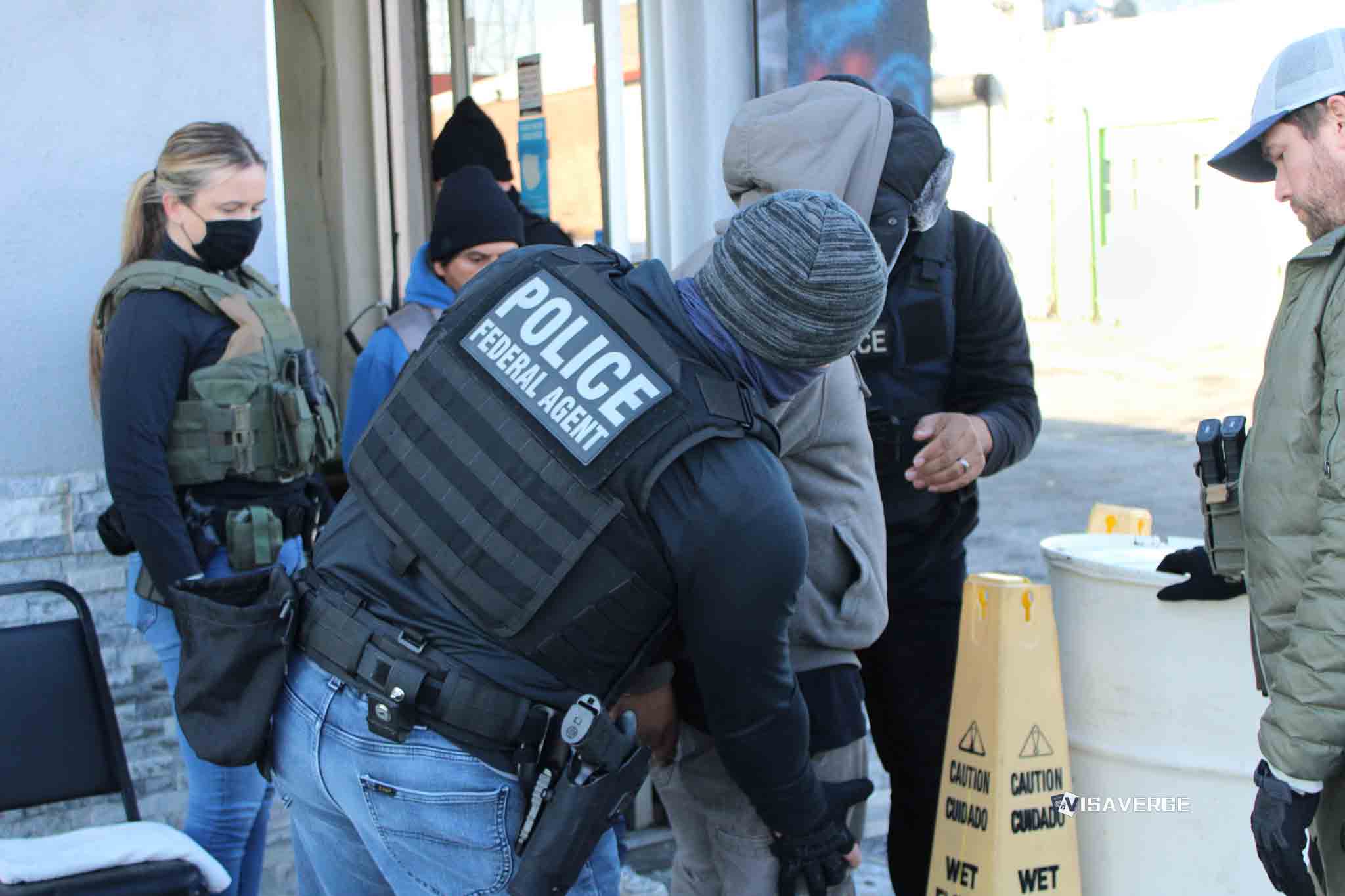
- The DHS spent $122 million on a warehouse in Socorro, Texas, for a new ICE detention site.
- ICE plans to double national detention capacity to 150,000 beds by acquiring industrial properties.
- Local Texas officials are criticizing the lack of transparency and infrastructure readiness for these massive projects.
(SOCORRO, TEXAS) — The Department of Homeland Security bought a warehouse property along Eastwind Avenue in Socorro to convert it into an ICE detention facility, using a real-estate purchase that officials and advocates view as a marker of a broader national capacity push.
Public deed records show DHS paid $122 million to El Paso Logistics II LLC, a Delaware-based company, for the site in the El Paso area. The purchase, first visible through transaction records, places a large federal detention footprint in a community just southeast of El Paso.

The warehouse deal in Socorro fits an approach that relies on large industrial buildings that can be converted more quickly than new construction, allowing ICE to add space as enforcement ramps up.
ICE is pursuing a plan to purchase approximately 23 warehouses nationwide to expand detention capacity, Bloomberg reported. The facilities would add roughly 76,500 detention beds across the United States, the report said.
As of January 25, 2026, ICE held a record 70,766 individuals in its detention system, up from 39,703 at the end of the Biden administration. Bloomberg reported the warehouse expansion could potentially double ICE’s capacity to nearly 150,000 people detained simultaneously.
Texas sits at the center of the planning described in an internal ICE document that outlines four major facilities statewide adding at least 20,000 beds combined. The document and the Socorro transaction point to a strategy that concentrates large-scale detention in a few hubs, including the El Paso region.
One of the biggest sites under discussion is a warehouse in Hutchins, Texas, near Dallas, designed to hold as many as 9,500 people, according to the internal document. The same document describes the current largest facility in the country as Camp East Montana in El Paso, which holds 5,000.
In the El Paso area, the planned facility tied to the DHS purchase in Socorro would hold approximately 8,500 people, the internal ICE document said. The Texas plan also includes two smaller processing centers planned for San Antonio and Los Fresnos.
ICE uses processing centers to move people through intake and screening and to coordinate transfers through the detention system. Those steps can include initial identification, administrative paperwork, medical screening, and routing detainees to other facilities.
Congress allocated $45 billion for ICE detention in the “One Big Beautiful Bill” passed in July 2025, funding that can support acquisitions, staffing and detention contracts. The appropriations link detention capacity to the ability to hold people while cases proceed and while removals are carried out.
The Trump administration has reported more than 675,000 deportations in its first year, with ICE deportations alone potentially approaching or exceeding 200,000. Supporters and critics have pointed to the pace as a central argument in the debate over whether the federal government needs more detention space.
Local leaders in Texas communities where the facilities are planned or advancing have criticized what they describe as limited notice and sparse detail about how projects will affect services and infrastructure.
Socorro Mayor Rudy Cruz Jr. said the city was not informed before the deal was finalized. His criticism focused on transparency, as the warehouse purchase moved forward without the city receiving advance notice of federal plans for the property.
Hutchins Mayor Mario Vasquez raised similar concerns about notice and said the city had little warning about ICE’s plans.
“No benefit to it whatsoever.”
Dallas County Commissioner John Wiley Price, whose district includes Hutchins, opposed the proposed facility and questioned whether local infrastructure can support it.
“The infrastructure’s not there.”
Such disputes often turn on what local governments seek before a project moves ahead, including clear plans and timelines, expected staffing, traffic and road demands, and the strain on emergency medical services and other public resources.
Civil-liberties advocates have also pointed to safety and oversight questions as the detention network expands, arguing that rapid growth and new sites can intensify long-running concerns about conditions.
The ACLU obtained documents that it said show ICE is considering seven new detention locations, including at least two former correctional facilities with histories of violence, sexual abuse, and corruption. The records added to scrutiny of where the agency plans to hold people as capacity rises.
Eunice Cho, senior counsel at the ACLU’s National Prison Project, pointed to deaths in custody early in the year while criticizing the expansion plan.
“Six people have already died in ICE custody in the first three weeks of the year. ICE has given us no reason to believe that these detention centers would be any safer than the abusive facilities it already operates.”
The ACLU documents and the internal ICE planning described in Texas arrive as ICE increases the number of detention sites it uses. By the end of November 2025, ICE was using 104 more facilities than at the start of the year, a 91 percent increase.
For communities like Socorro, the purchase from El Paso Logistics II LLC has turned a warehouse transaction into a question about what kind of detention facility will operate nearby, how large it will become, and what oversight will follow as ICE expands its footprint.
Price, arguing against the Hutchins proposal, kept the focus on basic readiness for a project of the scale ICE envisions.
“The infrastructure’s not there.”