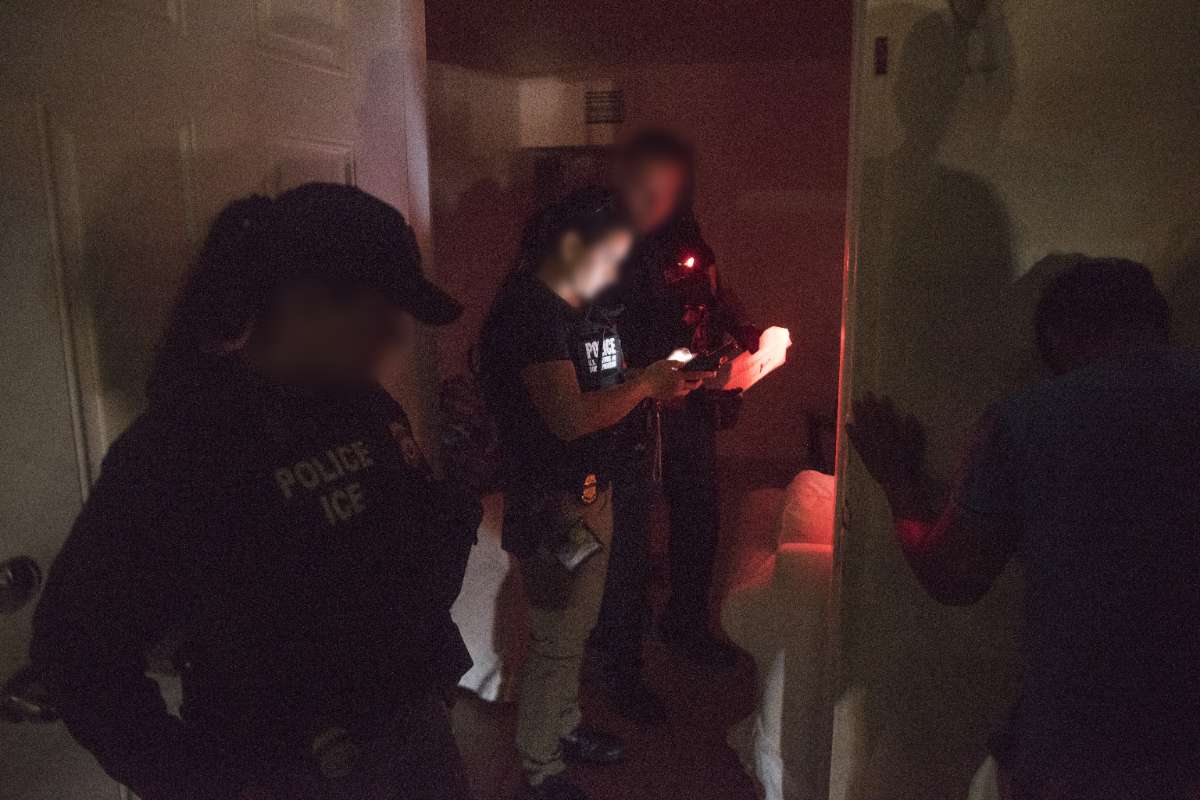
The White House and the Department of homeland security escalated deportation and enforcement operations on Monday, pressing ahead despite national protests and scrutiny after the fatal shooting of a U.S. citizen by an ICE agent.
New initiatives launched in recent days include Operation Salvo in New York City and Operation PARRIS in Minnesota, alongside the deployment of additional federal personnel to major cities as the administration “doubled down” on its approach.
Operations and deployments
Speaking in New York City on January 9, 2026, Secretary of Homeland Security Kristi Noem framed the effort as the start of a broader campaign. “Operation Salvo is just the beginning of a broader and a much more sustained effort to go after not only transnational criminal organizations and networks, but also illegal criminal aliens throughout the country. The Trump Administration is using every single tool that we have to protect the American people. We are on offense.”
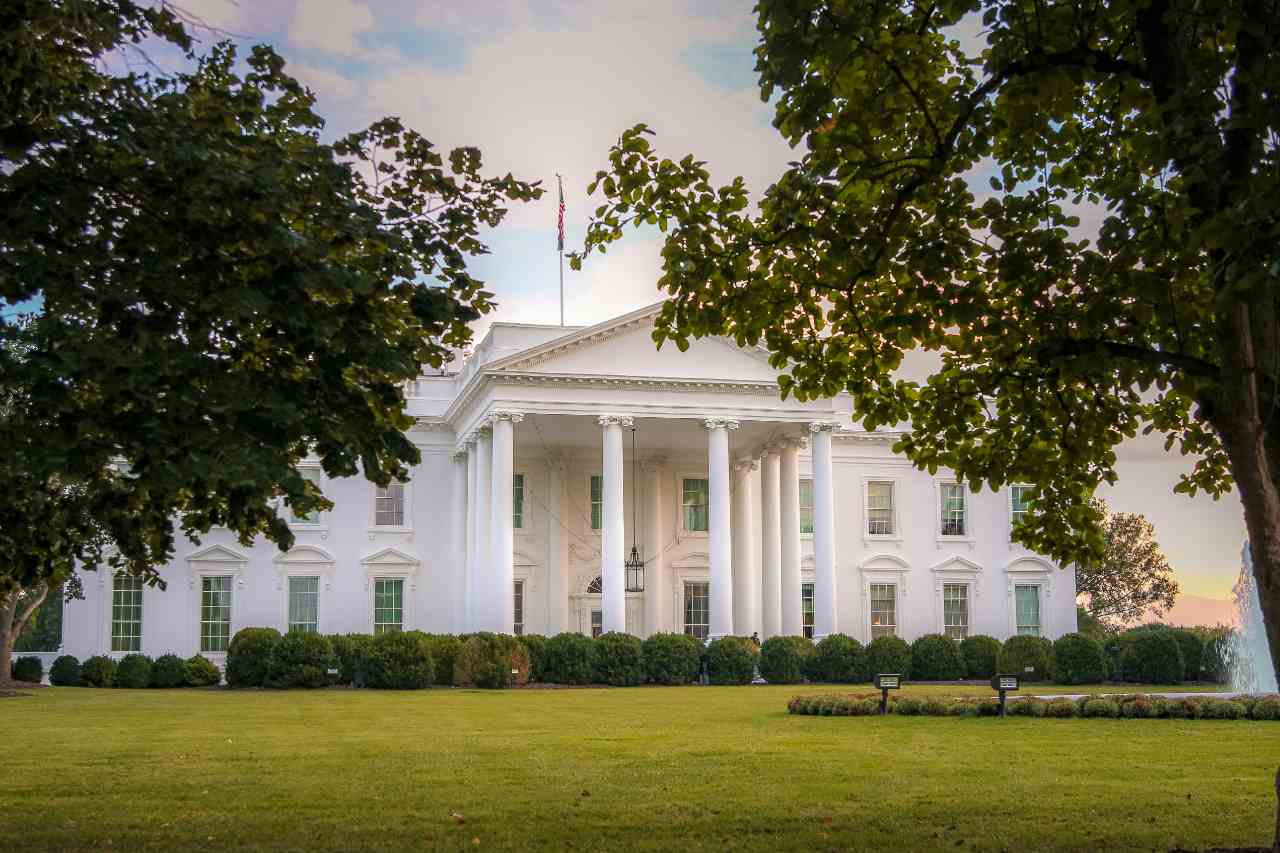
The White House moved to expand federal deployment rather than pull back after heightened protests and scrutiny. The administration described the approach as shifting toward more aggressive recruitment and enforcement tactics, including rapid removals and broader vetting.
Specific operations
Operation Salvo, announced January 9, 2026, is a multi-agency operation involving CBP, HSI and ERO that DHS said is targeting the Trinitarios gang in New York City. The operation has resulted in 54 arrests, with 60% of those arrested already removed from the country.
Operation PARRIS, launched January 9, 2026, is described as a “landmark” USCIS fraud investigation in Minnesota targeting 5,600 refugees. The initiative involves re-examining refugee claims through intensive background checks and referring cases to ICE for potential removal.
A dhs official statement on Operation PARRIS used combative language to describe the effort and its goals. “Minnesota is ground zero for the war on fraud. This operation in Minnesota demonstrates that the Trump administration will not stand idly by as the U.S. immigration system is weaponized by those seeking to defraud the American people. American citizens and the rule of law come first, always.”
Fatal shooting and immediate aftermath
the sharper enforcement posture comes after the January 7, 2026, fatal shooting of Renee Good, a 37-year-old mother and U.S. citizen, by ICE agent Jonathan Ross in Minneapolis. The shooting occurred during a massive federal surge involving 2,000 agents.
Noem addressed Good’s death on January 8, 2026, and characterized the incident as a response to an: “.act of domestic terrorism.” The statement came as protests and scrutiny intensified, and as the White House moved to expand federal deployment rather than pull back.
Local and federal reactions
Local leaders in Minnesota publicly urged a withdrawal of federal agents from the region. Minneapolis Mayor Jacob Frey and Minnesota Governor Tim Walz called for the immediate withdrawal, but the White House instead announced the deployment of “hundreds more” officers to the region.
Administration officials and documents have described the approach as a national operational tempo rather than limited, case-by-case work. The language and the pace of new initiatives have put renewed focus on how far federal authorities are willing to go in immigration enforcement, and how quickly.
Defense of use of force and agency statements
DHS has defended agents’ use of force in a series of encounters that drew attention over the past year. DHS Assistant Secretary Tricia McLaughlin told TIME on January 12, 2026: “It’s a pattern of vehicles being used as weapons by violent agitators to attack our law enforcement. Dangerous criminals – whether they be illegal aliens or U.S. citizens – are assaulting law enforcement and turning their vehicles into weapons to attack law enforcement. Our officers are experiencing a 3,200% increase in vehicular attacks.”
Separate figures cited in the same period highlight an increase in shootings into vehicles during enforcement encounters. Thirteen documented instances since July 2025 involved immigration agents firing into civilian vehicles, resulting in at least eight injuries and two deaths.
Statistics, detention, and policy changes
The broader enforcement push is reflected in federal statistics published as of December 2025. Those figures show 605,000+ official deportations since January 20, 2025, alongside 1.9 million “voluntary” self-deportations and 595,000+ arrests.
Detention levels are also expected to rise sharply. Immigration detention is projected to reach a record 107,000 individuals by late January 2026, and reports indicate that nearly 74% of those currently detained have no criminal record.
Policy changes have accompanied the enforcement surge. Noem officially terminated Temporary Protected Status for Ethiopia and Burma (Myanmar) in December 2025, and Haiti’s designation is set to expire in February 2026.
Impact on refugee communities and due process concerns
In Minnesota, Operation PARRIS is expected to affect refugee communities through re-interviews and renewed scrutiny of claims that were previously accepted. The operation’s structure, including intensive background checks and referrals to ICE, raises the prospect of removals for people who are in the country legally as refugees.
The administration has reportedly removed over 100 immigration judges, contributing to a massive backlog that has made it increasingly difficult for detainees to secure legal release. That backlog, combined with rising detention levels, has sharpened questions from advocates and local officials about due process and the speed of deportation decisions.
The combination of rapid removals, expanded vetting, and a detention population in which nearly 74% reportedly have no criminal record has become a central point of dispute. Critics have questioned whether the intensified campaign aligns with constitutional norms and humanitarian considerations.
Administration framing and broader messaging
The Department of Homeland Security has publicly linked these efforts to broader enforcement goals, using language that casts immigration fraud and enforcement as a central conflict. “Minnesota is ground zero for the war on fraud,” the DHS statement on Operation PARRIS said, before adding, “American citizens and the rule of law come first, always.”
In New York City, Noem presented Operation Salvo as part of a national strategy that extends beyond gang investigations. Her remarks tied the operation not only to transnational criminal organizations and networks, but to “illegal criminal aliens throughout the country,” and emphasized the administration’s willingness to use “every single tool” available.
The White House’s continued expansion of federal deployments has kept major cities at the center of the immigration enforcement campaign. Operation Salvo’s launch in New York City, paired with the federal surge in Minneapolis and the rollout of Operation PARRIS in Minnesota, has made clear that the administration intends to maintain a national operational tempo.
Government statements and statistics have been used by the administration to bolster its argument that the scale of enforcement is justified. ICE’s published enforcement statistics as of December 2025, including 605,000+ deportations since January 20, 2025 and 595,000+ arrests, are now being cited alongside new operations announced in early January.
The political and legal scrutiny surrounding the enforcement push has been intensified by the Minneapolis shooting and the administration’s description of it. Noem’s characterization of Good’s death as connected to an “.act of domestic terrorism” has underscored how the administration is framing the confrontation between federal agents and those protesting or resisting enforcement.
Even as protests continue, the administration’s own words and numbers convey an unmistakable message about direction. “We are on offense,” Noem said in New York City.
The U.S. administration has accelerated its immigration enforcement campaign, launching major operations in New York and Minnesota. Despite public outcry over a fatal shooting involving ICE, federal authorities are increasing personnel and detention capacity, which is expected to hit a record 107,000. Aggressive tactics, including re-examining refugee claims and terminating protected statuses, highlight a shift toward a national ‘offensive’ posture in immigration policy.