

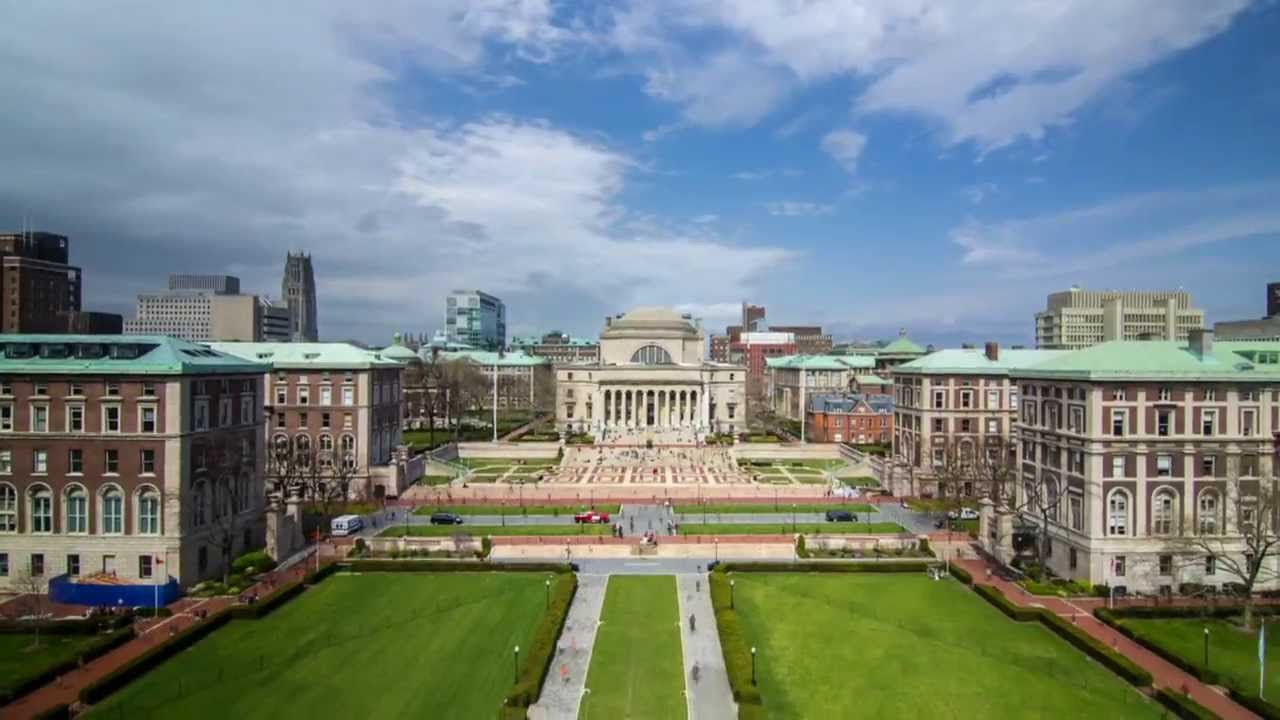
(NEW YORK, NY) — Columbia University and Barnard College again won recognition as Top Producing Institutions for the Fulbright U.S. Student Program in the 2025-2026 cycle, a designation that reflects a high number of selected grantees in a competitive national field.
The honor, issued under the Fulbright U.S. Student Program, identifies campuses that consistently place students into one of the best-known U.S. government-backed international exchange opportunities for research, graduate study and English teaching placements abroad.
For students weighing where to apply and how to fund overseas academic work, the Top Producing label functions as a benchmark of institutional advising capacity and proposal support, as well as a signal of campus interest in international research placements.
The Fulbright Program, established in 1946, grew out of a postwar push for academic exchange and cultural diplomacy, linking U.S. students and scholars with host communities through study, teaching and research.
Its reach spans more than 160 countries, and the U.S. Student and Scholar programs together award about 2,200 grants a year, making selection both widely sought and highly competitive.
Universities compete to build reliable Fulbright pipelines because outcomes often depend on the strength of campus ecosystems, including early research opportunities, faculty mentorship, language preparation and sustained fellowship advising.
Alumni outcomes also shape campus investment, as institutions highlight former grantees’ later trajectories in graduate study and public-facing work, reinforcing a feedback loop that can make future applicants more competitive.
Barnard’s latest recognition extended a run that the college described as nine consecutive years as a top producer, underscoring what it presented as sustained momentum in advising and student preparation.
Barnard submitted over 65 applications for the 2025-2026 cycle, a volume that points to both demand and selectivity in the process, with only a portion of applicants ultimately winning awards.
President Laura Ann Rosenbury attributed the results to “the academic excellence of our students and faculty, and the premier research experiences made accessible to our remarkable community.”
A-J Aronstein, Vice President of Community Engagement & Lifelong Success, linked Barnard’s recent outcomes to a shift in the scale of participation, saying the college now “annually doubl[es] or even tripl[es] the number of Fulbright US Student participants that it used to see in a typical year,” and that it has outpaced many R1 universities among liberal arts colleges.
Barnard said the selected alumnae won grants across a range of Fulbright roles, including graduate programs, English Teaching Assistant placements and independent research projects.
The destinations spanned multiple regions, with Barnard listing Sri Lanka, Germany, Indonesia, Chile, Luxembourg, and Switzerland among the countries in which the grants will place recipients.
Barnard’s profile as a private women’s liberal arts college affiliated with Columbia shapes how it sells the Fulbright story: close mentorship alongside access to a larger research university’s resources, labs and academic networks in New York City.
That combination, Barnard and Columbia supporters argue, can help candidates craft project proposals with both individualized guidance and an extensive set of institutional connections for research planning.
Columbia, for its part, ranked among the top producers for Fulbright U.S. Students in the 2025-2026 roster, appearing alongside institutions such as Harvard and MIT.
The university also pointed to a recent track record in prior cycles, including a 2023-2024 result that placed it in the top 10 with 28 awardees.
That year’s awardees included 17 from Columbia College, one from Columbia Engineering, and one from General Studies, Columbia said, reflecting participation across multiple undergraduate divisions.
Projects in that cycle covered fields including educational reform and computational neuroscience, and Columbia cited destinations that included South Korea, Uzbekistan, and Colombia.
Ariella Lang, Associate Dean of Academic Affairs and Director of Undergraduate Research and Fellowships, framed the awards as aligned with a broader campus identity, saying, “Our students are future changemakers and thought leaders who embrace the global cooperation that the Fulbright fosters.”
Columbia has maintained top-producer status for the last decade, the university said, positioning the recognition as a recurring outcome rather than a one-off surge.
The Top Producing Institutions label does not rank universities by a single metric for prospective applicants, but it often carries weight because it implies repeatable success: a campus that produces many grantees tends to have established advising processes and faculty engagement that can help candidates refine project design, affiliations and personal statements.
That matters in part because Fulbright applications require applicants to translate academic interests into feasible, place-based proposals that make sense to selection committees and host institutions abroad.
For students, the difference can be practical: strong advising ecosystems may help applicants start earlier, secure recommendations with concrete research grounding, and identify host-country affiliations that strengthen feasibility and fit.
The recognition also arrives as students and families look harder at funded mobility and structured international placements, especially as tuition costs and post-graduation job uncertainty influence decisions about whether to take on debt or pursue a grant-supported year abroad.
Fulbright’s grant categories, including research, graduate study and English teaching, offer different ways to build a coherent narrative around academic interests, language study and public service.
The scale of the program, spanning a large set of host countries and awarding thousands of grants annually, also makes it a prominent credential for students who want a recognizable marker of academic selection beyond any single institution’s name.
For international students and globally mobile professionals, the Fulbright story intersects with immigration-adjacent planning mostly indirectly, through academic signaling and career positioning rather than automatic legal outcomes.
A globally recognized fellowship can strengthen graduate school applications and research portfolios by adding a funded project, a host-country affiliation and concrete outputs such as fieldwork experience or teaching practice.
Those credentials can matter later in job searches, particularly in fields where employers value international experience and independent project execution, including public policy, technology and data research, international development, education, and sustainability.
Some students also consider how a stronger academic profile can support later study plans in the United States, where F-1 visas and Optional Practical Training can come into play after enrollment in U.S. programs.
Employment-based pathways, such as H-1B, tend to depend on employer sponsorship and other requirements, and a fellowship alone does not guarantee any visa outcome, but the experience can contribute to the kind of record that some employers and programs look for.
New York City’s academic and professional ecosystem forms part of the backdrop for both institutions’ messaging, because the city’s density of universities, cultural organizations, NGOs and international offices can help students build proposals with clearer real-world connections.
Barnard’s small-college model, paired with access to Columbia resources, allows it to pitch a hybrid experience: students can develop close relationships with faculty mentors while also tapping into broader research infrastructure.
Language training, interdisciplinary coursework and research access can all shape Fulbright competitiveness by helping applicants show they can carry out a project responsibly in a specific context.
Columbia and Barnard have described their broader international education emphasis in terms of cross-border scholarship and partnerships, including strength in humanities and social sciences, policy and global governance studies, and language and cultural exchange programs.
On the national landscape, the U.S. Department of State’s Bureau of Educational and Cultural Affairs recognized 114 total institutions across 96 for students and 25 for scholars, with seven, marked with asterisks, excelling in both.
That spread suggests that Top Producing recognition functions as a large, competitive club rather than a small, exclusive list, and it creates a reputational layer that universities can use when recruiting prospective students and building partnerships abroad.
The 2025-2026 classifications aligned with updated Carnegie categories, including a new “Special Focus: Technology, Engineering & Sciences, Medical & Health” grouping, reflecting how institutions and fields get sorted for higher-education comparisons.
Even without turning the Fulbright process into a checklist, the emphasis on funded exchange has grown as students treat scholarships not only as a mark of prestige but also as a way to reduce financial risk and add structure to early-career decisions.
The Fulbright Foreign Student Program, separate from the U.S. Student Program, also brings international scholars to U.S. universities, adding another dimension to how the Fulbright brand shapes campus internationalization and academic exchange.
In that sense, the Columbia and Barnard recognitions are also about institutional strategy: universities increasingly compete to position themselves as global mobility hubs, where funded placements, research mentoring and international networks form part of the educational product.
For prospective applicants in major international student markets, including India, Top Producing signals can influence how they evaluate universities’ support systems, especially when they want a campus that can back ambitious research plans and connect students to faculty networks.
Announcements like this often drive early interest in campus advising and a new round of preparation for the next application season, as students look for signals that they can find structured support for proposals and recommendations.
Columbia and Barnard’s message, in that climate, is that repeat recognition reflects an institutional capacity to help students translate academic ideas into credible international projects, a distinction that many applicants treat as a data point when choosing where to study next.
Columbia University and Barnard College Lead Fulbright U.S. Student Program
Columbia University and Barnard College have once again been recognized as top producers for the Fulbright U.S. Student Program for the 2025-2026 cycle. This prestigious status highlights their institutional commitment to global research and international exchange. Through dedicated advising and faculty mentorship, these New York City institutions help students secure competitive grants for teaching and research across more than 160 countries worldwide.


