- Boeing and GE Aerospace are investigating GE9X engine durability issues involving a specific seal.
- Certification flight testing continues uninterrupted despite inspections of the 777X test fleet.
- Boeing maintains its goal for first deliveries in 2027 while finalizing a root cause.
Boeing and GE Aerospace are investigating a potential engine durability issue involving a seal in the GE9X engines that power Boeing’s 777X, after the concern emerged during recent inspections.
Kelly Ortberg, Boeing CEO, raised the issue publicly on January 27, 2026, during the company’s fourth-quarter 2025 earnings call.
“We have identified a potential durability issue during a recent inspection on the 777-9 engine, and we’re working with GE to better understand that issue and finalise root cause and corrective action.”
Ortberg told investors that certification flight testing continues uninterrupted. He also said first deliveries remain targeted for 2027.
GE Aerospace confirmed on February 2, 2026, that it has an on-wing inspection program in place for the test fleet. The company said the inspections support Boeing while GE analyzes the issue and defines corrective actions under its safety and quality systems.
Company statements framed the work as an investigation and mitigation effort rather than a declared schedule slip. No timeline changes have been announced as of February 3, 2026.
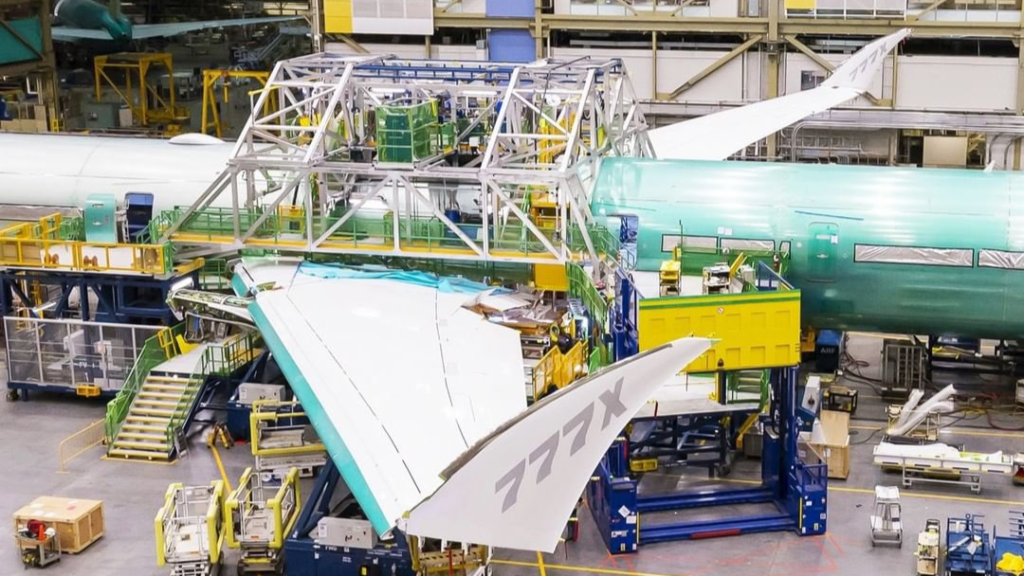
The seal concern lands as Boeing pushes through a long certification effort for the 777X, its next-generation version of the 777 widebody. The jet is still in flight testing, and the GE9X engines are the exclusive powerplant for the program.
Flight activity in 2026 has involved only two of five test aircraft, according to FlightRadar24 data. Boeing did not provide additional detail in the statements about why the rest of the test fleet has not flown this year.
FAA oversight remains central to the program’s next steps, and Boeing has pointed to progress in late 2025. The FAA approved TIA Phase 3 in Q4 2025, focusing on avionics, environmental controls, and auxiliary power unit, and Ortberg said the aircraft and engine “continue to perform well.”
Durability findings during a test campaign can drive added inspection work even when flight testing continues. Depending on what engineers find, such findings can also lead to design changes, additional documentation for certification, and instructions that shape how aircraft and engines are maintained once they enter service.
Boeing has not described the seal issue as a safety event, and neither company has said the problem has halted testing. GE’s confirmation of an on-wing inspection program signals a near-term emphasis on monitoring the test fleet closely while the companies determine what corrective actions, if any, are needed.
The timing matters for Boeing because the 777X program is already substantially behind its original schedule. Boeing has said the program is six years behind schedule and has accumulated over $15 billion in charges.
Against that backdrop, a potential redesign or retrofit decision could influence how Boeing and GE plan the remaining test campaign and manage certification documentation. It could also shape longer-term maintenance planning if the issue carries through to airline service, though the companies have not said that will happen.
Boeing’s latest update kept its delivery target unchanged. Ortberg’s comments left the 2027 first-delivery goal in place even as the companies evaluate what he called a “potential durability issue” and work to “finalise root cause and corrective action.”
The durability question surfaced as Boeing reported results it is using to show operational momentum during a wider production push. Boeing reported a $2.2 billion profit for 2025 overall and $8.2 billion in Q4.
Revenue in the quarter totaled $23.9 billion, up 57% year-on-year. Boeing tied its performance to ongoing production ramps and also referenced the Spirit AeroSystems acquisition as part of the operational backdrop.
Investors have treated the 777X as one of several markers of whether Boeing can stabilize programs while increasing output. The widebody’s certification and entry-into-service schedule influences factory planning, customer deliveries, and cash flow expectations, even when the company does not announce a timetable change.
The GE9X itself is a critical part of that picture. The GE9X turbofan was certified by the FAA in 2020, and Boeing relies on the engine’s performance and durability as it works through the 777X test program.
Engine seals play a basic role in managing airflow and maintaining efficiency and durability under the temperatures and pressures inside a large turbofan. When an engine durability issue points to a seal, engineers may focus on whether the part’s materials, geometry, or operating conditions are consistent with expectations across the flight envelope.
GE and Boeing have not publicly identified a root cause. Ortberg said the companies are working to better understand the issue and to finalize root cause and corrective action, while GE said it is analyzing the issue and defining corrective actions under its safety and quality systems.
If the problem persists, the GE9X may require seal redesign and retrofitting during future maintenance. That pathway typically depends on inspection findings and engineering analysis, followed by formal instructions that define how affected engines get checked, repaired, or updated, including during scheduled shop visits.
A retrofit during maintenance can be less disruptive than a change that requires immediate removal from service, but it still carries planning implications for airlines and maintenance providers. It also influences how a new aircraft type transitions from flight-test operations to fleet support, where parts availability, inspection intervals, and repair capacity shape day-to-day reliability.
For Boeing, the engine seal issue is also the latest reminder of how late-stage testing can surface problems that are not always apparent earlier. The 777X program already experienced a high-profile testing setback in 2024 tied to a different component.
Testing paused five months in 2024 due to cracks in 13m-long titanium thrust links, and the issue was addressed via design changes before testing resumed. The episode underscored how a single technical finding can cascade into additional inspections, engineering work, and regulatory scrutiny even when a program ultimately returns to flight.
That history sits behind expectations for how Boeing and GE will work through the latest durability concern. With certification flight testing continuing and Boeing still targeting 2027 first deliveries, the companies now face the task Ortberg described on January 27, 2026:
“better understand that issue and finalise root cause and corrective action.”