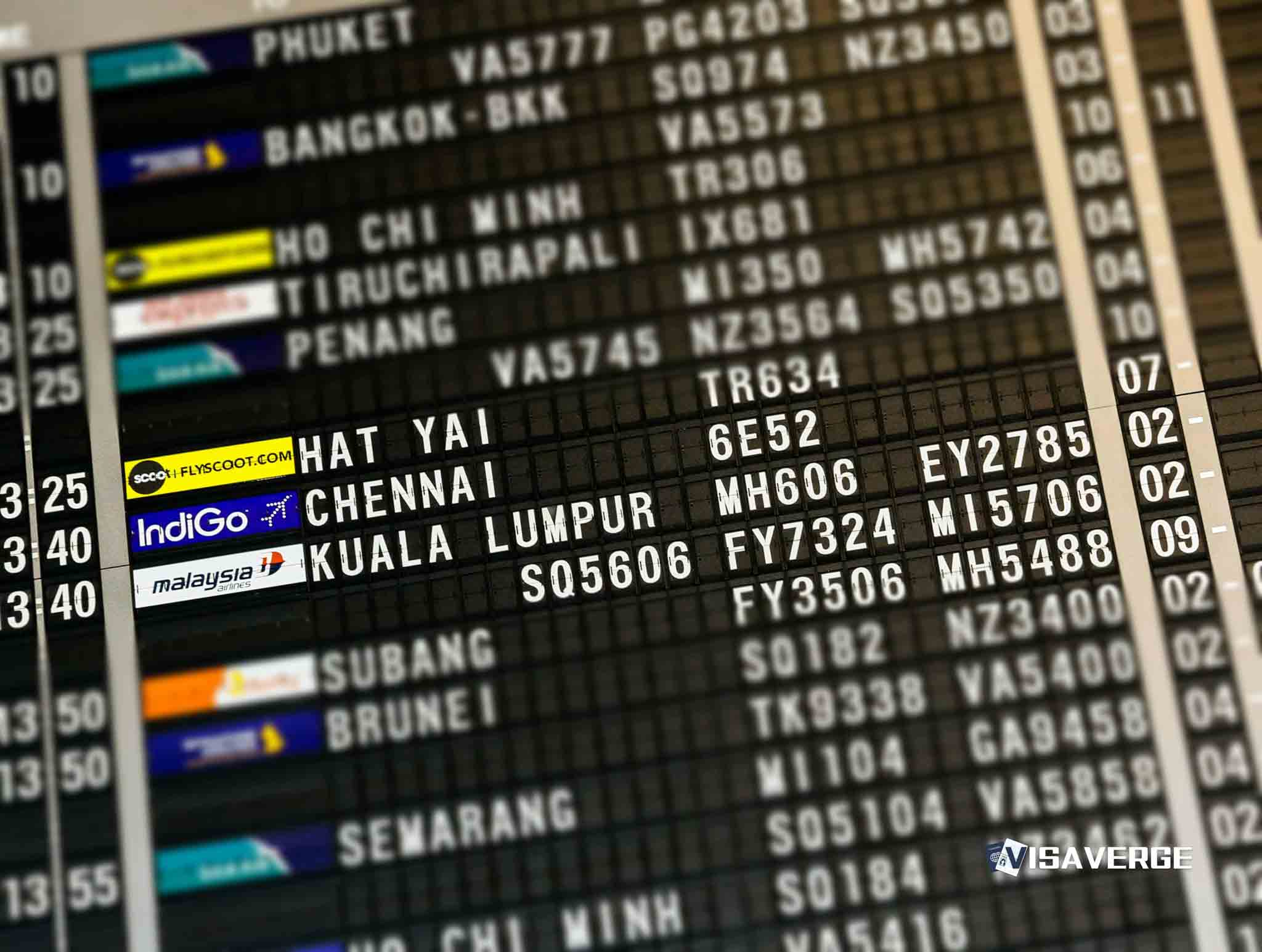
(DELHI, INDIA) A major Air Traffic Control failure at Indira Gandhi International Airport on November 7, 2025, triggered one of the most disruptive days in recent memory for Indian aviation. A glitch in the Automatic Message Switching System delayed or diverted nearly 700 flights and stranded thousands of passengers.
Officials from the Ministry of Civil Aviation later confirmed that a software fault inside the airport’s core data system forced controllers to switch to manual processing of flight plans. That manual work sharply slowed departures and caused knock‑on delays at airports across the country.

How the failure unfolded
By 9 am on November 7, more than 150 flights at Delhi had already been delayed by over an hour. As the morning rush met the crippled systems, the backlog quickly grew into a nationwide disruption affecting almost every major carrier and hub.
At the heart of the crisis was the Automatic Message Switching System — the software backbone that routes flight plan data and other critical messages to Air Traffic Control positions at Indira Gandhi International Airport. Without it, controllers had to:
- Key in flight-plan details manually.
- Cross‑check each entry by hand.
- Issue clearances with added verification steps.
With hundreds of departures and arrivals scheduled in tightly packed morning banks, that manual process added crucial minutes to each clearance. The result: long queues on taxiways, crowded boarding gates, and growing passenger frustration as departure times kept slipping on terminal screens.
Immediate operational and passenger impacts
- Airlines such as Air India, IndiGo, and SpiceJet issued urgent social‑media and SMS advisories.
- Passengers were urged to check flight status before leaving for the airport.
- Carriers warned that even confirmed bookings could face hours‑long delays or last‑minute re‑routing through other cities.
- Immigration halls in Mumbai and Bengaluru experienced sudden surges as travelers rebooked via alternate routes.
- That swelled queues for passport checks and stretched already busy staff during peak season.
Low winter visibility over parts of north India compounded the situation. Even when ATC could clear a departure, aircraft sometimes faced airborne holding or diversions. Some services were delayed by as much as 5.5 hours.
The Airports Authority of India (AAI) said the failure was confined to the Automatic Message Switching System and stressed that radar surveillance and radio communications between pilots and controllers were not compromised.
Investigation and official responses
- The Ministry of Electronics and Information Technology later ruled out any cyberattack, addressing speculation linked to nearby GPS spoofing incidents and Instrument Landing System upgrades.
- The Ministry of Civil Aviation convened review meetings in Delhi, bringing together:
- The ministry’s Secretary,
- The Chairman of the Airports Authority of India,
- Senior technical staff.
Their goal: examine the Automatic Message Switching System failure and order corrective steps.
According to analysis by VisaVerge.com, the incident renewed long‑standing questions about the resilience of India’s aviation technology. The Automatic Message Switching System is a single point through which huge volumes of data must flow before controllers can legally clear aircraft to push back, taxi, and take off.
Promised fixes and longer‑term plans
In the days following the failure, the AAI promised temporary redundancy upgrades within two weeks, including:
- Backup servers
- Alternative routing paths for message traffic
However, the authority acknowledged that full modernization would have to wait for a NextGen Air Traffic Control automation system, budgeted at ₹5,000 crore and scheduled for 2027.
For travelers between India and other countries, the crowded terminals and surging passport queues illustrated how flight‑plan software problems can spill directly into immigration spaces. Delayed and re‑routed passengers tend to arrive in unpredictable waves at passport control points.
Follow‑on outage: check‑in system failure
A separate third‑party system failure on December 2, 2025, showed further fragility in airport technology. A contractor‑run platform used for airline check‑in went down at multiple Indian airports, including Delhi.
- Impact:
- Boarding‑pass issuance and baggage drop operations were hit across several carriers.
- Queues extended through terminals as staff reverted to slower manual procedures.
- Resolution:
- Air India said the disruption was fully resolved by December 3, with normal schedules restored.
Broader reactions and implications
The twin episodes prompted renewed scrutiny from lawmakers and aviation specialists. Common viewpoints include:
- ATC systems and related airport IT infrastructure need the same level of attention as runways or security screening.
- Indira Gandhi International Airport, handling vast flows of connecting international traffic daily, requires especially robust IT resilience.
The Ministry of Civil Aviation highlights ongoing programs to modernize airspace management and airport capacity on its website, and officials say those efforts — detailed on https://www.civilaviation.gov.in — will continue alongside the investigation into the November failure.
What comes next (short, medium, long term)
- Short term (days–weeks)
- Implement promised temporary redundancy: backup servers and alternate routing.
- Train controllers and staff on manual work‑arounds and surge handling.
- Medium term (months–years)
- Strengthen contractor and third‑party platform reliability (check‑in, bag drop).
- Improve coordination between airlines, airports, and immigration authorities for passenger surges.
- Long term (by 2027)
- Deploy the NextGen Air Traffic Control automation system (₹5,000 crore) to eliminate single points of failure and modernize core ATC architecture.
Key takeaways
Even a short‑lived glitch in a single piece of Air Traffic Control or check‑in software can ripple through India’s entire aviation and immigration chain. Until the ₹5,000 crore NextGen project is delivered, resilience will depend on patching older systems, training staff for manual work‑arounds, and preparing airports to handle sudden passenger spikes.
For passengers, the practical lesson from Delhi’s troubled autumn is simple: technology matters long before takeoff. If you are traveling through India’s busiest gateway, build extra time into itineraries rather than relying on very short connections between immigration, security, and onward flights.
On November 7, 2025, a software fault in Indira Gandhi International Airport’s Automatic Message Switching System forced manual flight‑plan processing, delaying or diverting nearly 700 flights and causing nationwide disruption. Authorities ruled out cyberattack, convened technical reviews, and pledged temporary redundancy upgrades within weeks. A separate December check‑in outage highlighted further IT fragility. Full modernization relies on the NextGen ATC project, budgeted at ₹5,000 crore and scheduled for 2027, while short‑term fixes and training are prioritized.