- Gulf hub closures have tripled economy fares to as high as $7,330 for urgent Asia-Europe travel.
- Major transit airports like Dubai remain unavailable for commercial flights due to regional conflict.
- Airlines are rerouting passengers through longer corridors including North America, China, and the Caucasus regions.
(DUBAI) — Airlines rerouted Asia-to-Europe passengers on March 3-4 after Gulf hub closures shut key transit airports for a fourth day, sending one-way economy fares soaring to $2,200-$7,330 and leaving many travelers with few seats before mid-March.
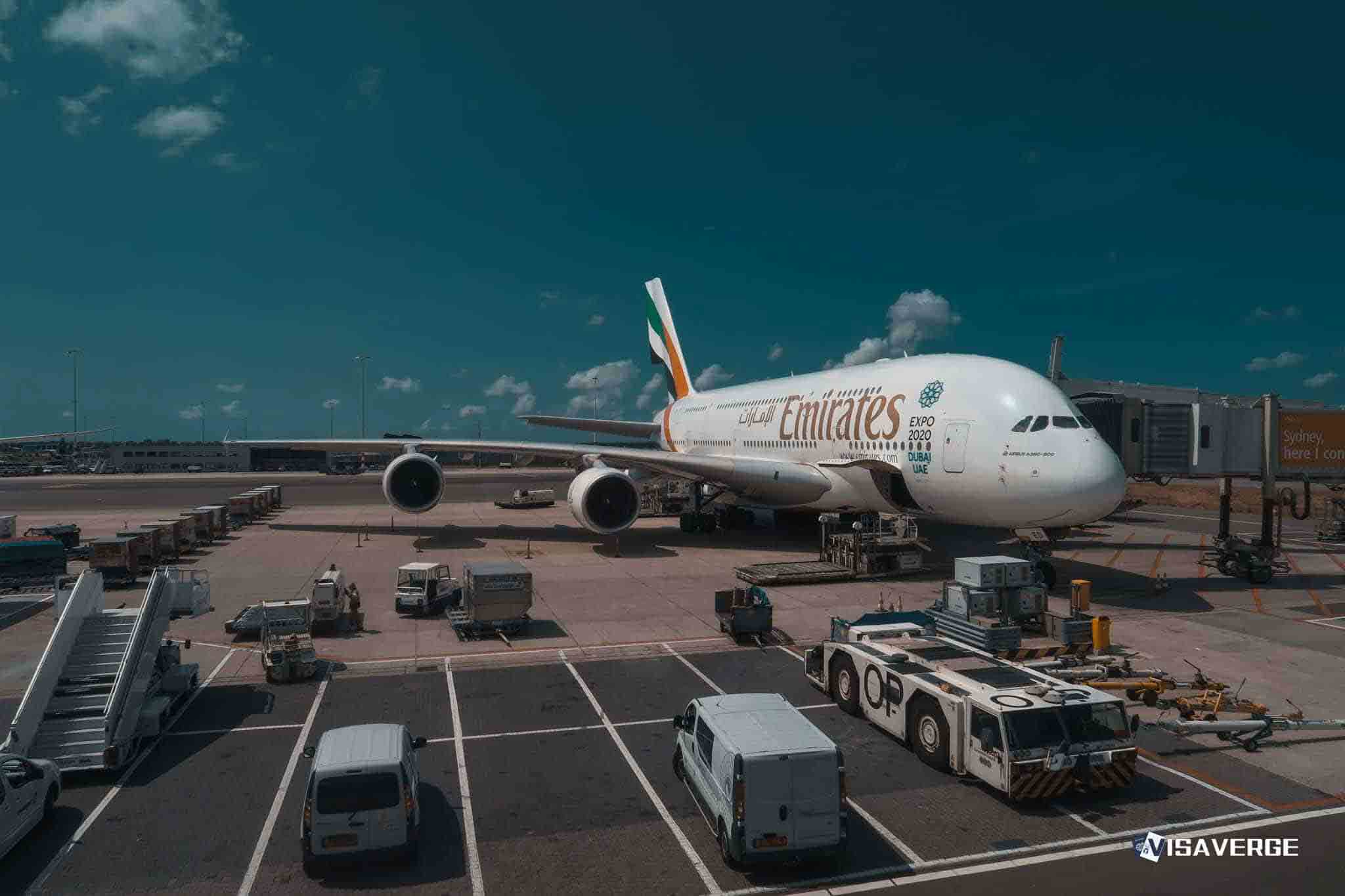
The disruption hit routes that normally funnel through Gulf hubs, with Dubai—handling over 1,000 flights daily—still unavailable as of March 3, 2026. Travelers searching for departures in the March 11-17 window saw sold-out economy cabins, longer itineraries and sudden fare shock as remaining seats priced far above typical levels.
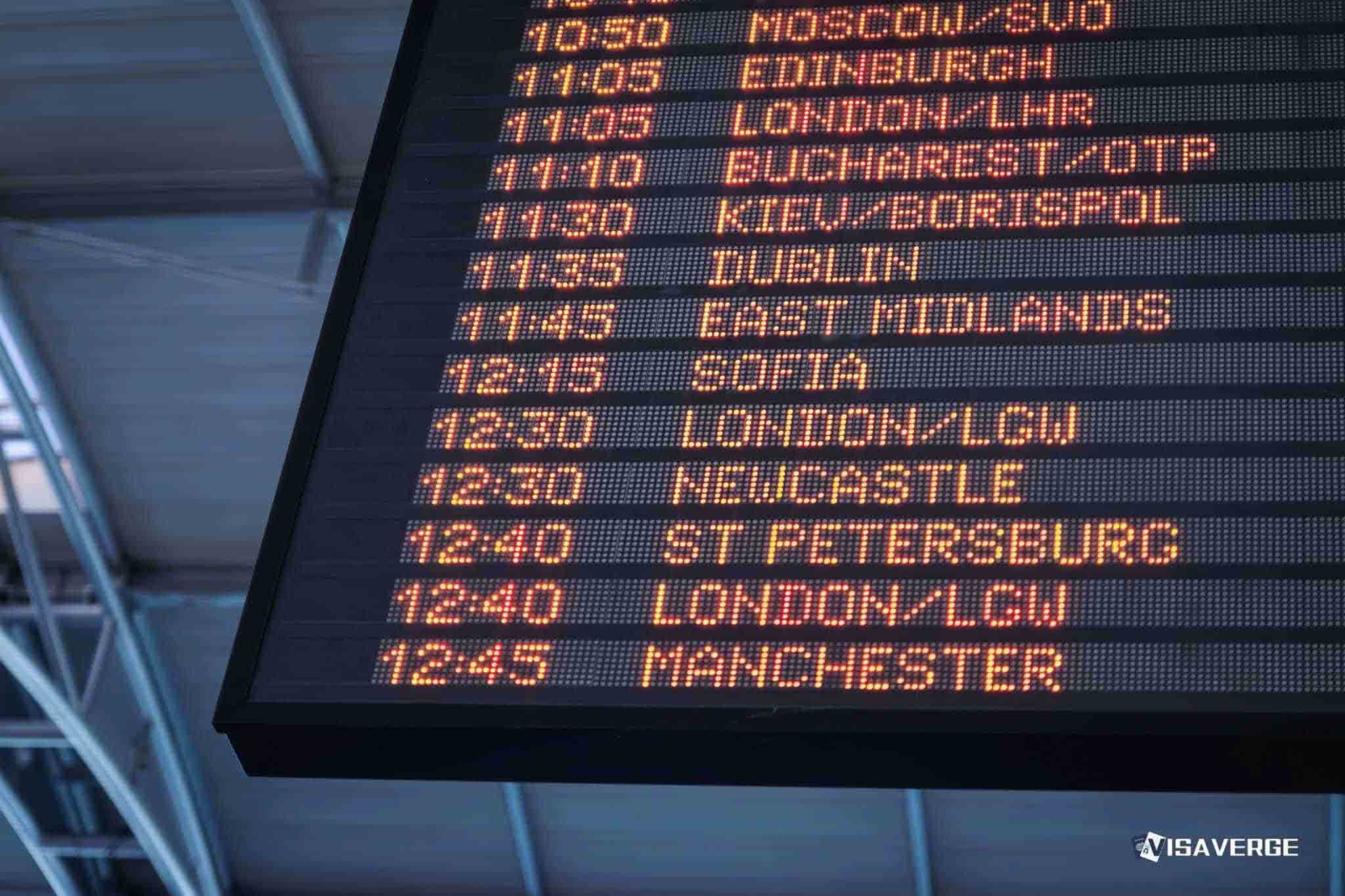
For passengers, the immediate effect has been fewer workable connections and a scramble for rerouted tickets that avoid the Middle East. Some itineraries showed business class as the only bookable option on near-term dates, while economy inventory reappeared only later in March.
The Gulf’s role in Asia-to-Europe travel sits at the center of the shock. Large hub-and-spoke networks normally bundle dense banks of connections to Europe from across Asia and Australia, keeping schedules frequent and fares competitive.
When those hubs went offline, the same flows had to spread across a patchwork of alternatives. The remaining paths often require more stops, fewer same-day onward choices and longer flying times, reducing the number of seats that can move between Asia and Europe each day.
The closures stem from the U.S.-Israel war against Iran, which has forced airlines to avoid affected airspace and disrupted established routings. With major Gulf transit points unavailable, carriers have diverted flights via longer corridors that include North America, East Asia and the Caucasus.
Passengers have also faced cancellations and the costs that come with them. Stranded travelers have had to cover extra expenses while they wait out disruptions or rebuild itineraries around what is still operating.
The mechanics behind the spike are straightforward, and punishing. Cutting off high-throughput connections removes a large pool of seats from the market, while the detours that replace them consume more aircraft time, more fuel and more crew hours per trip.
Longer routings also complicate schedules. A journey that once depended on tightly timed Gulf connections can turn into a multi-leg itinerary where missed connections become more likely and overnight layovers more common, especially when limited flight frequencies leave few backup options on the same day.
Near-term inventory has tightened sharply as airlines and agents hunt for seats across the remaining corridors. In searches conducted during March 3-4, some carriers showed little or no economy availability for days at a time, even as premium cabins remained on sale at much higher prices.
The sudden change has also shifted what passengers are willing to accept. Travelers trying to reach Europe quickly have increasingly taken indirect routings that would normally look inefficient, prioritizing any workable seat over the most direct path.
Prices have moved with that urgency, rising several times above normal levels. In many cases, the cost of the trip reflects not just demand but the constraints imposed by longer routes, fewer available seats and the operational limits of airlines already committed to published schedules.
In the tightest travel window, March 11-17, the market has behaved like a last-minute capacity squeeze rather than a typical seasonal peak. Some Asia-to-Europe journeys that usually price within reach for leisure travelers have appeared at levels more associated with premium travel, especially on dates with only a handful of seats left.
Across multiple origin cities, searches showed that the highest prices clustered around the earliest available economy departures, with later March dates dropping back as more seats appeared. That pattern has reinforced a race for the first workable option, even when it involves extra stops or long layovers.
Booking volatility has become another feature of the week. As passengers refresh searches and seats disappear, quoted prices can jump quickly, and agents have had to manage expectations for customers who assumed routings through the Gulf would remain available.
The rerouting logic has pushed flights into longer arcs via distant hubs and nontraditional corridors. Some itineraries have run north via the Caucasus and Afghanistan, while others have swung south via Egypt, Saudi and Oman, depending on what airlines can operate and where connections still exist.
Other journeys have moved even farther afield. Some routings have flowed through China and Singapore, while the most extreme detours have used North America as a bridge, adding distance and time while exposing passengers to more connection points and more risk of delays cascading across multiple legs.
These corridors come with operational trade-offs that passengers feel directly. Fewer daily connection banks mean missing one flight can strand a traveler overnight, while longer flying times can reduce the number of seats airlines can offer on a given aircraft over a week because each trip takes longer to complete.
Scarcity has also reflected structural constraints that do not disappear overnight. Limited bilateral capacity on certain country pairs, the availability of aircraft already scheduled elsewhere, and the simple reality of finite seats on remaining direct or one-stop services have all narrowed options at exactly the moment demand surged.
The knock-on effects have extended beyond individual passengers to the wider market in Asia-to-Europe travel. As Gulf hubs went dark, demand concentrated on carriers and routings that bypass the Middle East entirely, pulling seats forward and leaving less availability for travelers who normally book closer to departure.
That shift has shown up in carrier and agency signals. Thailand’s Transport Minister Phiphat Ratchakitprakarn linked the pressure on direct services to changing passenger behavior, saying demand from Europeans avoiding Middle East transits has filled direct routes from carriers like Thai Airways.
EVA Air also reported booking surges for Taiwan-Europe flights via non-Gulf paths. The surge has reinforced a feedback loop: as more travelers chase the bypass options, those flights fill faster, pushing remaining seats into higher price buckets.
Travel agencies have been dealing with the surge in real time. Australia’s Flight Centre recorded a 75% call increase, and Global MD Andrew Stark pointed to rebookings via China, Singapore and North America as customers try to reconstruct journeys once anchored on Gulf connections.
Those calls have often involved difficult choices. Some customers accept longer travel times to secure an economy seat, while others move up to premium cabins when economy inventory disappears for the dates they need.
The scramble has also altered the usual balance between price and convenience. Travelers faced with high economy quotes on early departures have sometimes found that business class is the only immediate option on certain airlines, not because demand suddenly turned luxury-focused but because economy seats vanished first.
For airlines, the immediate challenge has been absorbing displaced connecting passengers without the Gulf’s high-volume infrastructure. Even when alternative routings exist on paper, turning them into reliable connections for large numbers of travelers requires seats, coordination and schedule room that may not be available at short notice.
The closure period has also exposed how much Asia-to-Europe connectivity depends on a small number of highly efficient hubs. When those hubs stop functioning, the market does not simply reroute smoothly; it fragments into thinner corridors, each with its own capacity limits and higher operating costs.
Passengers have felt those costs directly in both fares and trip complexity. A detour via a distant hub can add significant time in the air and on the ground, and each additional segment increases the chances of missed connections, baggage problems and last-minute itinerary changes.
The disruption has also created a sharp divide between travelers with flexible dates and those without them. Searches indicated that later March departures offered more availability and lower prices than the earliest remaining options, while urgent travelers paid the highest rates to travel in the March 11-17 window.
That dynamic has fed uncertainty for people trying to plan around fixed commitments. With near-term seats scarce and prices moving quickly, customers have had to decide whether to lock in a costly itinerary now or wait for more inventory to appear later in March.
The market’s focus now extends beyond immediate reroutes to the reopening timeline and what happens after the mid-March crunch. Prices may ease post-March 18 but remain elevated while hubs stay closed, leaving travelers watching for any normalization that restores faster connections and adds seats back into the system.
Even if operations improve, the short-term reality has included stranded passengers, disrupted itineraries and added out-of-pocket spending on hotels, meals and rebooking fees depending on ticket rules. For many travelers, the expense has not been limited to the airfare itself but has accumulated across the days lost to cancellations and detours.
For now, the Asia-to-Europe picture remains defined by constrained capacity and uneven availability, with bypass routes filling quickly and the most time-sensitive travelers paying the highest costs. With Gulf hub closures still forcing detours on March 3-4, passengers searching for March 11-17 departures have faced a market where the next seat, not the best seat, often sets the price.