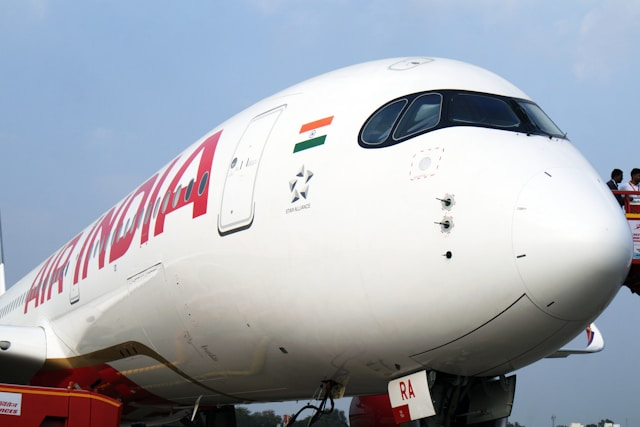
- Air India is modifying faucet control modules on its Boeing 787 fleet to prevent dangerous water leaks.
- The FAA directive requires replacing faulty hardware to stop water from reaching critical electronic equipment bays.
- More than half of identified aircraft have already been updated during a wider fleet retrofit program.
(INDIA) — Air India began modifying faucet control modules across its Boeing 787 fleet after a Federal Aviation Administration Airworthiness Directive issued on February 2, 2026 ordered changes to address water leaks linked to the components.
The directive, which superseded a previous one from January 2024, targets faucet control modules, commonly referred to as FCMs, that can leak without being detected during flight.
Those undetected leaks can migrate below passenger floors and into electronic equipment bays, pushing a cabin plumbing issue into areas that house systems the aircraft relies on.
If left unaddressed, the leaks could damage flight-critical equipment and potentially result in “loss of continued safe flight and landing”.
Air India operates 33 Boeing 787 aircraft, including 26 legacy 787-8 planes, and it has already started the modifications across the fleet.
More than half of the 787s identified for modification have been completed, Air India said, though the airline has not disclosed the exact number of aircraft that are fully modified.
The February 2 directive mandates that operators replace the FCMs with an improved design that is not susceptible to leaking, shifting the response from monitoring and mitigation to a full hardware change.
That replacement serves as the “terminating action” under the FAA’s directive, a designation that carries operational significance because it eliminates requirements that had applied under the January 2024 directive.
Under the earlier approach, operators faced repetitive inspections and leak tests, as well as the use of temporary moisture management devices meant to limit the impact of any leaks that occurred.
With replacement now required, the FAA directive effectively closes out that loop of ongoing checks and temporary measures once the improved FCM design is installed.
The safety concern described by the directive centers on where the water can go, not simply the fact that it can leak.
Water migrating below passenger floors can enter electronic equipment bays during flight, creating conditions that the directive links to the risk of damage to flight-critical equipment.
For airlines, that means the affected component touches multiple priorities at once: passenger-facing cabin functionality on one side and the integrity of protected equipment spaces on the other.
Air India’s effort to modify the modules comes as it works through a wider program to update its Boeing 787 cabins, a separate initiative focused on the 26 legacy 787-8 aircraft in its fleet.
The airline expects the first two retrofitted aircraft to return to service in the coming weeks, tying the water-leak compliance work to a period of significant maintenance and configuration activity for part of the long-haul fleet.
Air India also expects deliveries in 2026 of three new line-fit 787-9 aircraft and two line-fit A350-1000 aircraft, adding new jets alongside the work on legacy widebodies.
The combined picture is a fleet plan that includes new deliveries and interior retrofits while also absorbing mandatory changes tied to safety directives affecting existing aircraft systems.
In practical terms, the FAA’s February 2 order sets the compliance endpoint around a redesigned part, rather than continued inspection cycles built around the existing design.
That matters because the terminating action replaces a recurring workload—repetitive inspections, leak tests, and temporary moisture management devices—with a single required change that eliminates those continuing steps once completed.
For an airline operating 33 Boeing 787s, the scope of the task is fleetwide, and the pace becomes an operational question as aircraft move through modification without the carrier disclosing exactly how many are now fully updated.
Air India’s progress measure—more than half completed among the 787s identified for modification—signals that a substantial portion of the work is already done, even as the full compliance picture remains incomplete in the absence of a disclosed final count.
The modules at the center of the directive sit in a part of the aircraft that passengers directly interact with, but the hazard described by the FAA centers on downstream effects that are out of sight.
A leak that remains undetected can migrate below the passenger floor, and that migration pathway is what connects the issue to electronic equipment bays rather than limiting it to a cabin inconvenience.
By directing replacement with an improved design not susceptible to leaking, the February 2 directive aims to prevent the leak itself from occurring in the first place, instead of relying on repeated checks to find leaks after they begin.
The FAA’s decision to supersede the January 2024 directive signals a shift in how the issue is addressed within the regulatory framework, moving from an approach that relied on recurring verification and mitigation steps to one that requires the redesigned component as the resolution.
Air India’s decision to begin modifications places the airline’s Boeing 787 fleet within that newer compliance track, with work already underway and more than half completed among the aircraft identified for the change.
At the same time, the airline’s cabin retrofit program for its 26 legacy 787-8 aircraft continues on its own timeline, with the first two retrofitted jets expected to return to service in the coming weeks.
That retrofit effort sits alongside a 2026 delivery schedule that includes three new line-fit 787-9 aircraft and two line-fit A350-1000 aircraft, underscoring that the carrier’s fleet activity this year spans both in-service aircraft and incoming jets.
Air India has not said how many of its aircraft have fully completed the FCM modification, but it has framed the effort as already past the halfway mark for the affected aircraft it has identified, with the remainder still in progress.
The FAA directive’s focus on replacing faucet control modules with an improved design sets a clear objective for airlines operating Boeing 787 aircraft: remove the susceptibility to leaking that can allow water to migrate into electronic equipment bays and create the conditions tied to the risk of “loss of continued safe flight and landing”.